Argenteuil
Édouard Manet · 1874
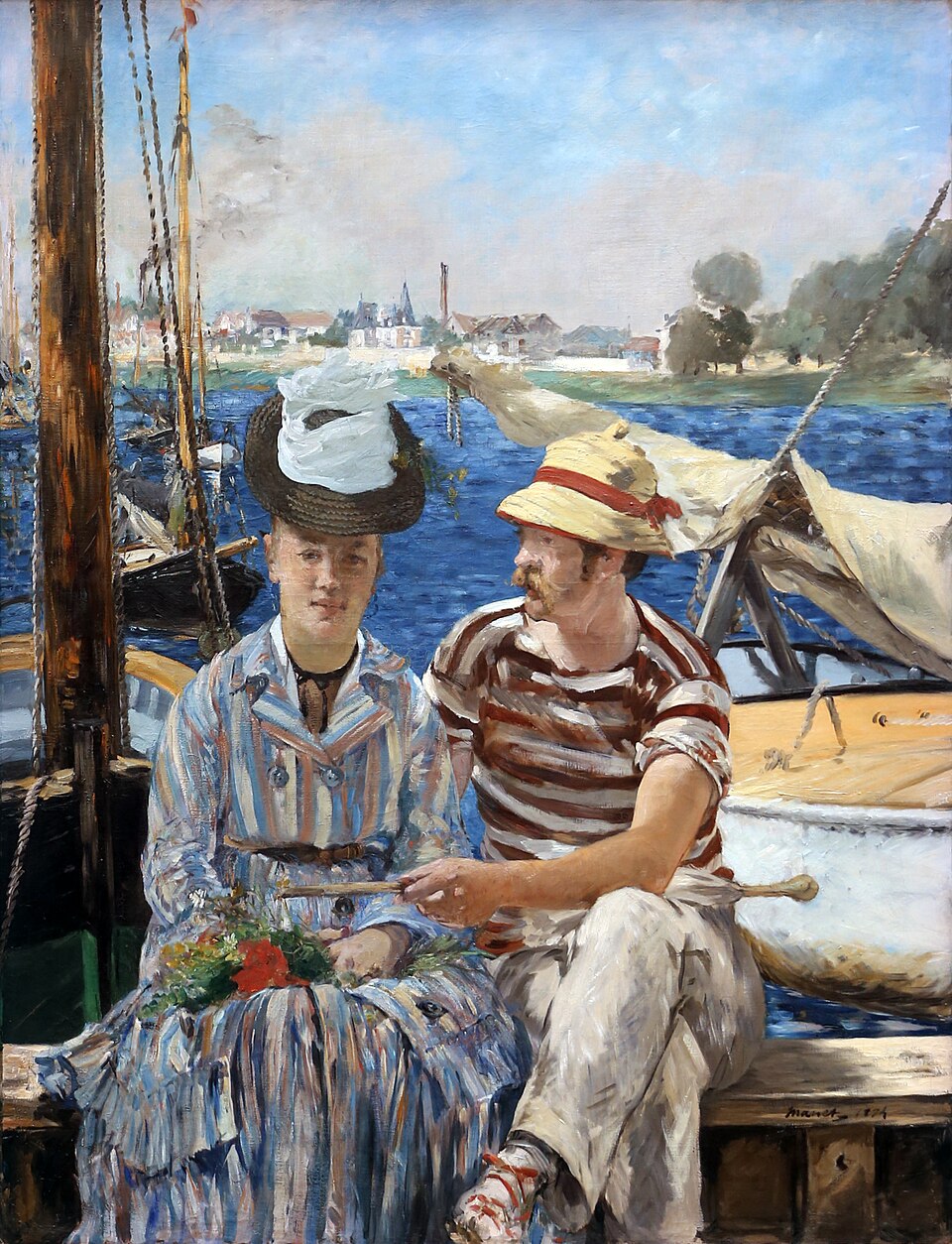
A boatman and a young woman sit on a dock beside a river of startling blue. Critics mocked the colour of Manet's water, yet Argenteuil became one of his first fully Impressionist paintings.
The story behind the painting
Manet painted Argenteuil in 1874. From 1872 his themes and brighter palette had echoed those of Claude Monet and Auguste Renoir, and that summer he stayed at Gennevilliers and visited Monet, who had lived at Argenteuil since 1873. The riverside villages along the Seine were full of painters: Renoir came often, and Gustave Caillebotte was based at Petit-Gennevilliers. Yet while his friends held their own first Impressionist exhibition in 1874, Manet chose to send Argenteuil to the traditional Paris Salon of 1875, bringing Impressionism to a wider public. Even then the group was called the band of Manet.
What to look for
A boatman and his companion sit on a mooring dock, surrounded by sailboats, the deep blue Seine and the town of Argenteuil on the far bank. Manet's brother-in-law Rodolphe Leenhoff posed for the man; the woman is unidentified. The composition sets verticals, the mast, the woman and a factory chimney, against horizontals, the parapet, the man's rolled parasol and the bank. Small touches of colour punctuate it: the white on her hat, the flowers she holds, the red band on his head. T.J. Clark noticed that what looks like the chimney's reflection in the water is really a rope hanging from a boat's boom.
Meaning and intent
Francoise Cachin saw Manet showing the lively, dazzling Impressionist style while staying deliberate and composed. Carol Armstrong reads an anecdotal meeting of the sexes, built on pairs such as front and profile, formal and casual, and links it to Manet's Boating, which uses the same couple but reverses many of these oppositions. T.J. Clark sees an exploration of the middle class, the countryside and industry, with great flat clarity of form, figures and landscape that do not quite belong together, and the look of a new form of life, placid and modest but with a claim to pleasure.
Legacy
At the Salon the painting drew harsh responses, most of them about the water. One critic called it marmalade from Argenteuil spread on an indigo river; Maurice Chaumelin, writing in 1877, described a butcher's boy boating on a river of indigo. Others defended it. Chesneau asked whether Manet must paint water the traditional green when it is blue on certain days, adding that while others hissed, he applauded. Castagnary wrote that what Manet paints is contemporary life. Manet kept the painting until his death; Henri Van Cutsem bought it from his widow and bequeathed it to Tournai, where it hangs in the Musee des Beaux-Arts.
Did you know?
- Painted in 1874 and shown at the Paris Salon of 1875.
- Manet's brother-in-law Rodolphe Leenhoff posed for the boatman.
- Critics mocked its indigo river.
- Now in the Musee des Beaux-Arts in Tournai, Belgium.
About the artist
Édouard Manet (1832-1883)
genre art · Impressionism · Argenteuil
More by Édouard Manet
 Luncheon on the Grass - Édouard Manet (1863)
 Olympia - Édouard Manet (1863)
%20(33539037428).jpg) A Bar at the Folies-Bergère - Édouard Manet (1882)
A Bar at the Folies-Bergère - Édouard Manet (1882) The Balcony - Édouard Manet (1868)
.jpg) Music in the Tuileries - Édouard Manet (1862)
Music in the Tuileries - Édouard Manet (1862).jpg) The Fif - Édouard Manet (1866)
The Fif - Édouard Manet (1866)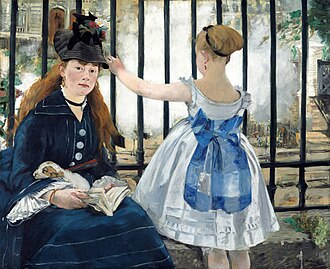 The Railway - Édouard Manet (1873)
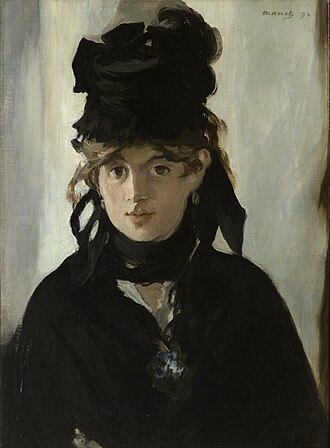 Berthe Morisot with a Bouquet of Violets - Édouard Manet (1872)
Paintings by related artists
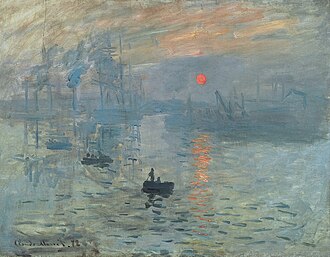 Impression, Sunrise - Claude Monet (1872)
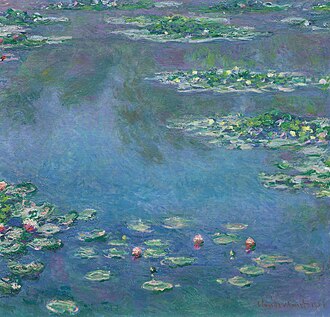 Water Lilies - Claude Monet (1906)
 Dance at Le Moulin de la Galette - Pierre-Auguste Renoir (1876)
 Luncheon of the Boating Party - Pierre-Auguste Renoir (1881)
 The Fighting Temeraire - J. M. W. Turner (1839)
 Rain, Steam and Speed - The Great Western Railway - J. M. W. Turner (1844)
 The Starry Night - Vincent van Gogh (1889)
.jpg) Café Terrace at Night - Vincent van Gogh (1888)
Café Terrace at Night - Vincent van Gogh (1888)