After the Bath, Woman Drying Herself
Edgar Degas · 1890s
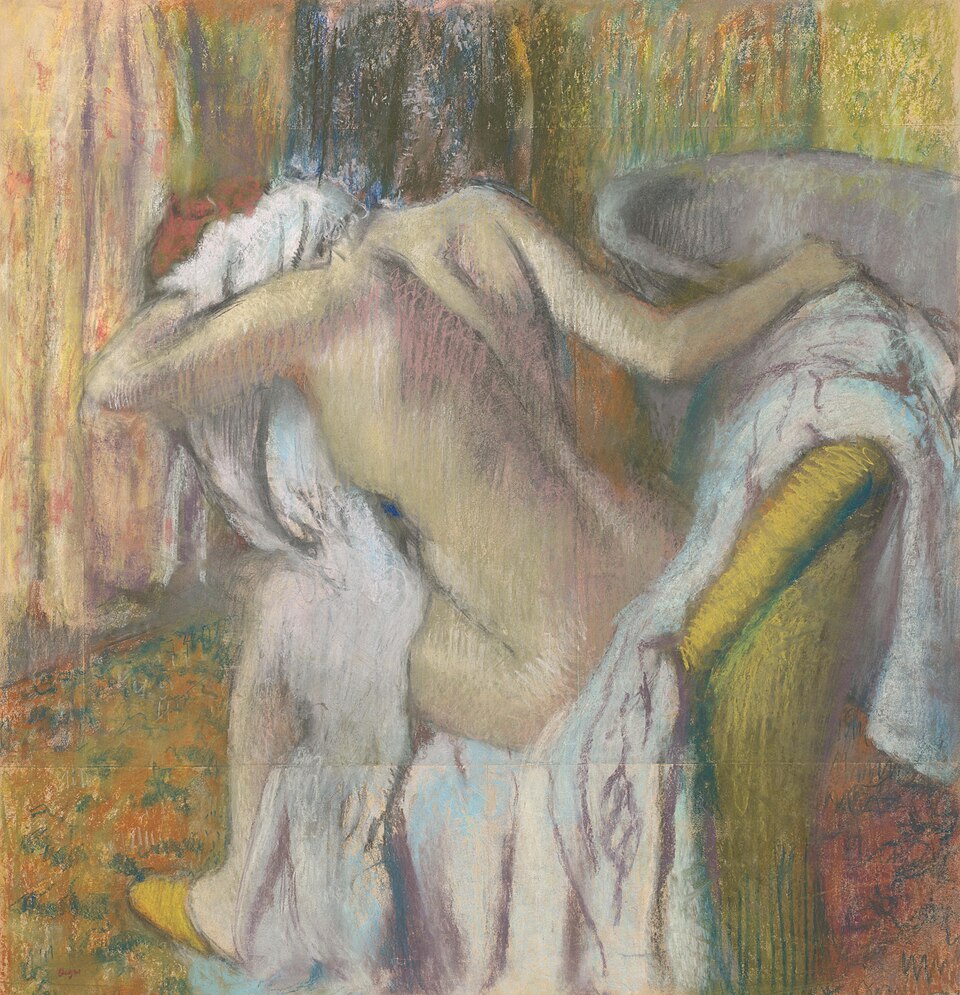
A woman with her back to us, arched over a wicker chair, towel at her neck, her spine a deep line of tension. Degas said he wanted you to feel you were looking through a keyhole. Francis Bacon called pastels like this among the greatest things ever made.
The story behind the painting
Degas made this large pastel between 1890 and 1895, as part of a series of photographs, sketches, pastels and oils of women bathing or dancing. He often used photographs and sketches first to study light and composition, and his handling of light may relate to his failing eyesight. He had shown many bathing nudes at the last Impressionist exhibition in 1886, and nine pastels of women at their bath were exhibited by Theo van Gogh in 1888. This one is about 103.5 by 98.5 cm, drawn on several pieces of paper mounted on cardboard; he may have started smaller and added paper as he worked.
What to look for
A woman sits on white towels spread over a wicker chair, her back to you. Her body is arched and slightly twisted, and the deep line of the backbone stresses the tension. One hand dries her neck with a towel, presumably after leaving the tin bath in the corner; the other arm grips the chair. The room is set by the vertical and diagonal lines where floor and walls meet. Degas laid on many layers of pastel, mostly Prussian blue, cadmium yellow and ochres, so the figure seems almost translucent, with blurred contours that suggest movement.
Meaning and intent
Her face is hidden, so all attention rests on the body. Carol Armstrong argues that Degas twisted bodies into unusual positions to make viewers uncomfortable, so they look away and respect the woman's privacy; she saw these nudes as existing in a world of their own. Richard Kendall found them notably non-erotic. Some critics thought them tactless for lacking any idealisation, while Octave Mirbeau praised Degas for refusing to flatter the nude for easy success. Others found his precision more scientific than artistic. The work still divides critics today.
Legacy
After a showing at the Lefevre Gallery in 1950, the National Gallery in London bought the pastel in 1959. It had a strong influence on Francis Bacon, visible in his Three Figures in a Room of 1964 and Three Studies of the Male Back of 1970; the Tate called it something of a talisman for him. In 1985 Bacon chose it as one of three central nudes in his Artist's Choice exhibition at the National Gallery, between Velázquez's Rokeby Venus and Michelangelo's Entombment. A less worked version of the subject is in the Courtauld Gallery.
Did you know?
- Pastel, made between 1890 and 1895.
- Drawn on several sheets of paper mounted on cardboard.
- In the National Gallery, London, since 1959.
- A strong influence on Francis Bacon.
About the artist
Edgar Degas (1834-1917)
More by Edgar Degas
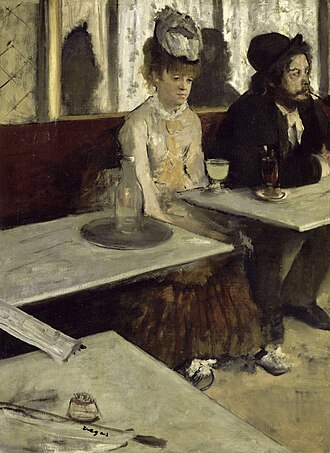 L'Absinthe - Edgar Degas (1875)
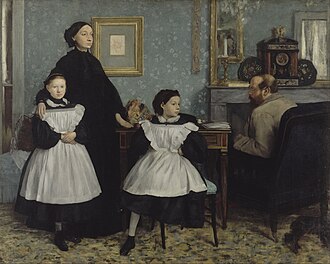 The Bellelli Family - Edgar Degas (1858)
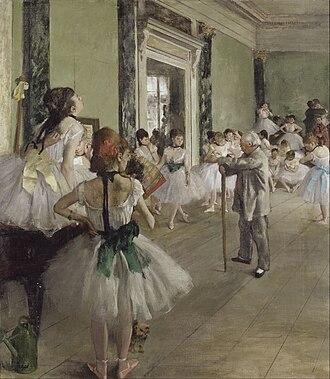 The Ballet Class - Edgar Degas (1871)
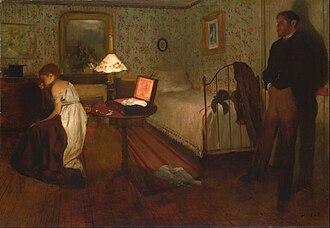 Interior - Edgar Degas (1868)
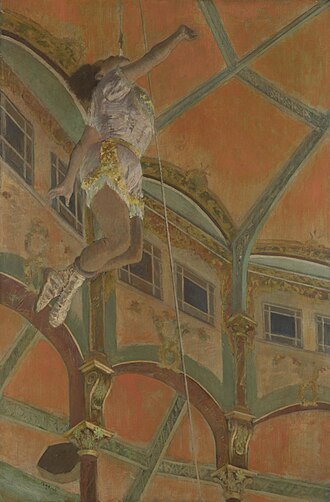 Miss La La at the Cirque Fernando - Edgar Degas (1879)
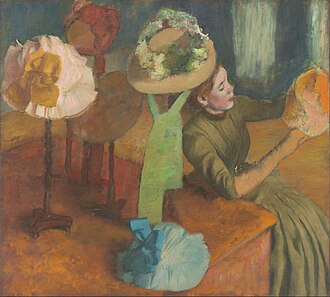 The Millinery Shop by Edgar Degas - Edgar Degas
.jpg) The Tub - Edgar Degas (1886)
The Tub - Edgar Degas (1886)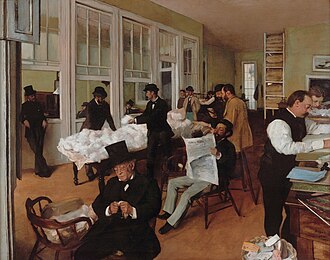 A Cotton Office in New Orleans - Edgar Degas (1873)
Paintings by related artists
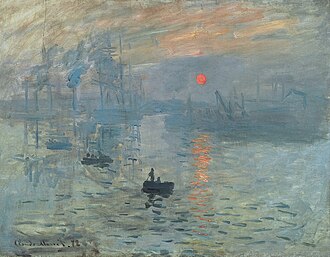 Impression, Sunrise - Claude Monet (1872)
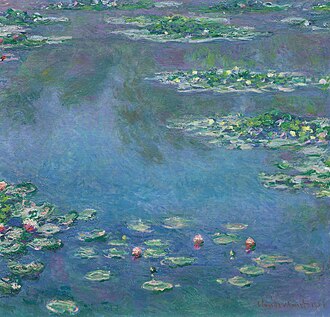 Water Lilies - Claude Monet (1906)
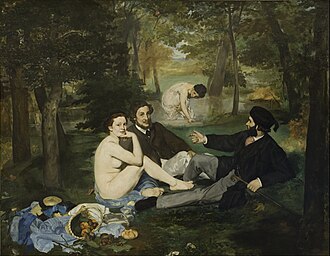 Luncheon on the Grass - Édouard Manet (1863)
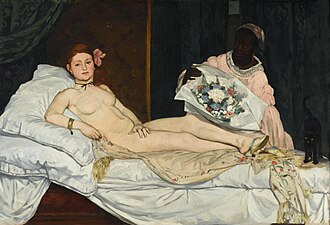 Olympia - Édouard Manet (1863)
 Dance at Le Moulin de la Galette - Pierre-Auguste Renoir (1876)
 Luncheon of the Boating Party - Pierre-Auguste Renoir (1881)
 The Starry Night - Vincent van Gogh (1889)
.jpg) Café Terrace at Night - Vincent van Gogh (1888)
Café Terrace at Night - Vincent van Gogh (1888) The Fighting Temeraire - J. M. W. Turner (1839)
 Rain, Steam and Speed - The Great Western Railway - J. M. W. Turner (1844)
 Where Do We Come From? What Are We? Where Are We Going? - Paul Gauguin (1897-1898)
%201889.jpg) The Yellow Christ - Paul Gauguin (1889)
The Yellow Christ - Paul Gauguin (1889)