Interior
Edgar Degas · 1868
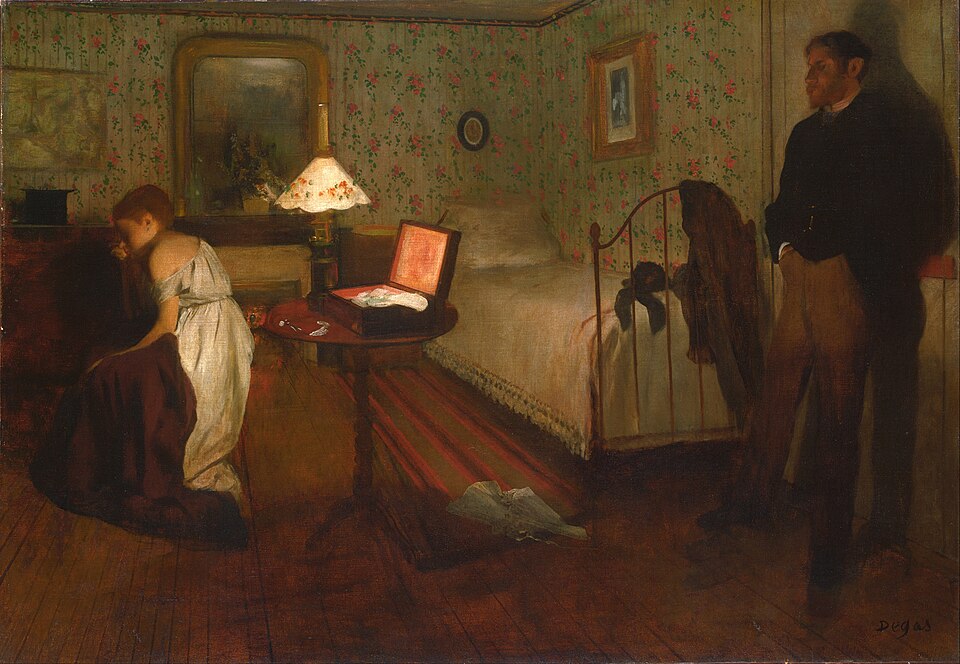
A man leans against a door, a half-dressed woman turns away from him, and a lamp burns on a small table between them. Called the most puzzling of Degas's major works, Interior has kept scholars guessing for more than a century, down to its very title.
The story behind the painting
Degas painted Interior in 1868 to 1869, when his growing commitment to Realism had pulled him away from history subjects such as Semiramis Building Babylon toward scenes of modern life. He probably meant to send it to the Salon of 1869, yet it was not shown in public until June 1905, at the Galerie Durand-Ruel in Paris. Even the name is unsettled: people who knew the artist called it either Le Viol, The Rape, or Interior, and Degas exhibited it under the second title. In 1897 he called it my genre painting, which suggests he saw it as unlike the rest of his work.
What to look for
Art historians speak of the work's stage-managed character. Objects sit in the room like props, and the lamplight makes it feel as if a play is under way. The man stands by the door with his legs apart and his hands in his pockets, while the woman, partly undressed, sits turned away from him. Look for the narrow single bed, the round table with its lamp, an open sewing box catching the light, a corset dropped on the floor, and the man's top hat resting on the bureau in the background. Felix Krämer also points to traces of what look like blood on the bed.
Meaning and intent
Because the scene feels like theatre, scholars have searched for a story behind it, and none has convinced everyone. Georges Rivière suggested a novel by Duranty; others pointed to Zola's Madeleine Férat. In 1976 Theodore Reff proposed Zola's Thérèse Raquin, where Laurent enters the room on his wedding night to a wife frozen by guilt, and many accepted this. In 2007 Krämer objected that the bed is a narrow single one and the hat shows the man has not just entered. He proposed a Gavarni lithograph of a Lorette, and read the scene as prostitution and the aftermath of sexual violence rather than a marriage gone wrong.
Legacy
Interior now hangs in the Philadelphia Museum of Art. Its unresolved tension carried into the next generation through Degas's protégé Walter Sickert. In conversation Degas described the picture to him as a genre painting, and Sickert's Camden Town Murder series of 1908 and his painting Ennui of 1914 show the same kind of scene: a man and a woman together in a room, full of dramatic tension and left deliberately ambiguous. The painting asks the viewer to supply the story, and that open question is a large part of its power.
Did you know?
- Painted in 1868 to 1869.
- Also known as Le Viol (The Rape).
- First shown in public in 1905, at Galerie Durand-Ruel in Paris.
- In the Philadelphia Museum of Art.
About the artist
Edgar Degas (1834-1917)
woman · man · genre art · table · bed · Philadelphia Museum of Art · carpet
More by Edgar Degas
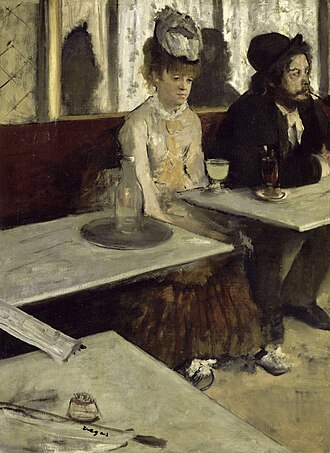 L'Absinthe - Edgar Degas (1875)
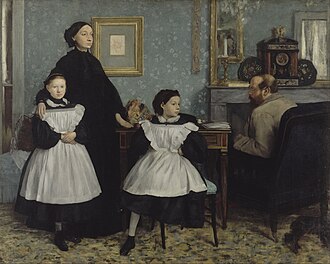 The Bellelli Family - Edgar Degas (1858)
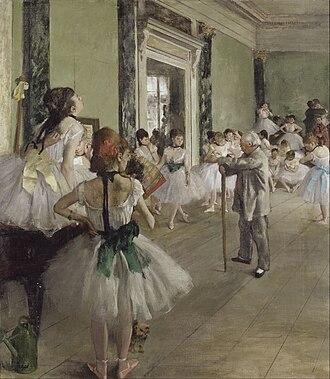 The Ballet Class - Edgar Degas (1871)
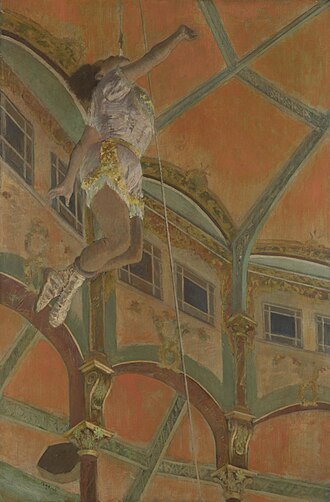 Miss La La at the Cirque Fernando - Edgar Degas (1879)
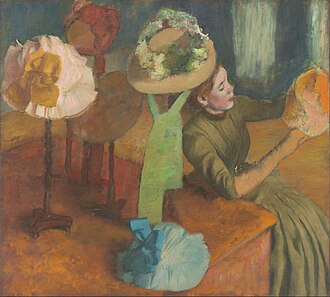 The Millinery Shop by Edgar Degas - Edgar Degas
.jpg) The Tub - Edgar Degas (1886)
The Tub - Edgar Degas (1886)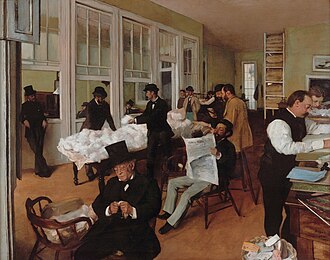 A Cotton Office in New Orleans - Edgar Degas (1873)
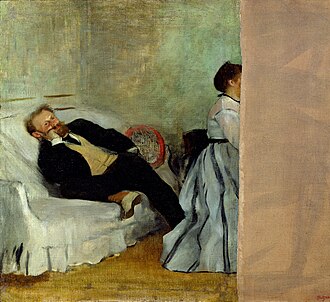 Mr. and Mrs. Édouard Manet - Edgar Degas (1868)
Paintings by related artists
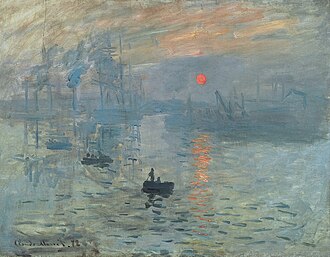 Impression, Sunrise - Claude Monet (1872)
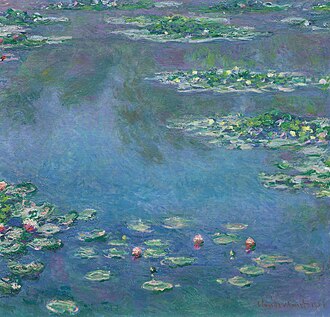 Water Lilies - Claude Monet (1906)
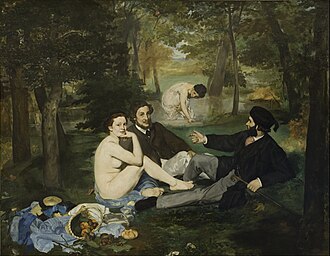 Luncheon on the Grass - Édouard Manet (1863)
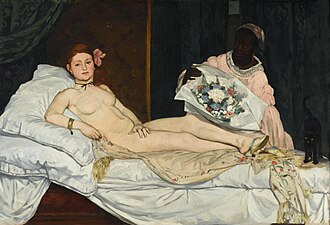 Olympia - Édouard Manet (1863)
 Dance at Le Moulin de la Galette - Pierre-Auguste Renoir (1876)
 Luncheon of the Boating Party - Pierre-Auguste Renoir (1881)
 The Starry Night - Vincent van Gogh (1889)
.jpg) Café Terrace at Night - Vincent van Gogh (1888)
Café Terrace at Night - Vincent van Gogh (1888) The Fighting Temeraire - J. M. W. Turner (1839)
 Rain, Steam and Speed - The Great Western Railway - J. M. W. Turner (1844)
 Where Do We Come From? What Are We? Where Are We Going? - Paul Gauguin (1897-1898)
%201889.jpg) The Yellow Christ - Paul Gauguin (1889)
The Yellow Christ - Paul Gauguin (1889)