Adoration of the Shepherds
Nicolas Poussin · 1633
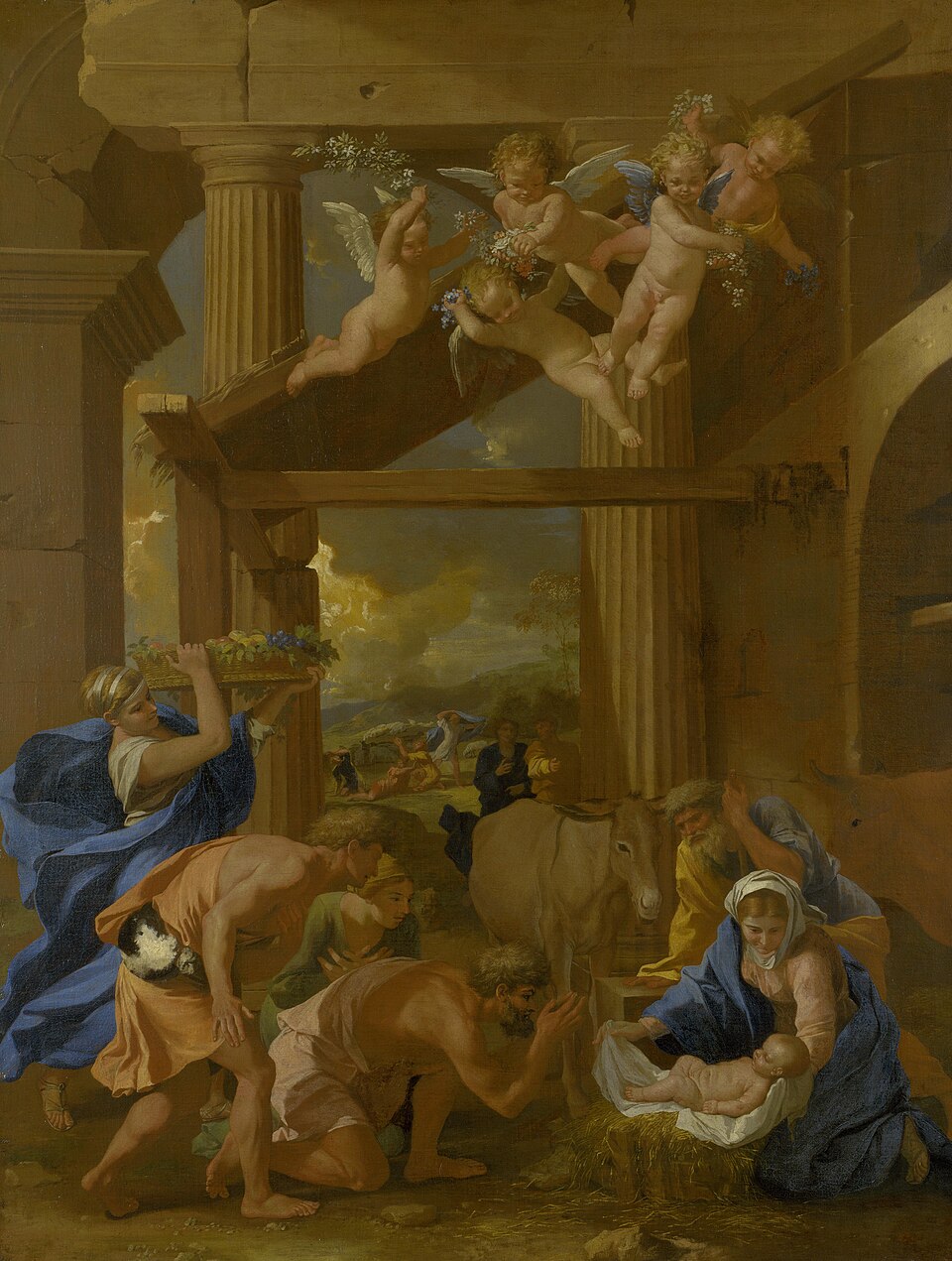
Shepherds kneel before the newborn Christ in a ruined classical building, putti hover ready to shower flowers, and the whole scene glows in warm copper tones. Unusually, Poussin signed this one on a stone.
The story behind the painting
Poussin painted it in 1633 to 1634, approaching 40, after nearly a decade in Rome. Following a lukewarm reception for his St Peter's altarpiece and an illness, he turned to smaller canvases for a small circle of connoisseurs led by Cassiano dal Pozzo. This work is untypical in passing quickly to a prince: by 1637 it belonged to Cardinal Gian Carlo de' Medici and hung in his villa outside Florence. Wikidata gives 1633; the dating rests on its likeness to other coppery works of 1633 to 1634.
What to look for
Find the signature N. Pusin.fe on the stone at lower right. The golden stone of the ruins is echoed in the tanned shepherds and the cloudy sky, broken only by the blue of the Virgin's mantle and of the woman carrying fruit. The ox beside Joseph almost vanishes into the wall. In the distance, the Annunciation to the Shepherds unfolds in agitated poses, with a loosely painted white angel against the cloud, while the foreground figures seem frozen like sculpture. The front kneeling shepherd may derive from one by Raphael.
Meaning and intent
Classical ruins in Nativity scenes recall the Golden Legend, which told that the Basilica of Maxentius in Rome partly collapsed on the night of Christ's birth. Ruined temples could also stand for the decay of the Old Covenant, an idea from Early Netherlandish painting. The woman with fruit may refer to a lost statue of Plenty by Donatello in Florence, and to the Florentine custom of bringing fruit to women after childbirth. Above, a putto holds jasmine.
Legacy
The painting was much admired: 20 painted copies are recorded from roughly the next century, and seven prints from the 1660s to 1813. After the cardinal's death in 1663 it may have moved to France, where a Nativity by Poussin is recorded in several collections, possibly including that of the gardener André Le Nôtre. Later it belonged to Sir Joshua Reynolds and then the Proctor-Beauchamp family until 1956. It is now in the National Gallery, London.
Did you know?
- Signed N. Pusin.fe on a stone.
- About 97 x 74 cm.
- Owned by Cardinal Gian Carlo de' Medici by 1637.
- About 20 painted copies are recorded.
About the artist
Nicolas Poussin (1594-1665)
religious art · Christ Child · National Gallery
More by Nicolas Poussin
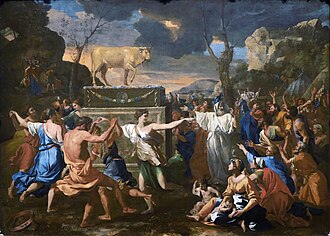 The Adoration of the Golden Calf - Nicolas Poussin (1634)
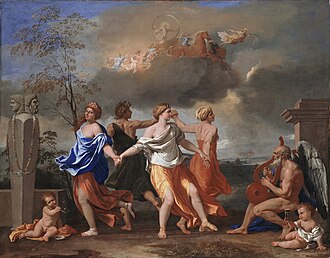 A Dance to the Music of Time - Nicolas Poussin (1630s)
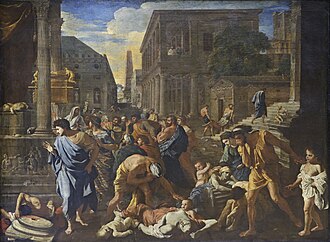 The Plague at Ashdod - Nicolas Poussin (1630)
.jpg) The Judgment of Solomon - Nicolas Poussin (1649)
The Judgment of Solomon - Nicolas Poussin (1649)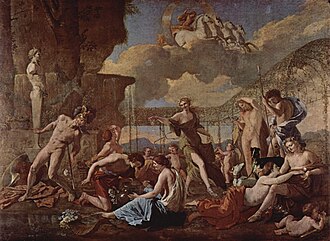 The Empire of Flora - Nicolas Poussin (1631)
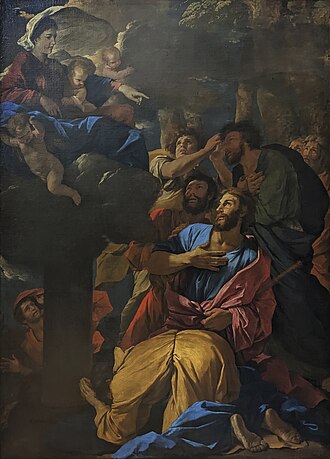 The Apparition of the Virgin to Saint James the Great - Nicolas Poussin (1620s)
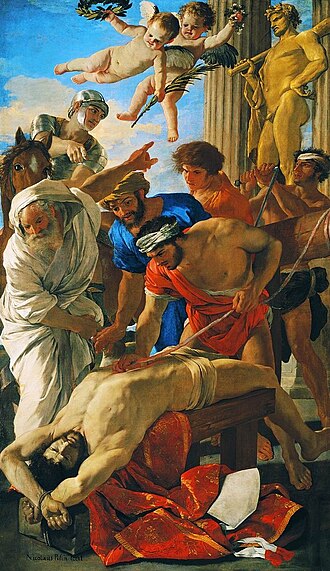 The Martyrdom of Saint Erasmus - Nicolas Poussin (1628)
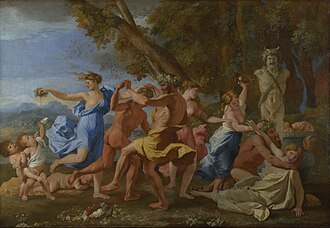 A Bacchanalian Revel Before a Term - Nicolas Poussin (1630s)