The Swing
Francisco Goya · 1779
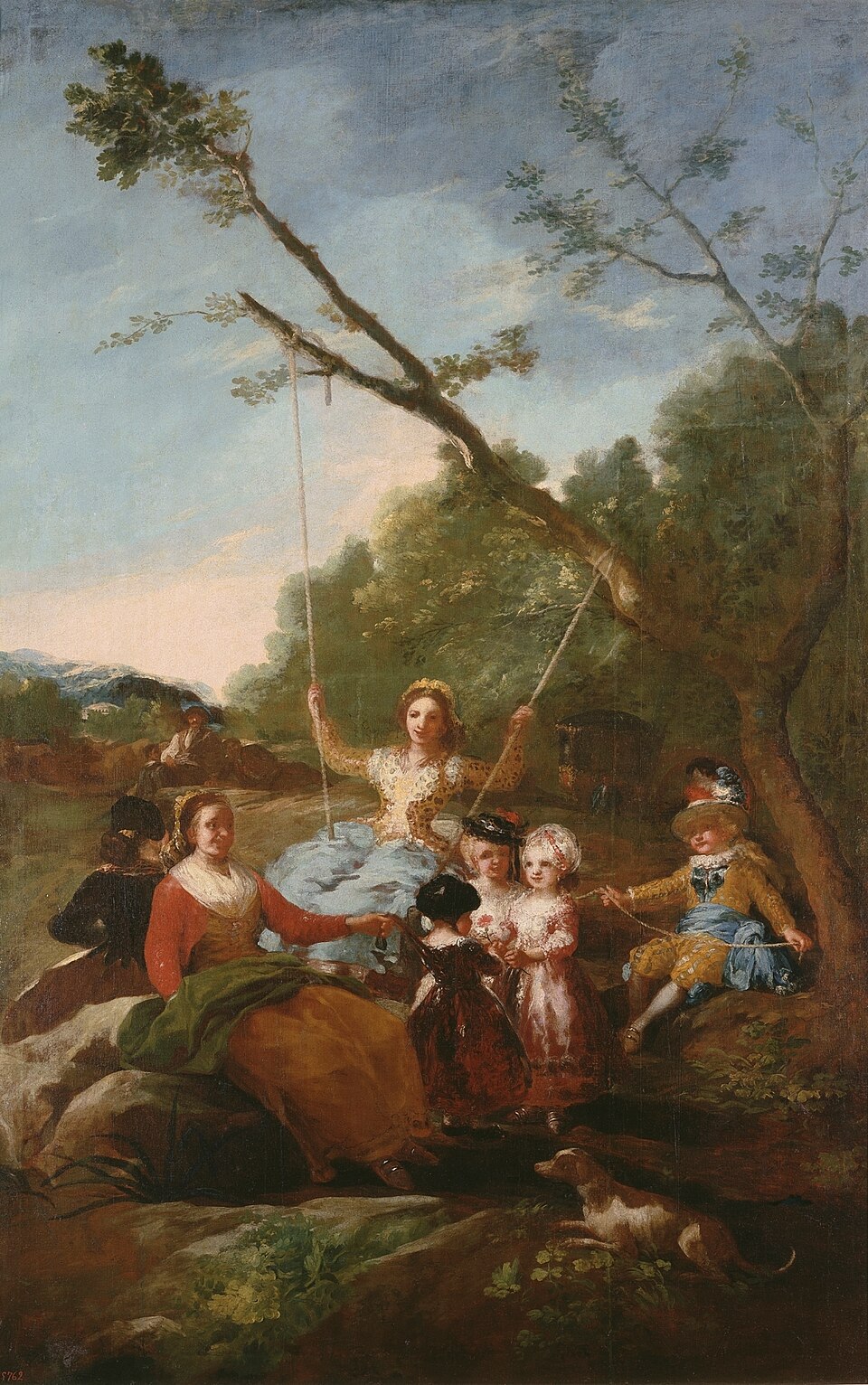
Out in the countryside, a young woman swings on a rope while richly dressed children play around her. Goya turned an old flirtatious theme into a calm family outing, painted as a design for a royal tapestry.
The story behind the painting
The Swing, El columpio in Spanish, is a tapestry cartoon Goya designed for the bedroom of the Princes of Asturias in the Palace of El Pardo. It is the first of a group of thirteen tapestries in Goya's third series. Wikidata dates it to 1779. In his own peculiar spelling, Goya described the picture as a family who had gone out to the country to enjoy themselves: four children and three maids, one of whom is swinging on a rope. The swing was a recurring subject in Western art, especially in French Rococo painting by Boucher and Fragonard, where it carried obvious erotic overtones.
What to look for
Three maids are swinging happily in the countryside while the children they care for enjoy themselves. The children's showy clothes mark them clearly as aristocrats. One child pushes the swinging maid, and another maid holds the youngest. The children receive most of the light, as the twilight falls on them and their clothes. In the background a carriage is made of blurred spots, and three shepherds with their flocks complete the scene. One woman, who holds a little girl back, is not dressed as a servant but as a courtesan, possibly a wealthy aristocrat dressed as a maja, as was fashionable at the time.
Meaning and intent
Goya may have set aside the erotic sense the subject had in French painting: here the scene is peaceful and familiar, and the atmosphere entirely calm. Some authors read The Swing as an allegory of the three ages of life, with the children as childhood, the women as youth and the distant shepherds as old age. Others see a more ambiguous message, a meeting between the nurses and the shepherds, suggested by the gazes of the men and of the woman with her back turned. The painting can hold both readings at once, the innocent outing and the quiet glances exchanged at its edges.
Legacy
Goya strengthened the patchy, stain-like effect with rapid brushstrokes, a manner that years later would lead to the Black Paintings. The strongest influences on the picture are Rembrandt and Velázquez, whom Goya admired and called his masters. Made as a full size design to be woven, 260 by 165 cm, the cartoon is now kept in the Museo del Prado in Madrid. Seen today, it shows a young court painter learning to work with light and loose paint inside a decorative commission, long before the dark works that would make his name.
Schon gewusst?
- A tapestry cartoon for the bedroom of the Princes of Asturias at El Pardo.
- The first of thirteen tapestries in Goya's third series.
- Goya described it as a family outing with four children and three maids.
- Kept in the Museo del Prado, Madrid.
Über den Künstler
Francisco Goya (1746-1828)
Genreszene · Museo del Prado · Wagen
Mehr von Francisco Goya
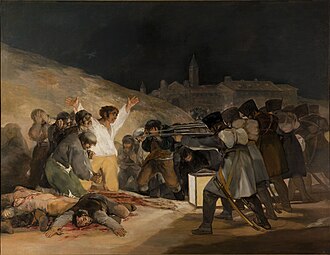 Die Erschießung der Aufständischen - Francisco Goya (1814)
.jpg) Die nackte Maja - Francisco Goya (1800)
Die nackte Maja - Francisco Goya (1800).jpg) Saturn verschlingt seinen Sohn - Francisco Goya (1819)
Saturn verschlingt seinen Sohn - Francisco Goya (1819)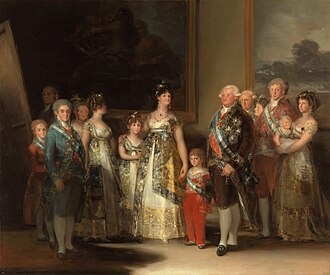 Die Familie Karls IV. - Francisco Goya (1800)
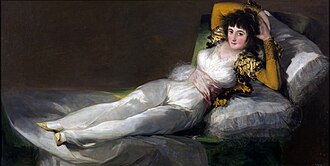 Die Bekleidete Maja - Francisco Goya (1800)
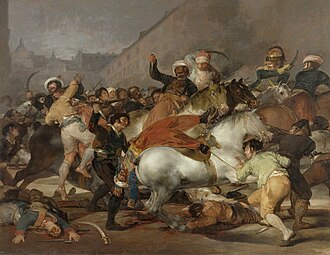 Kampf mit den Mamelucken am 2. Mai 1808 in Madrid - Francisco Goya (1814)
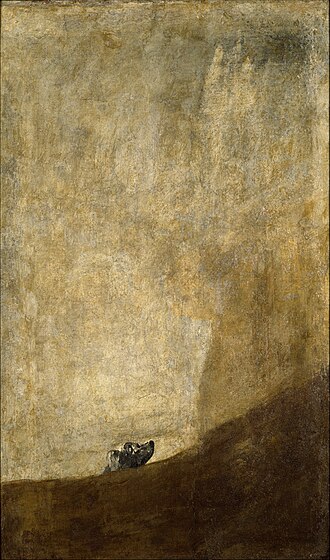 Hund - Francisco Goya (1819)
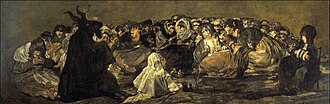 Hexensabbat - Francisco Goya (1820s)
Werke verwandter Künstler
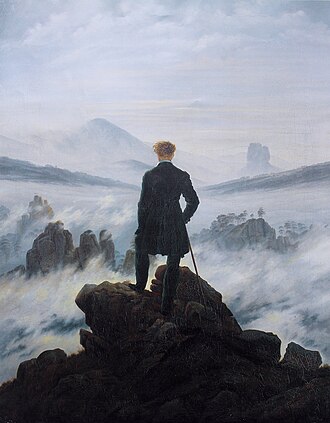 Der Wanderer über dem Nebelmeer - Caspar David Friedrich (c. 1818)
 Abtei im Eichwald - Caspar David Friedrich (1800s)
 Die letzte Fahrt der Temeraire - J. M. W. Turner (1839)
 Rain, Steam and Speed - The Great Western Railway - J. M. W. Turner (1844)
 Die Freiheit führt das Volk - Eugène Delacroix (1830)
 Der Tod des Sardanapal - Eugène Delacroix (1827)