The Madhouse
Francisco Goya · 1814
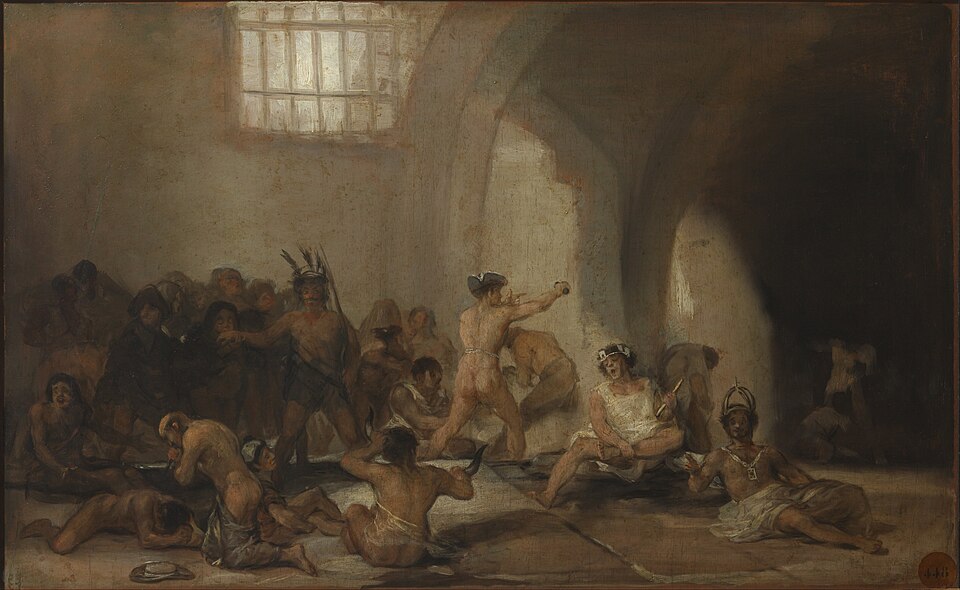
Naked and half-dressed figures crowd a vaulted room lit only by one barred window high on the wall. Goya based this scene on an asylum he had seen in Zaragoza, after years of illness had taught him what suffering was.
The story behind the painting
Goya painted The Madhouse, also called Asylum, in oil on panel, based on a scene he had witnessed at the then well known asylum of Zaragoza. Wikipedia places it between 1812 and 1819, while Wikidata gives 1814. It came after a turbulent period in his life. In 1792 he had fallen gravely ill, struggling to walk and keep his balance, partly blind and deaf; he recovered but stayed deaf for life. He suffered bouts of depression, writing that he was sometimes raving with a mood he himself could not stand. An aunt and an uncle of his had also suffered from insanity.
What to look for
The architecture is claustrophobic, often called Piranesian, and the only light comes from a barred window high on the wall, as if pressing down on the figures. Each figure is a distinct character, close to caricature. One wears what looks like a wild feathered headdress, another fights in a tricorne hat, another makes a gesture of blessing toward the viewer, and many are naked. Some can be read as parodies of powerful people in society, such as the clergy, or the army in the man with the tricorne. The small panel, 45 by 72 cm, holds a whole crowded world.
Meaning and intent
In the salons of the Spanish Enlightenment asylums were a popular topic, including practices such as chaining patients; the mentally ill were seen as possessed and were often made into public entertainment. Goya's earlier Yard with Lunatics of 1794 already avoided stereotypes. The Madhouse goes further, showing its people in a dingy room as human beings who suffer, not as people to be restrained for their own good. It develops the theme of the world upside down and is linked to his print series Los disparates. Of these pictures Goya said he could make observations for which commissioned works normally leave no room for fantasy and invention.
Legacy
Critics have not agreed on what The Madhouse means. Some argue it shows Goya losing touch with the public, since it is hardly a picture to hang at home; others place it alongside works that depict violence. It is also debated whether it played any part in the movement to reform asylums led by Philippe Pinel and William Tuke, or whether it instead confirmed the idea that the mentally ill should be confined and shackled. Like his Disasters of War etchings, it shows Goya's willingness to set aside beauty and make the viewer face suffering. It is kept at the Royal Academy of Fine Arts of San Fernando.
Schon gewusst?
- Based on a scene Goya saw at the Zaragoza asylum.
- Dated 1812 to 1819 by Wikipedia, 1814 by Wikidata.
- Goya had been left deaf by a severe illness in 1792.
- Kept at the Royal Academy of Fine Arts of San Fernando.
Über den Künstler
Francisco Goya (1746-1828)
Genreszene · Real Academia de Bellas Artes de San Fernando
Mehr von Francisco Goya
 Die Erschießung der Aufständischen - Francisco Goya (1814)
.jpg) Die nackte Maja - Francisco Goya (1800)
Die nackte Maja - Francisco Goya (1800).jpg) Saturn verschlingt seinen Sohn - Francisco Goya (1819)
Saturn verschlingt seinen Sohn - Francisco Goya (1819) Die Familie Karls IV. - Francisco Goya (1800)
 Die Bekleidete Maja - Francisco Goya (1800)
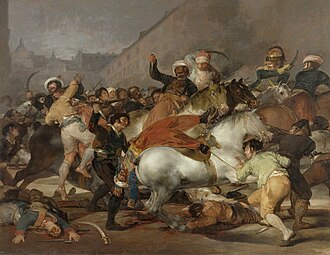 Kampf mit den Mamelucken am 2. Mai 1808 in Madrid - Francisco Goya (1814)
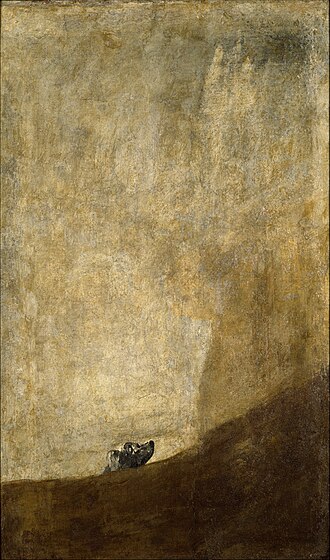 Hund - Francisco Goya (1819)
 Hexensabbat - Francisco Goya (1820s)
Werke verwandter Künstler
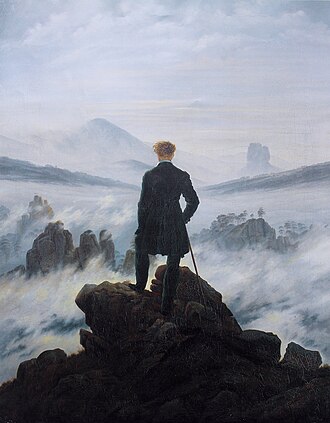 Der Wanderer über dem Nebelmeer - Caspar David Friedrich (c. 1818)
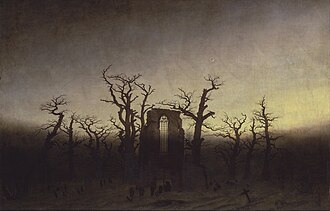 Abtei im Eichwald - Caspar David Friedrich (1800s)
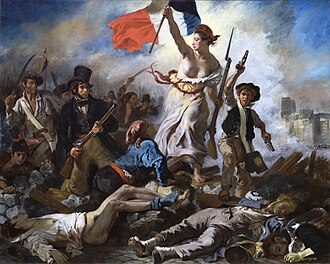 Die Freiheit führt das Volk - Eugène Delacroix (1830)
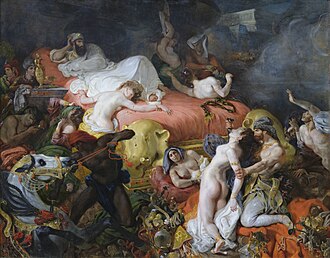 Der Tod des Sardanapal - Eugène Delacroix (1827)
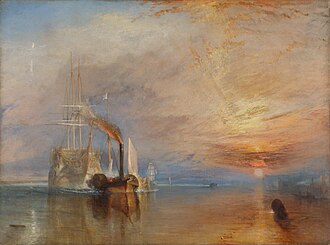 Die letzte Fahrt der Temeraire - J. M. W. Turner (1839)
 Rain, Steam and Speed - The Great Western Railway - J. M. W. Turner (1844)
.jpg) Knabe in Blau - Thomas Gainsborough (1770)
Knabe in Blau - Thomas Gainsborough (1770).jpg) Mr. und Mrs. Andrews - Thomas Gainsborough (1748)
Mr. und Mrs. Andrews - Thomas Gainsborough (1748)