Straße in Delft
Johannes Vermeer · 1658
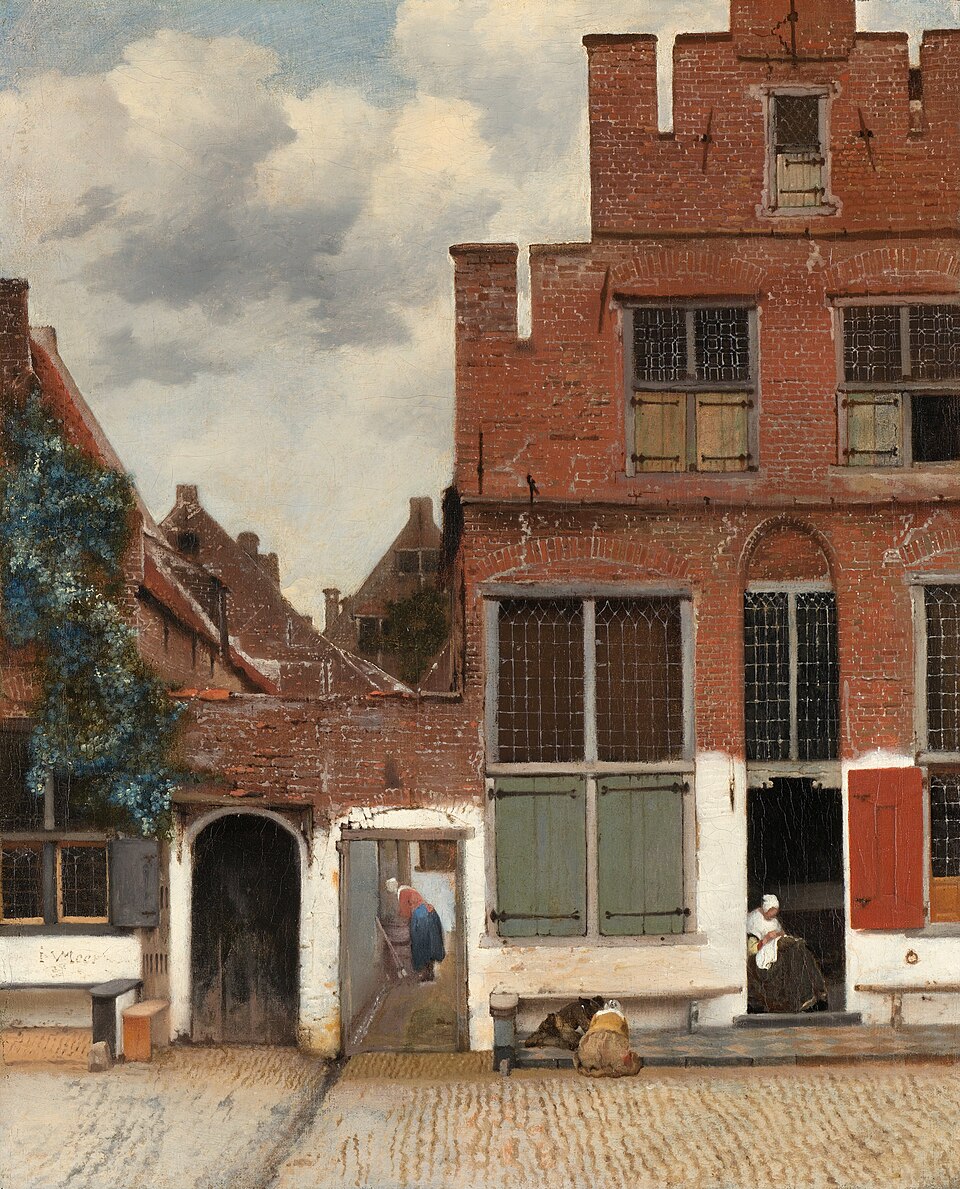
Nothing dramatic happens here: a woman sews in a doorway, a maid bends in an alley, bricks soak up the afternoon. Yet Vermeer turns an ordinary Delft street into something you can almost touch.
The story behind the painting
The Little Street, Het Straatje in Dutch, was painted by Johannes Vermeer around 1657 to 1658, in Delft, the town where he lived and worked. It is a small oil on canvas, 54.3 by 44 centimetres, signed I V MEER below the window at the lower left. It is one of only three views of Delft by Vermeer; the others are the famous View of Delft and the now lost House Standing in Delft. For a long time scholars debated exactly which street he painted, proposing sites such as the Voldersgracht and the Nieuwe Langendijk. In 2015, research in the city's quay dues register, which records the measurements of houses and passageways along Delft's canals, concluded that the scene shows Vlamingstraat, at today's numbers 40 and 42. The painting turned out to be close to home in a very personal way.
What to look for
Stand back first and see the structure. Straight vertical and horizontal lines alternate with the triangle of the house's gable and the triangle of sky, giving the quiet composition a lively rhythm. Then come closer. The walls, stones and brickwork are painted in a thicker layer of paint, which makes them almost palpable. Vermeer worked with a relatively limited set of pigments: red ochre and madder lake for the reddish-brown brick, lead white and natural ultramarine for the blue of the sky, and azurite mixed with lead-tin yellow for the green shutters and foliage. Look for the figures who make the street feel inhabited, a woman in a doorway and another in the passage, and for the gutter running from the left doorway toward the canal, a detail that matches the real street.
Meaning and intent
The Little Street shows a typical aspect of life in a Dutch Golden Age town: no event, no hero, just domestic work and old brick in daylight. Its power lies in this attention to the everyday. The 2015 research gave the painting an unexpected personal dimension. The house on the right belonged to Vermeer's aunt, Ariaentgen Claes van der Minne, who sold tripe, and the passageway beside it was known as the Penspoort, or Tripe Gate. Vermeer's mother and sister lived on the same canal, diagonally opposite. Seen this way, the picture is less an anonymous view than a portrait of a family neighbourhood, painted with the patience of someone who knew every brick. The sources do not record what Vermeer himself said about the work, so its meaning rests in what he chose to show.
Legacy
The Little Street is considered an important work of the Dutch master and today hangs in the Rijksmuseum in Amsterdam. Its fame has also driven a kind of detective work: generations of researchers tried to pin down its location, until the archival study of 2015 pointed to Vlamingstraat. Further research found that the buildings and the tree behind the house match maps of the period, and that the outlet of the gutter from the left doorway to the canal is still in the right place today. Few paintings let us stand so precisely where an artist once stood. In a small canvas of bricks, shutters and sky, Vermeer showed that ordinary life, observed with love and care, could be as worthy of painting as any grand subject.
Schon gewusst?
- The painting is signed I V MEER below the window at the lower left.
- It is one of only three Vermeer views of Delft, one of which is now lost.
- The house on the right belonged to Vermeer's aunt, who sold tripe; the alley was called the Tripe Gate.
- In 2015 archival research identified the site as Vlamingstraat 40 and 42 in Delft.
Über den Künstler
Johannes Vermeer (1632-1675)
Frau · Niederländisches Goldenes Zeitalter der Malerei · Haus · Stadtlandschaft · Rijksmuseum
Mehr von Johannes Vermeer
 Das Mädchen mit dem Perlenohrgehänge - Johannes Vermeer (1665)
 Dienstmagd mit Milchkrug - Johannes Vermeer (c. 1658)
 Ansicht von Delft - Johannes Vermeer (1660s)
 Der Astronom - Johannes Vermeer (1664)
 Die Malkunst - Johannes Vermeer (1660s)
.jpg) Brieflesendes Mädchen am offenen Fenster - Johannes Vermeer (1650s)
Brieflesendes Mädchen am offenen Fenster - Johannes Vermeer (1650s)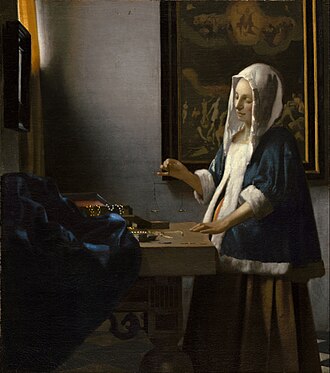 Frau mit Waage - Johannes Vermeer (1665)
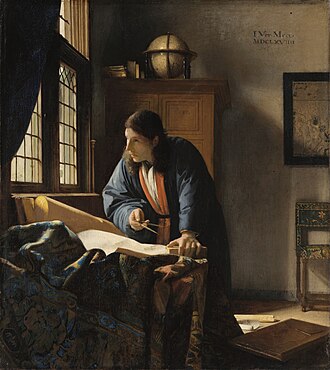 Der Geograph - Johannes Vermeer (1668)
Werke verwandter Künstler
 Die Nachtwache - Rembrandt van Rijn (1642)
 Selbstbildnis - Rembrandt van Rijn (1659)
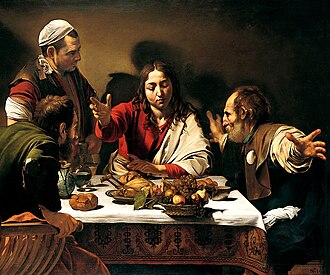 Das Abendmahl in Emmaus - Caravaggio (1601)
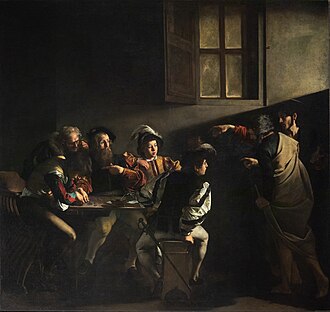 Die Berufung des Hl. Matthäus - Caravaggio (1609)
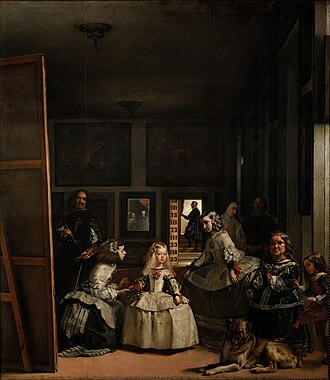 Las Meninas - Diego Velázquez (1656)
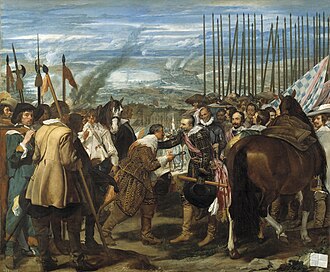 Die Übergabe von Breda - Diego Velázquez (1635)