Der Astronom
Johannes Vermeer · 1664
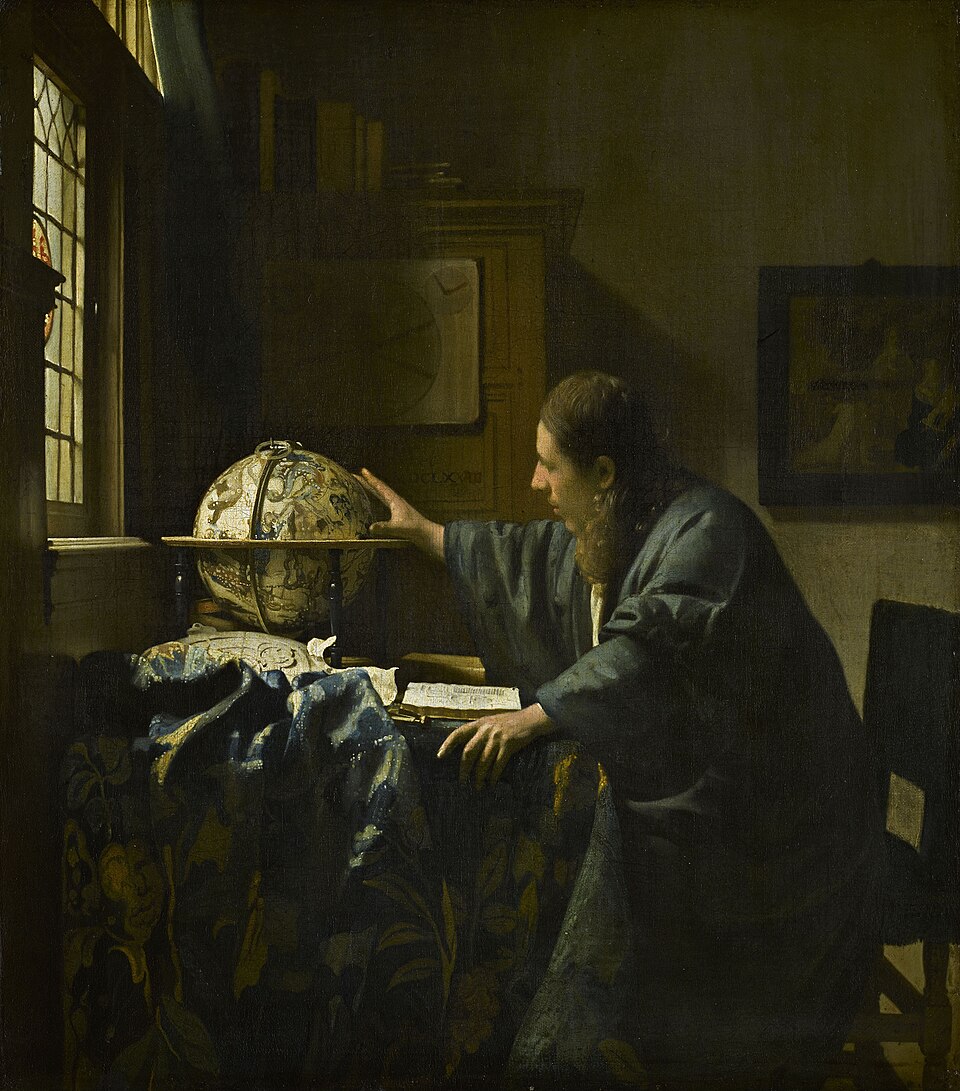
A scholar leans toward a globe of the heavens, one hand reaching out as if to turn the sky itself. Vermeer gives him no telescope, only a window, a book and his own thoughts.
The story behind the painting
The Astronomer is a small oil on canvas by Johannes Vermeer, the Delft master of the Dutch Golden Age. Wikipedia dates its completion to 1668, while Wikidata records 1664; it measures roughly half a metre on each side. Portraits of men of learning were a favourite subject in seventeenth-century Dutch painting, and Vermeer painted this astronomer together with the slightly later The Geographer. The two are believed to show the same man, possibly the Delft scientist Antonie van Leeuwenhoek, though that identification remains a suggestion rather than a certainty. A 2017 study found that the canvases for both pictures were cut from the same bolt of cloth, confirming how closely they belong together. Both show the same room and furniture, only slightly rearranged, as if Vermeer had simply walked around a familiar study.
What to look for
Begin with the light. It falls from the window at the left, across the scholar's face and his outstretched hand, and settles on the celestial globe, identified as a version by Jodocus Hondius. On the table, beside a heavy patterned carpet, lies an open book: the 1621 edition of Adriaan Metius's Institutiones Astronomicae Geographicae. Look up at the wall and you will find a painting within the painting, showing the Finding of Moses. Notice the careful geometry of the room, the way table, globe and figure lock together. It has been proposed that Vermeer used a camera obscura as an aid in reconstructing such geometry, one of the reasons his interiors feel so quietly exact. Then notice what is missing: there is no telescope anywhere in the scene.
Meaning and intent
Every object here speaks of the astronomer's profession, but Vermeer layers in something more. The book is open to Book III, a section that advises the astronomer to seek inspiration from God, suggesting that study of the heavens and faith need not be opposed. The Finding of Moses on the wall may point the same way: Moses was described as learned in all the wisdom of the Egyptians, and so can stand for knowledge and science. The absent telescope is striking, because Adriaan Metius credited his own brother Jacob with inventing it. Art historian Julian Jason Haladyn has suggested that this absence conveys interiority. Rather than peering outward through a lens, the scholar reaches for the sky with his hand and his mind.
Legacy
The painting's journey is dramatic. It can be traced to a Rotterdam sale in 1713, where it was sold with The Geographer; at a 1720 Amsterdam sale it was praised as top-notch, and until 1800 the two pictures always travelled together as pendants. In the 1880s it passed to the banker Alphonse James de Rothschild and then to his son Édouard. In 1940 it was seized from the Rothschild home by the Nazi Einsatzstab Reichsleiter Rosenberg, stamped with a small swastika on the back and sent to Germany, where Hitler coveted it for a museum he planned in his hometown. Today The Astronomer hangs in the Louvre in Paris, a quiet study of thought that survived one of history's loudest catastrophes.
Schon gewusst?
- Vermeer's The Astronomer and The Geographer were painted on canvas from the same bolt of cloth, according to a 2017 study.
- The book on the table has been identified as the 1621 edition of Adriaan Metius's Institutiones Astronomicae Geographicae.
- In 1940 the painting was seized by the Nazis and a small swastika was stamped on its back.
- In a 1720 sale catalogue it was described as an 'Astrologist' by Vermeer of Delft, 'extra puyk', meaning top-notch.
Über den Künstler
Johannes Vermeer (1632-1675)
Genreszene · Mann · Gemäldeabteilung des Louvre
Mehr von Johannes Vermeer
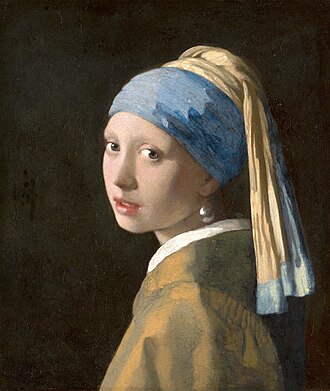 Das Mädchen mit dem Perlenohrgehänge - Johannes Vermeer (1665)
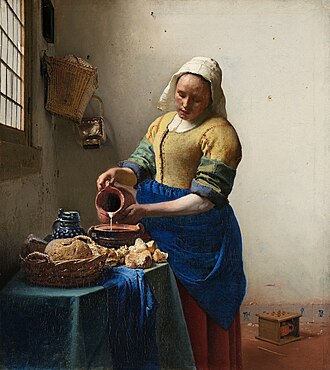 Dienstmagd mit Milchkrug - Johannes Vermeer (c. 1658)
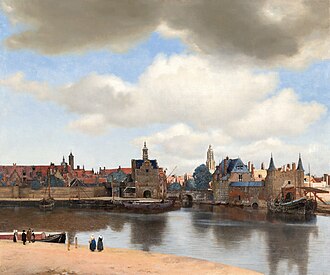 Ansicht von Delft - Johannes Vermeer (1660s)
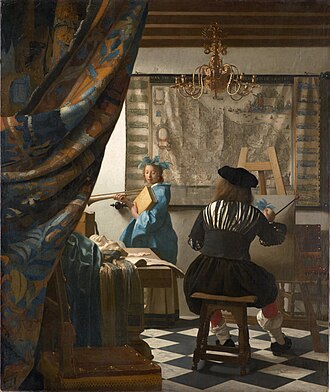 Die Malkunst - Johannes Vermeer (1660s)
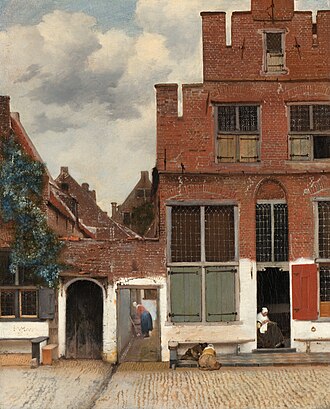 Straße in Delft - Johannes Vermeer (1658)
.jpg) Brieflesendes Mädchen am offenen Fenster - Johannes Vermeer (1650s)
Brieflesendes Mädchen am offenen Fenster - Johannes Vermeer (1650s)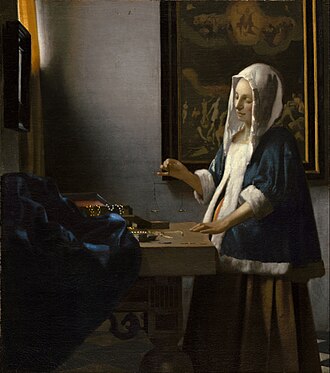 Frau mit Waage - Johannes Vermeer (1665)
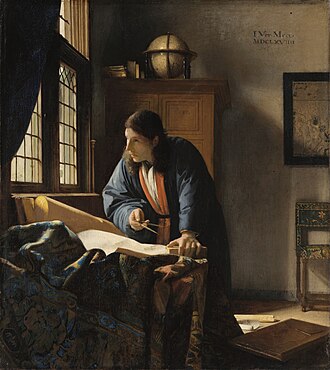 Der Geograph - Johannes Vermeer (1668)
Werke verwandter Künstler
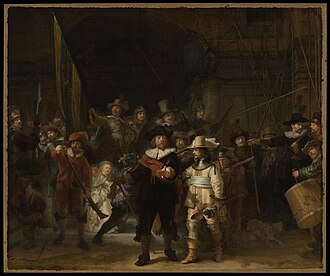 Die Nachtwache - Rembrandt van Rijn (1642)
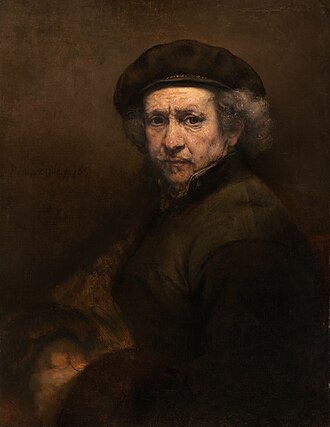 Selbstbildnis - Rembrandt van Rijn (1659)
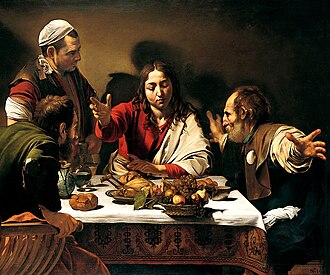 Das Abendmahl in Emmaus - Caravaggio (1601)
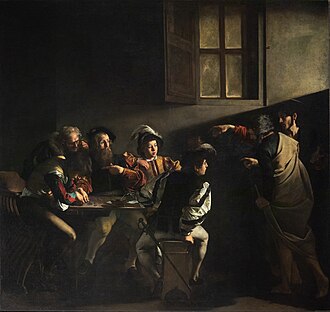 Die Berufung des Hl. Matthäus - Caravaggio (1609)
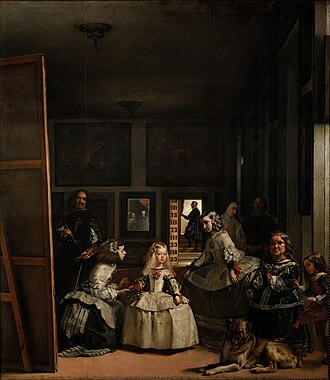 Las Meninas - Diego Velázquez (1656)
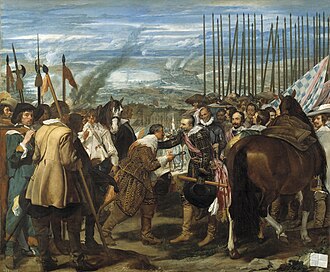 Die Übergabe von Breda - Diego Velázquez (1635)