The Letter
Francisco Goya · 1814
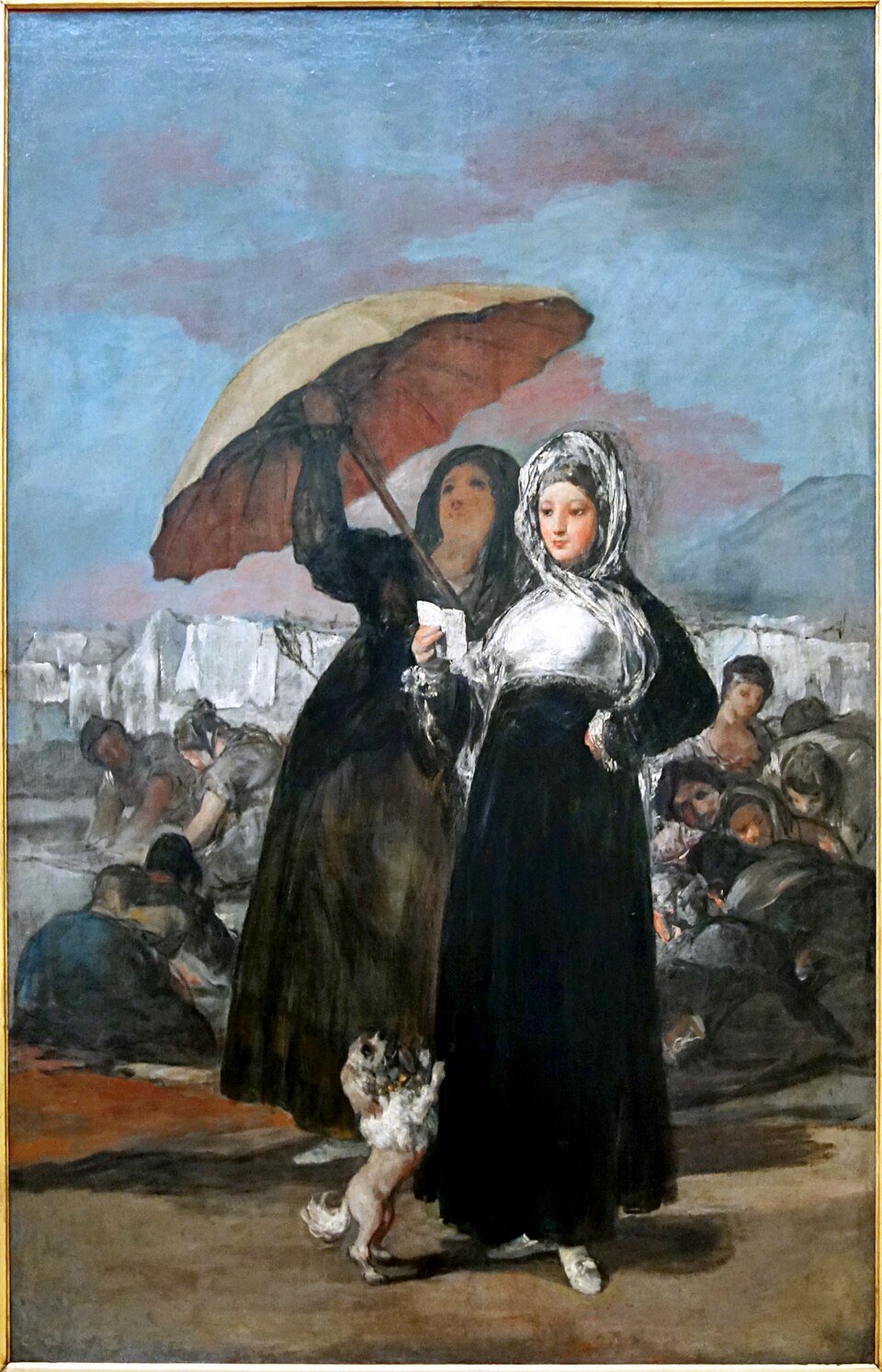
A fashionable young woman reads a love letter in the shade of a parasol held by her maid, while behind them washerwomen kneel in the full sun. Goya painted this quiet satire around 1814, just after the war that had torn Spain apart.
The story behind the painting
The painting is known as The Letter, and in French as Les Jeunes, The Young Ones, or Young Woman Reading a Letter. Wikidata dates it to 1814. Goya painted it as Spain emerged from its War of Independence, when he had returned to serve the king despite his political position as an afrancesado, a supporter of Enlightenment ideas, under a restored absolute Bourbon monarchy. By then his style had clearly turned towards criticism of social life, satire and sympathy for the Enlightenment. The canvas was sold together with The Old Women, painted a few years earlier, though the two are not a pair. Both now belong to the Palais des Beaux-Arts in Lille.
What to look for
The scene takes place on a patch of waste ground near water. In the foreground an aristocratic woman dressed in the manner of the majas idly reads a letter beneath a parasol held up by a servant behind her. A small dog at her feet tries to distract her. Further back, washerwomen work in the full sun, kneeling at the water. In the distance is a town. Notice the layers of the picture, each one a different social rank, and the colours: far from the bright tones of Goya's tapestry cartoons, they belong to the darker palette he had adopted since the 1790s. The canvas is large, about 181 by 122 cm.
Meaning and intent
Goya insists on inequality. The young woman, concerned only with her love affairs, is shaded by her servant, while the washerwomen kneel exposed to the sun. For the Lille museum the little dog is an attribute of lust, and washerwomen were also associated with prostitution and formed the lowest social class of the city; Goya had treated prostitution shortly before in Maja and Celestina on a Balcony and Majas on a Balcony. The work is described as a satire on the hypocrisy of youth and a social critique. Drawings of his Album E, such as Useful Work, where washerwomen appear, show the same interest in customs and social reform.
Legacy
The picture marks a stage in Goya's evolution: he had already produced The Disasters of War, and the first Black Paintings came four years later. Its life continued far from Spain. On 30 September 1968 Burundi issued a stamp reproducing it for International Stamp Day. In 2001 the Peruvian painter Herman Braun-Vega borrowed its main figures for his painting The Letter at Máncora (Goya), placing them on a Peruvian beach where the conquistadors had landed, alongside three Peruvians, one with his motorcycle taxi. The meeting of two cultures in that picture shows how Goya's young reader still speaks across centuries.
Schon gewusst?
- Dated 1814 by Wikidata, painted after the Spanish War of Independence.
- Also known as Les Jeunes, a satire on the hypocrisy of youth.
- Sold together with The Old Women, though not its pendant.
- In the Palais des Beaux-Arts, Lille.
Über den Künstler
Francisco Goya (1746-1828)
Frau · Genreszene · Romantik · Haushund · Brief · Dienstbote · Palais des Beaux-Arts de Lille
Mehr von Francisco Goya
 Die Erschießung der Aufständischen - Francisco Goya (1814)
.jpg) Die nackte Maja - Francisco Goya (1800)
Die nackte Maja - Francisco Goya (1800).jpg) Saturn verschlingt seinen Sohn - Francisco Goya (1819)
Saturn verschlingt seinen Sohn - Francisco Goya (1819) Die Familie Karls IV. - Francisco Goya (1800)
 Die Bekleidete Maja - Francisco Goya (1800)
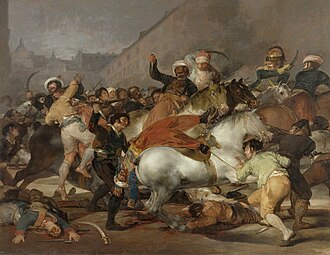 Kampf mit den Mamelucken am 2. Mai 1808 in Madrid - Francisco Goya (1814)
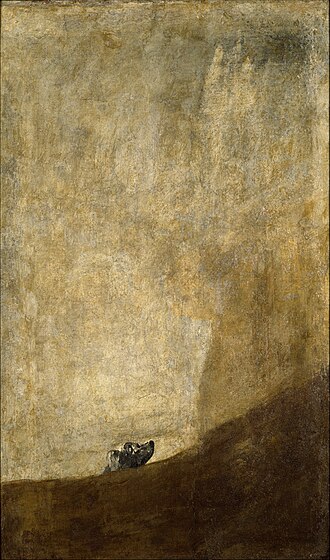 Hund - Francisco Goya (1819)
 Hexensabbat - Francisco Goya (1820s)
Werke verwandter Künstler
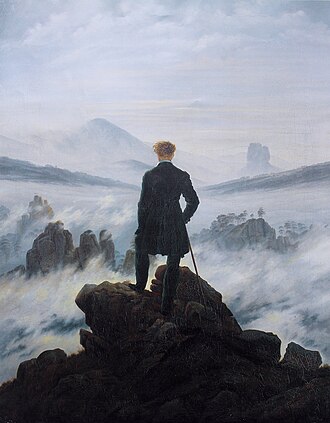 Der Wanderer über dem Nebelmeer - Caspar David Friedrich (c. 1818)
 Abtei im Eichwald - Caspar David Friedrich (1800s)
 Die letzte Fahrt der Temeraire - J. M. W. Turner (1839)
 Rain, Steam and Speed - The Great Western Railway - J. M. W. Turner (1844)