Tribunal der Inquisition
Francisco Goya · 1812
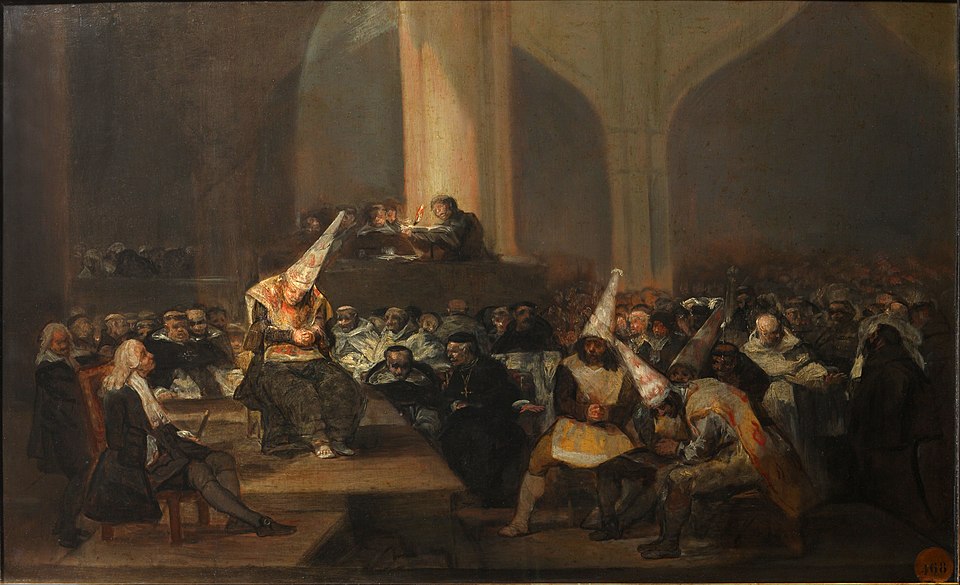
Four accused people sit under tall pointed hats while a church full of onlookers fades into darkness behind them. Goya, who was twice summoned by the Inquisition himself, painted this scene of public shame on a small wooden panel.
The story behind the painting
Goya painted The Inquisition Tribunal in oil on panel sometime between 1812 and 1819; Wikidata gives 1812. It belongs to a group of works that includes Bullfight, The Madhouse and A Procession of Flagellants, all showing customs that liberals like Goya wanted abandoned but whose reform was blocked by the absolutist policy of Ferdinand VII. By then Goya had long left behind the sunny rococo pictures of his youth. A grave illness in 1792 had left him permanently deaf, and afterwards he turned to strong images of human cruelty. The panel was owned by Manuel Garcia de la Prada and is now in the Real Academia de Bellas Artes de San Fernando in Madrid.
What to look for
The panel is small, 46 by 73 cm. The scene takes place inside a church during an auto-da-fe, an act of faith held by a tribunal of the Spanish Inquisition. The officials are mostly monks, with a single secular judge. The four accused wear the coroza, a tall pointed hat, and the sanbenito, a garment describing their offences. Clerics and inquisitors form a ring around them, and further back a sea of invited guests fills the church to watch. Look at the contrast of light: every figure in the foreground is lit, individual and clearly characterised, while the background is an anonymous crowd shut in by darkness and a claustrophobic Gothic architecture.
Meaning and intent
The auto-da-fe was designed to shame and break an accused heretic in public. Victims had often been tortured until they confessed, and their accusers and witnesses were kept secret until that moment. The clothes they were forced to wear announced crime and punishment: the conical hat, and for those to be burned at the stake, a sanbenito painted with flames on black. In this panel the pointed hats stand for that threat of the fire. Goya knew this world personally. He was called before the Inquisition over his print series Los Caprichos of 1799, and again in 1815, when his Naked Maja and Clothed Maja were found among the seized property of Manuel Godoy. Both times he escaped serious punishment.
Legacy
The Spanish Inquisition was founded in 1478, and its first auto-da-fe took place in Seville in 1481, when six conversos were burned. In Goya's lifetime it was winding down, but it was officially ended only in 1834. Goya returned again and again in drawings, paintings and prints to the cruelty of the Inquisition and the violent times he lived through. There is a quiet irony in his career: in 1783 he had painted the six-year-old Manuel Osorio Manrique de Zuniga, who, the source says, later became a cardinal at twenty-three and ended the Inquisition. This small, dark panel remains one of his sharpest images of that institution.
Schon gewusst?
- Oil on panel, 46 by 73 cm, dated between 1812 and 1819.
- Part of a group with Bullfight, The Madhouse and A Procession of Flagellants.
- Goya was summoned by the Inquisition in 1799 and in 1815.
- Held by the Real Academia de Bellas Artes de San Fernando, Madrid.
Über den Künstler
Francisco Goya (1746-1828)
Historienmalerei · Real Academia de Bellas Artes de San Fernando
Mehr von Francisco Goya
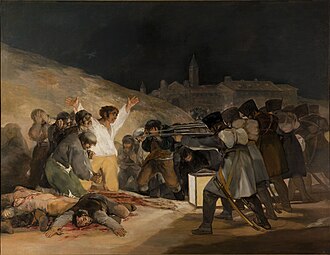 Die Erschießung der Aufständischen - Francisco Goya (1814)
.jpg) Die nackte Maja - Francisco Goya (1800)
Die nackte Maja - Francisco Goya (1800).jpg) Saturn verschlingt seinen Sohn - Francisco Goya (1819)
Saturn verschlingt seinen Sohn - Francisco Goya (1819)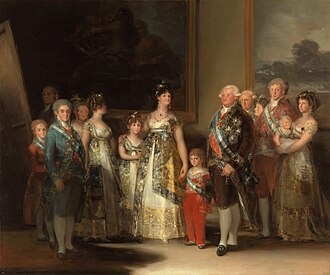 Die Familie Karls IV. - Francisco Goya (1800)
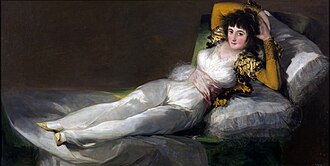 Die Bekleidete Maja - Francisco Goya (1800)
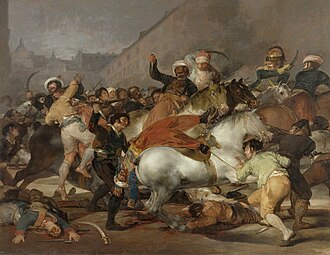 Kampf mit den Mamelucken am 2. Mai 1808 in Madrid - Francisco Goya (1814)
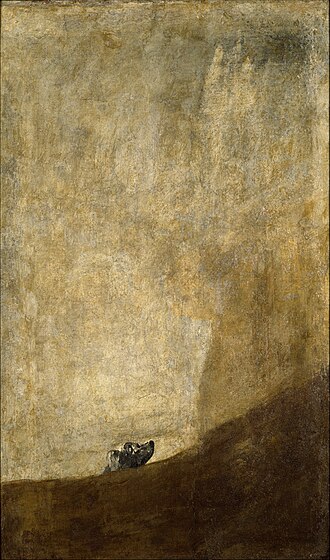 Hund - Francisco Goya (1819)
 Hexensabbat - Francisco Goya (1820s)
Werke verwandter Künstler
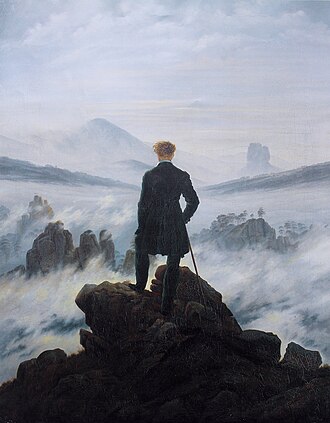 Der Wanderer über dem Nebelmeer - Caspar David Friedrich (c. 1818)
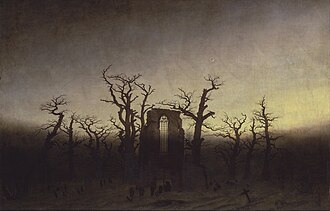 Abtei im Eichwald - Caspar David Friedrich (1800s)
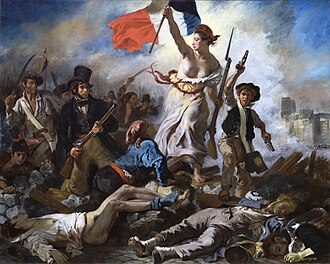 Die Freiheit führt das Volk - Eugène Delacroix (1830)
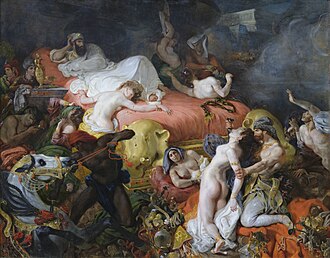 Der Tod des Sardanapal - Eugène Delacroix (1827)
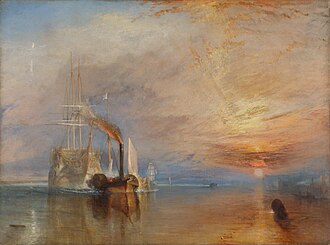 Die letzte Fahrt der Temeraire - J. M. W. Turner (1839)
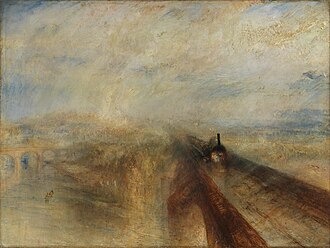 Rain, Steam and Speed - The Great Western Railway - J. M. W. Turner (1844)
.jpg) Knabe in Blau - Thomas Gainsborough (1770)
Knabe in Blau - Thomas Gainsborough (1770).jpg) Mr. und Mrs. Andrews - Thomas Gainsborough (1748)
Mr. und Mrs. Andrews - Thomas Gainsborough (1748)