Der Triumphzug des Neptun
Nicolas Poussin · 1635
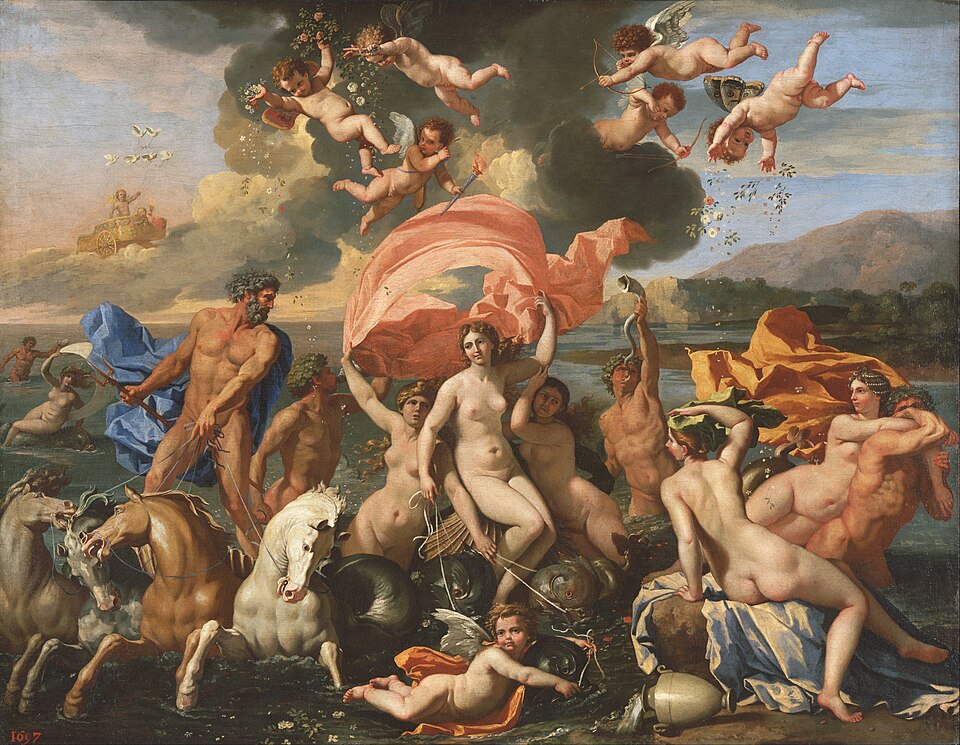
A goddess rides a shell across the sea, Neptune drives his horses beside her and putti fill the sky. But who is she? Even the title of this Poussin has been argued over for centuries.
The story behind the painting
Poussin painted the canvas in 1635 or 1636 for Cardinal Richelieu. Today it is known both as The Triumph of Neptune and Amphitrite and as The Birth of Venus. The oldest recorded title, from the biographer Giovanni Pietro Bellori who died in 1698, is il trionfo di Nettunno, the triumph of Neptune. The question became a real scholarly debate in the 1960s. Wikipedia gives the size as 114.4 by 146.6 cm, while Wikidata records 97.2 by 108 cm.
What to look for
On the left, Neptune, bearded and muscular, holds his trident and drives four horses through the waves. In the centre a woman sits on a shell boat, surrounded by figures in the sea near a beach, while putti fly overhead. Look for small details such as the chariot in the clouds on the left, a typical attribute of Venus. The putto below the central woman was copied directly from Raphael's Triumph of Galatea, which also seems to have shaped the whole composition.
Meaning and intent
The central figure could be Venus, Neptune's wife Amphitrite, or the sea nymph Galatea. Anthony Blunt concluded that Poussin was working on ideas for all these subjects at once, and that the picture bears the marks of the others, though it represents Neptune and Amphitrite. The scene also recalls Botticelli's Birth of Venus, though that painting was then in a Medici country house near Florence, far less famous and less accessible than Raphael's fresco in the Villa Farnesina near Rome.
Legacy
After Richelieu, the painting belonged to Catherine the Great of Russia and hung in the Hermitage in Saint Petersburg until the Russian government sold it in 1932. It is now in the Philadelphia Museum of Art. Its double title is part of its charm: a single sunlit sea scene that holds several myths at once, and lets each viewer decide whether they are watching a triumph of the sea god or the arrival of the goddess of love.
Schon gewusst?
- Painted in 1635 or 1636 for Cardinal Richelieu.
- Its subject is debated: Venus, Amphitrite or Galatea.
- Sold from the Hermitage by the Russian government in 1932.
- Now in the Philadelphia Museum of Art.
Über den Künstler
Nicolas Poussin (1594-1665)
mythologische Malerei · Philadelphia Museum of Art
Mehr von Nicolas Poussin
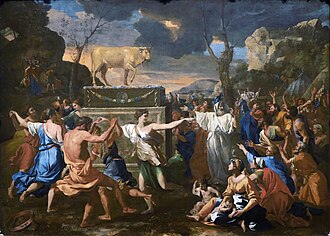 Die Anbetung des goldenen Kalbes - Nicolas Poussin (1634)
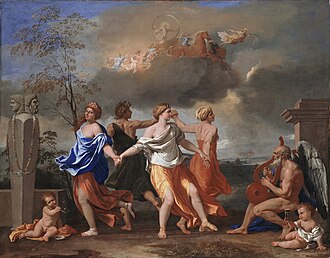 Tanz zu Musik und Zeit - Nicolas Poussin (1630s)
 Die Pest von Ashdod - Nicolas Poussin (1630)
.jpg) Urteil des Salomon - Nicolas Poussin (1649)
Urteil des Salomon - Nicolas Poussin (1649)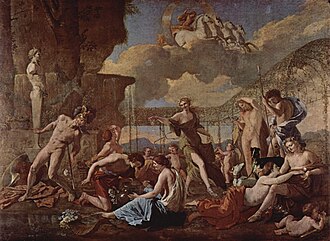 Das Reich der Flora - Nicolas Poussin (1631)
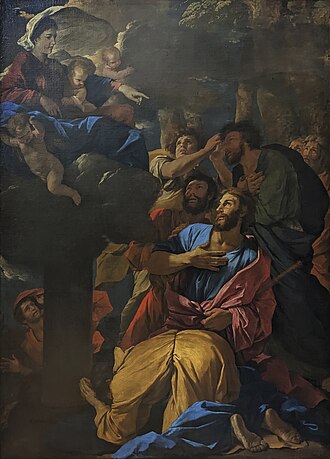 Die Jungfrau erscheint dem Hl. Jacobus - Nicolas Poussin (1620s)
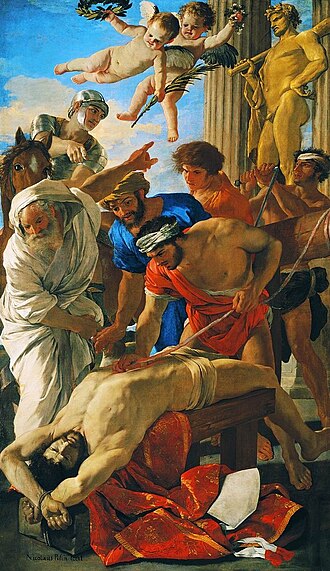 Das Martyrium des Hl. Erasmus - Nicolas Poussin (1628)
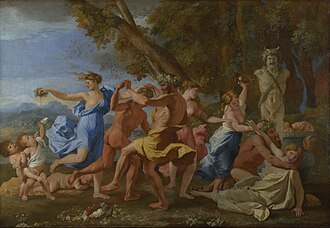 Bacchanal vor einer Pan-Büste - Nicolas Poussin (1630s)