Hirte mit Flöte
Tizian · 1510s
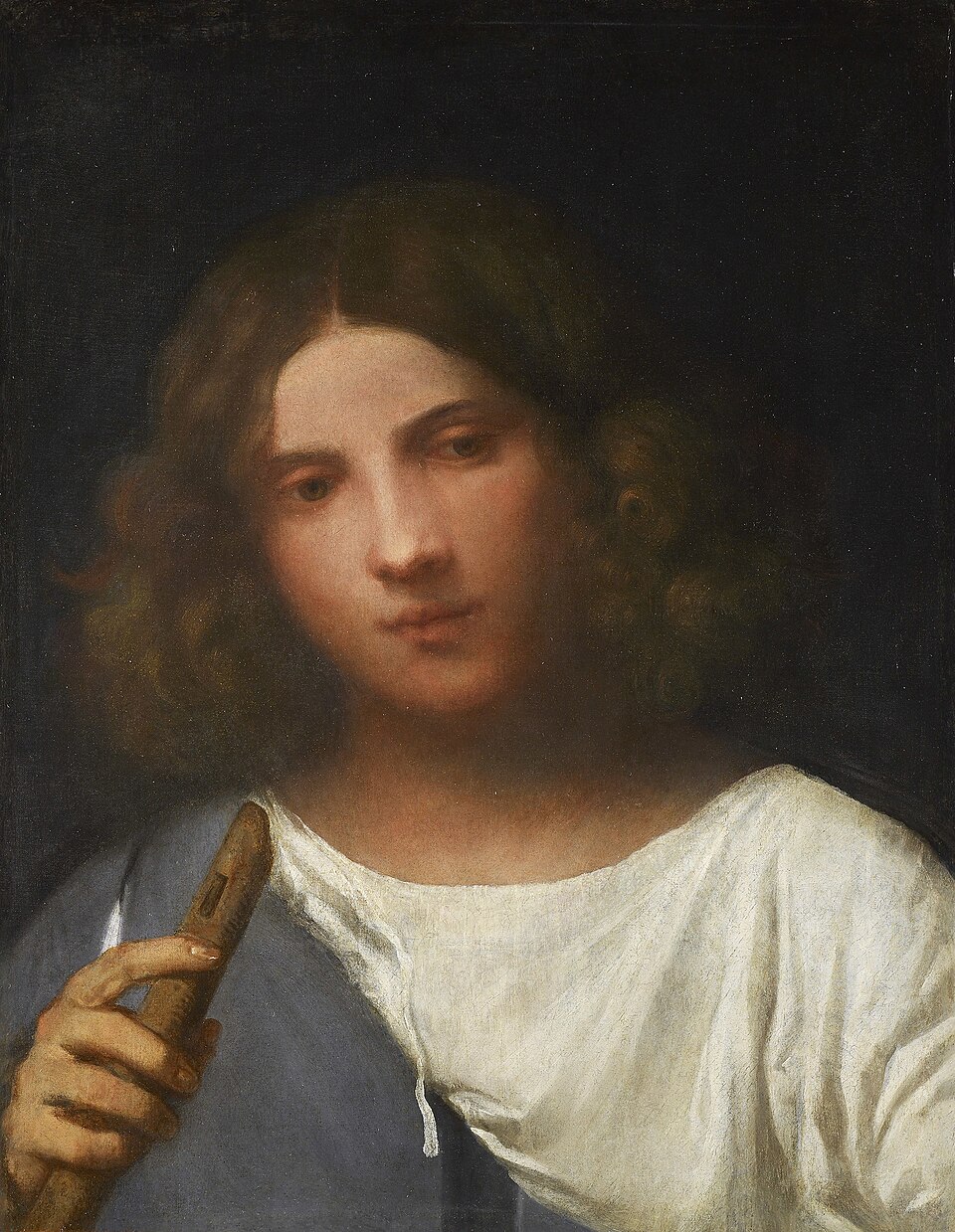
A boy in a loose white shirt holds his pipe as if he has just stopped playing, and looks away, lost in thought. Kings have owned him, poets have written about him, and scholars still argue over who painted him.
The story behind the painting
Shepherd with a Flute, also called Boy with a Pipe, is an oil on canvas of perhaps 1510 to 1515, in recent decades usually attributed to Titian, though in the past often to Giorgione. It was bought at an unknown date by Charles I of England as a work by Giorgione. After the king's execution it was sold in 1650, and in 1660, at the Restoration, it was recovered by Charles II. It hung at Whitehall Palace, then Kensington Palace, and from 1833 at Hampton Court Palace, already open to the public. Today it is in the Royal Collection, in the King's Closet at Windsor Castle.
What to look for
A boy or young man looks out of the picture space, apparently lost in thought, holding a woodwind instrument as though he has just played it. His loose white shirt was not always so: X-rays reveal that he originally wore a more formal white shirt with continuous gathers under a slate-blue doublet. The canvas measures about 62 by 49 cm, according to Wikidata. The composition and mood are very close to the Boy with an Arrow in Vienna, a rare painting still universally given to Giorgione. The head also relates to another Giorgionesque bust in Vienna, David with the Head of Goliath; both may share a common model.
Meaning and intent
The change of costume matters for meaning. Was this ever a portrait of a real person? The source considers it more likely an idealised, general image of a type, a kind of painting that goes back to Leonardo da Vinci and was taken up by several Venetian artists in the early 16th century. A dreamy young musician, caught between playing and silence, suits that Venetian taste for mood rather than story. It may even be a copy of a lost Giorgione original; Marcantonio Michiel mentioned in 1531 a lost shepherd who holds fruit in his hand, alongside the Vienna Boy with an Arrow.
Legacy
Bernard Berenson strongly supported Giorgione, who died in 1510, which would date the work around 1508; Crowe and Cavalcaselle had already doubted that in the later 19th century. John Shearman made the fullest case for Titian in his Royal Collection catalogue, followed by many including S. J. Freedberg, since the technique is close to undoubted early Titians. Francesco Torbido and Morto da Feltre have also been suggested. In 1892 the painting inspired a poem by Michael Field, the pen name of Katharine Harris Bradley and her niece Edith Emma Cooper, in Sight and Song, a book of poems on individual paintings.
Schon gewusst?
- Painted perhaps 1510 to 1515; now usually given to Titian.
- Once owned by Charles I, recovered by Charles II in 1660.
- X-rays show the boy first wore a slate-blue doublet.
- Inspired a poem by Michael Field in 1892.
Über den Künstler
Tizian (1488-1576)
Porträt · Hochrenaissance · Venezianische Schule · Royal Collection · junger Mann · Schäfer
Mehr von Tizian
.jpg) Venus von Urbino - Titian (1538)
Venus von Urbino - Titian (1538)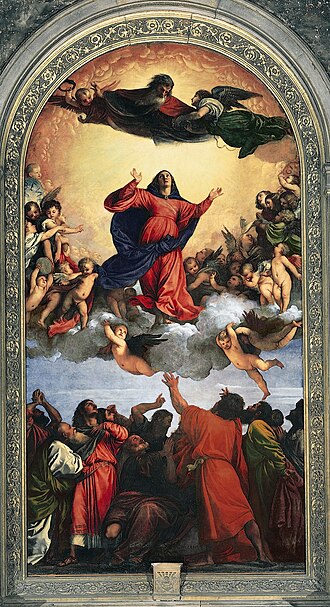 Mariä Himmelfahrt - Titian (1510s)
FXD.jpg) Himmlische und Irdische Liebe - Titian (1510s)
Himmlische und Irdische Liebe - Titian (1510s)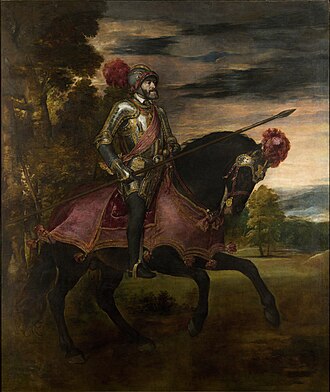 Kaiser Karl V. nach der Schlacht bei Mühlberg - Titian (1548)
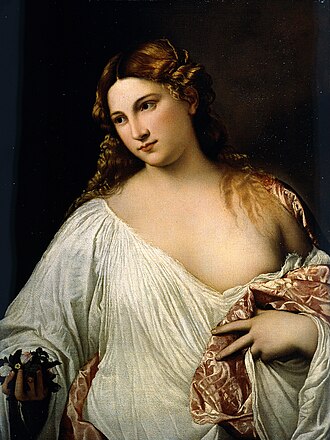 Flora - Titian (1517)
 Allegorie der von der Klugheit beherrschten Zeit - Titian (1550)
 Bacchus und Ariadne - Titian (1520s)
%20nave%20left%20-%20Altar%20of%20Madona%20di%20Ca'Pesaro.jpg) Pesaro Madonna - Titian
Pesaro Madonna - Titian