Self-Portrait as Saint Catherine of Alexandria
Artemisia Gentileschi · 1616
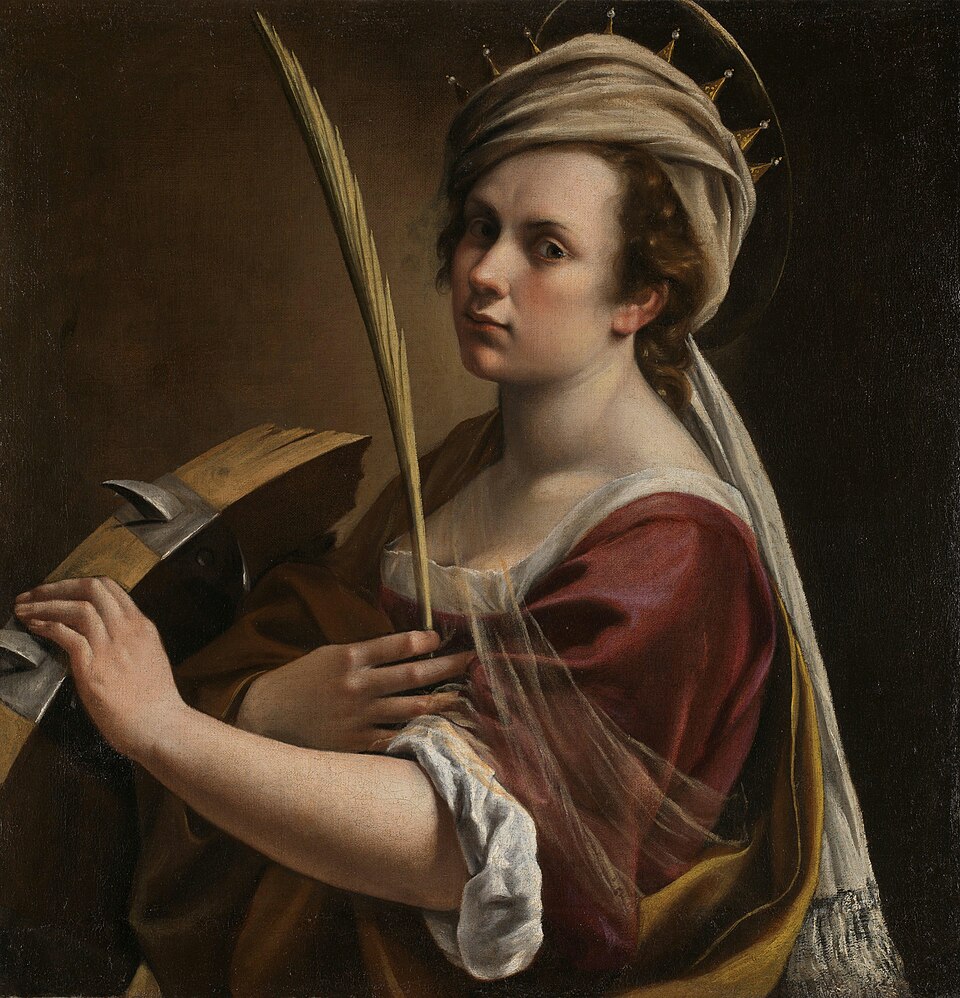
Artemisia Gentileschi painted her own face onto a martyred saint, a broken spiked wheel at her side. For centuries nobody knew where the picture was, until it surfaced in a French family collection and found a home at the National Gallery in London.
The story behind the painting
Artemisia Gentileschi painted this picture during her years in Florence. Wikipedia dates it to 1615 to 1617, while Wikidata gives 1616. It is one of several paintings of female martyrs she made after her famous rape trial of 1612, a trial in which she, unlike the man she accused, was tortured to test whether her testimony was true. The work is close to her Saint Catherine of Alexandria of around 1619, now in the Uffizi Gallery in Florence.
What to look for
The woman is shown in three-quarter view beside a broken spiked wheel, the instrument of torture that tradition says was used on Saint Catherine before she was beheaded. In her other hand she holds a palm frond, another traditional sign of martyrdom. A crown sits under her headscarf to suggest royal status, but the crown and the halo are believed to have been added later. The canvas is close to square, about 71 by 69 cm, so the figure fills the space at close range.
Meaning and intent
Current research on the works Artemisia made at the same time suggests that this picture began as a plain self-portrait and was only later changed into the saint. That makes it a double image: a young painter looking out as herself, and a woman who survived violence taking the form of a saint who kept her faith under torture. The sources do not say who first owned it or why the change was made, and that silence is part of its mystery.
Legacy
Nothing is recorded of the painting until the early 1940s, when Charles Marie Boudeville left it to his son. It stayed in the Boudeville collection until it was sold at Hôtel Drouot in Paris in December 2017, and dealers Robilant+Voena then acquired it. In July 2018 the National Gallery in London announced its purchase. It was the first painting by a woman artist the Gallery had acquired since 1991, and the museum restored it after the acquisition.
Schon gewusst?
- Painted in Florence, dated 1615-1617 by Wikipedia and 1616 by Wikidata.
- The crown and halo are believed to be later additions.
- Unrecorded until the early 1940s.
- Acquired by the National Gallery, London, in 2018.
Über den Künstler
Artemisia Gentileschi (1593-1653)
religiöse Kunst · National Gallery · Selbstbildnis · Katharina von Alexandrien · Artemisia Gentileschi
Mehr von Artemisia Gentileschi
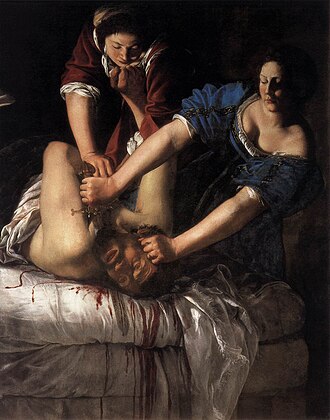 Judith enthauptet Holofernes - Artemisia Gentileschi (1613)
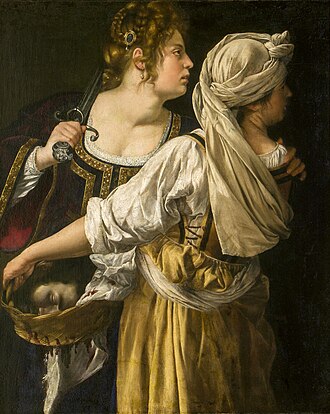 Judith mit ihrer Magd - Artemisia Gentileschi (1618)
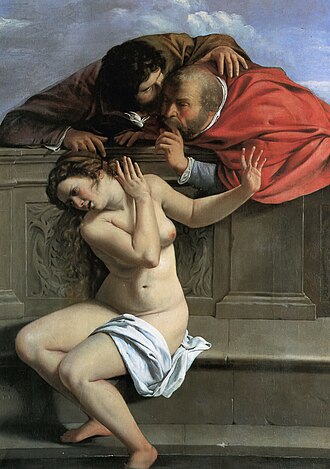 Susanna und die Ältesten - Artemisia Gentileschi (1610)
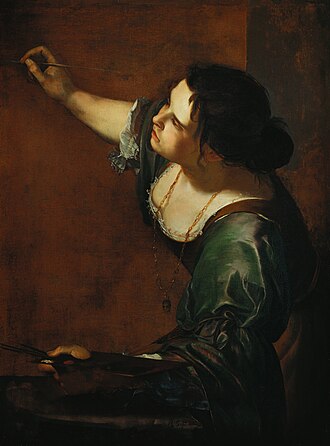 Selbstporträt als Allegorie der Malerei - Artemisia Gentileschi (1638)
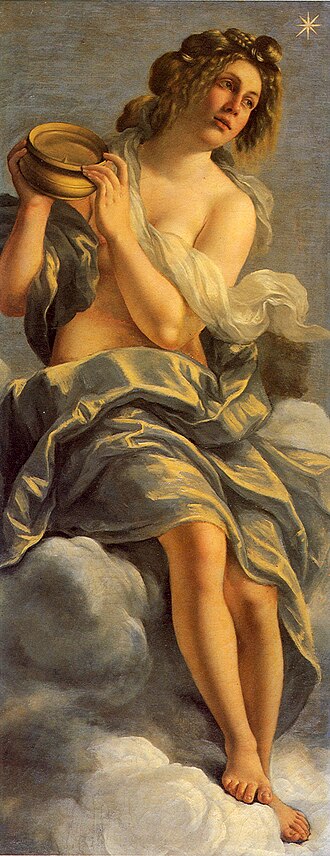 Das natürliche Talent - Artemisia Gentileschi (1615)
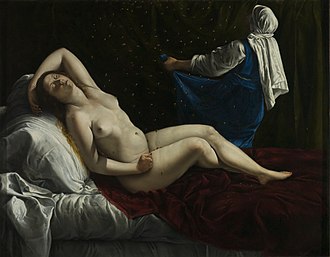 Danaë - Artemisia Gentileschi (1612)
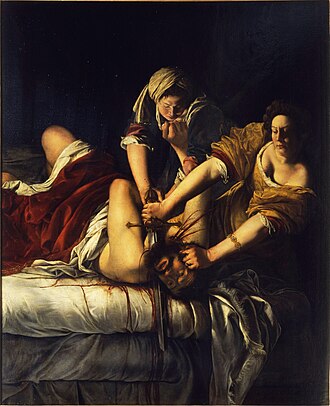 Judith enthauptet Holofernes - Artemisia Gentileschi (1620)
 Esther vor Ashaver - Artemisia Gentileschi (1620s)
Werke verwandter Künstler
 Das Abendmahl in Emmaus - Caravaggio (1601)
 Die Berufung des Hl. Matthäus - Caravaggio (1609)
 Las Meninas - Diego Velázquez (1656)
 Die Übergabe von Breda - Diego Velázquez (1635)
 Saint Francis in Meditation - Francisco de Zurbarán (1639)
 The Immaculate Conception - Francisco de Zurbarán (1661)
 Dreifachporträt von Karl I. - Anthony van Dyck (1635)
 Karl I mit M. de St. Antoine - Anthony van Dyck (1636)
 Die Aufrichtung des Kreuzes - Peter Paul Rubens (1609)
 Der Raub der Töchter des Leukippos - Peter Paul Rubens (1618)
 Die Nachtwache - Rembrandt van Rijn (1642)
 Selbstbildnis - Rembrandt van Rijn (1659)