Der heilige Hieronymus in seinem Studierzimmer
Albrecht Dürer · 1521
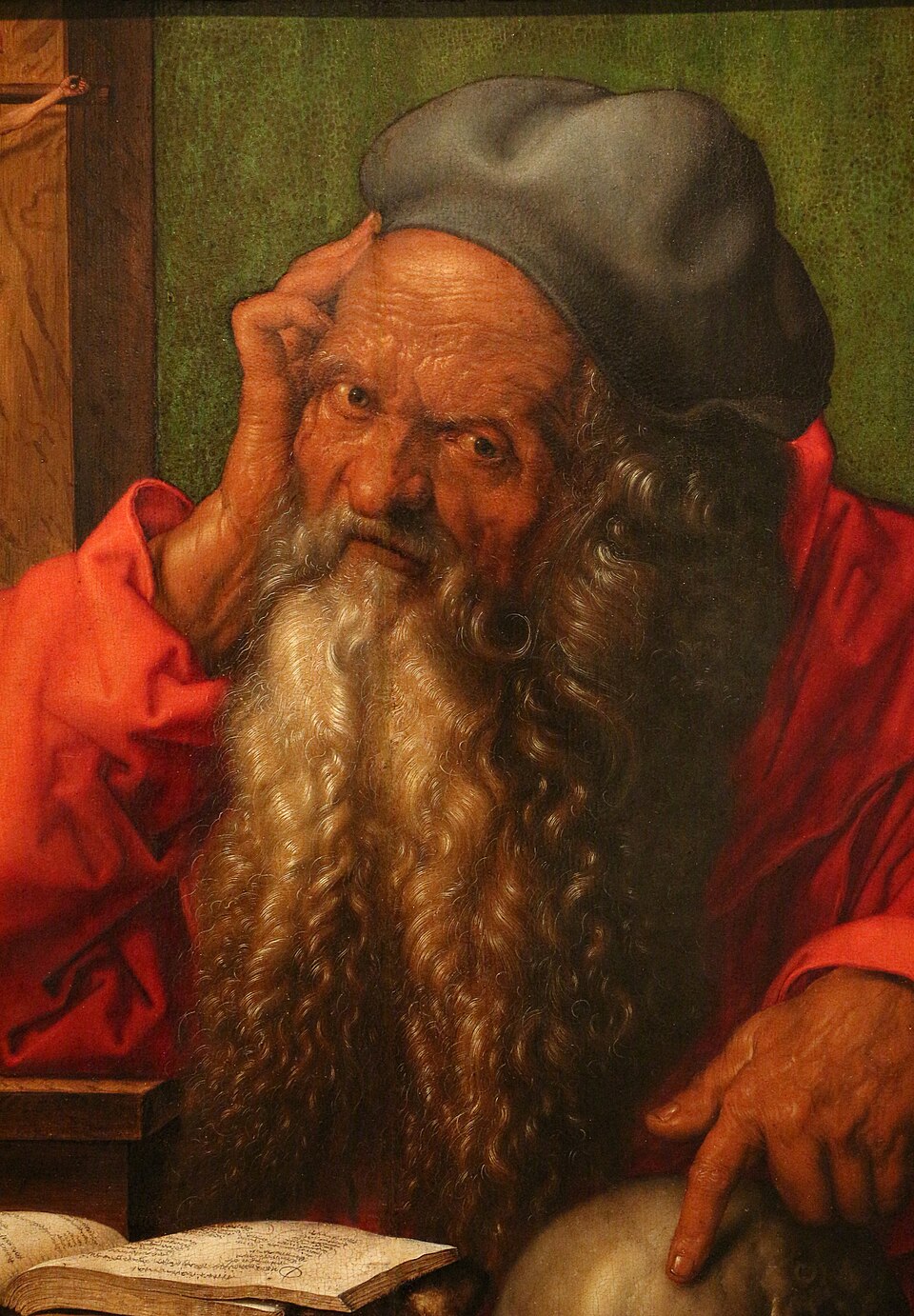
The model was a man of 93. Dürer met him in the Netherlands, drew his deeply lined face, and turned him into Saint Jerome, one finger resting on a skull.
The story behind the painting
Dürer painted this panel during his stay in the Netherlands in 1520-1521, completing it in March 1521. For the saint he used an aged local man as his model. A preparatory drawing of that man survives in the Albertina in Vienna, and on it Dürer noted his age: 93. When the painting was finished, the artist gave it as a gift to Rodrigo Fernandes de Almada, head of the Portuguese trade mission in the Netherlands. It stayed in Almada's family collection for more than three centuries, until 1880, when it was donated to the museum in Lisbon that holds it today, the Museu Nacional de Arte Antiga.
What to look for
Among Dürer's many images of Saint Jerome, this is the one that looks most like a portrait. The study itself, with its furniture and objects, nearly disappears; the old man fills the panel. Dürer paints him with great attention to detail, down to the wrinkles and the white-yellowish beard. Look at the foreground: an inkpot at the right, a bookrest at the left, and a crucifix at the upper left. Most striking of all, the saint's finger rests on a skull. The panel is about 60 by 48 centimetres, oil on wood, intimate enough that the face and the skull seem to meet our eyes at the same moment.
Meaning and intent
The finger on the skull is a memento mori, a reminder that every life ends. Dürer had treated Saint Jerome before, notably in his 1514 etching, where the saint is a small figure in the background of a richly detailed room. Here he turns that idea around. The space shrinks, and the skull takes on far greater visual weight. The result is less a scene of scholarly work than a meditation on age and mortality, told through the face of a real man in his nineties. The crucifix, the book and the ink speak of faith and learning, but the skull asks the question that holds them together.
Legacy
This Saint Jerome has a remarkable history of travel and quiet keeping. Painted in the Netherlands by a German master, it went as a gift to a Portuguese official and stayed with his family until 1880. Today it is among the treasures of Lisbon's national museum of ancient art. Its closeness to portraiture, and the survival of the drawing that records the model's age, give it an unusual human depth. When you stand before it, you are looking at a saint, but also at a particular old man whom Dürer met, studied and honoured, five hundred years ago.
Schon gewusst?
- Completed March 1521, oil on panel, 60 × 48 cm
- A preparatory drawing in the Albertina, Vienna, notes the model's age: 93
- Given by Dürer to Rodrigo Fernandes de Almada
- Donated to the Museu Nacional de Arte Antiga, Lisbon, in 1880
Über den Künstler
Albrecht Dürer (1471-1528)
religiöse Kunst · Deutsche Renaissance · Hieronymus
Mehr von Albrecht Dürer
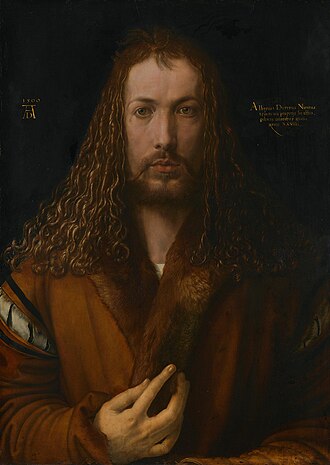 Selbstbildnis im Pelzrock - Albrecht Dürer (1500)
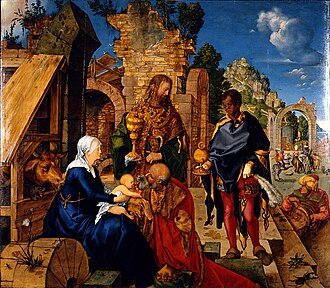 Anbetung der Könige - Albrecht Dürer (1504)
.jpg) Das Rosenkranzfest - Albrecht Dürer (1506)
Das Rosenkranzfest - Albrecht Dürer (1506)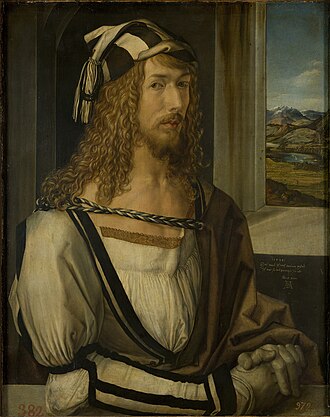 Selbstporträt im Alter von 26 Jahren - Albrecht Dürer (1498)
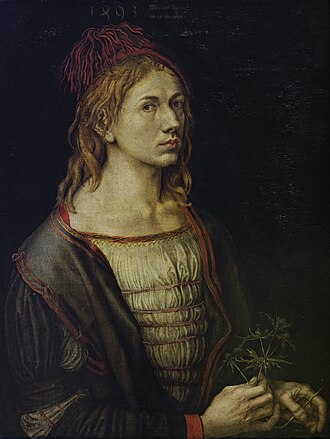 Selbstporträt mit einer Distel - Albrecht Dürer (1493)
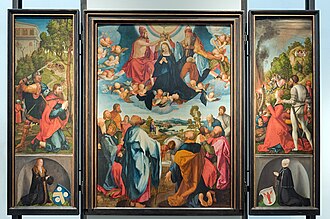 Heller-Altar - Albrecht Dürer (1500s)
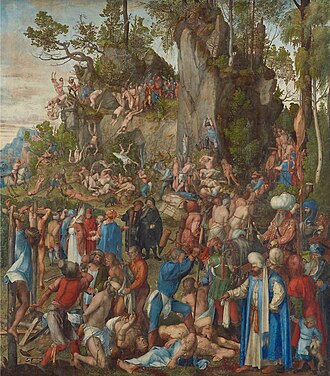 Marter der zehntausend Christen - Albrecht Dürer (1508)
%20-%20Google%20Art%20Project.jpg) Allerheiligenbild - Albrecht Dürer (1511)
Allerheiligenbild - Albrecht Dürer (1511)