Saint George and the Dragon
Gustave Moreau · 1880s
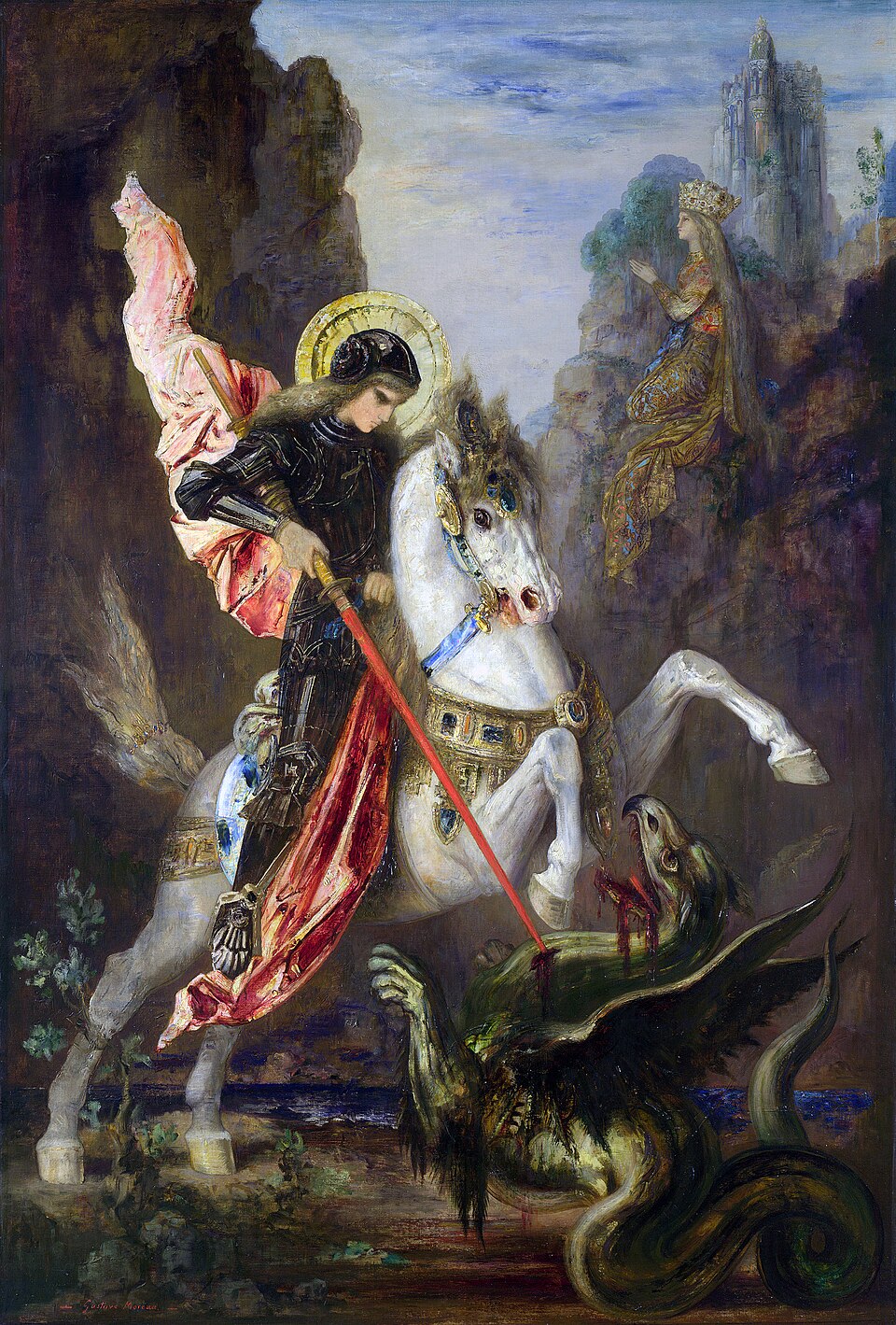
A young, long-haired Saint George drives his lance into the dragon's chest, calm as an icon. Moreau had left the canvas in a storeroom for years before finishing it for a Marseille shipowner.
The story behind the painting
The Marseille shipowner Louis Mante, who already owned major works by Moreau such as Salome Dancing before Herod, commissioned the painting in 1889. But Moreau had begun it long before, around 1870: x-rays show that its first composition was very close to a watercolour of 1869 now in a private collection in Stuttgart. So Moreau finished for Mante a picture that had sat in the storeroom near his studio for years. It was completed in 1889, though Mante, very busy, only came to see it months later. Wikidata dates the work to the 1880s.
What to look for
Saint George is young, with long hair and an androgynous body. His cloak flies out as his white horse rears and he pierces the dragon's chest with his lance. In the background the praying princess, wearing a tall, rich crown, stands on high mountains, before a fortress topped with a small spire. Moreau took from Raphael's Saint George in the Louvre the helmet, the flying cloak and the rearing horse, but added a golden halo like that of a Byzantine icon.
Meaning and intent
The hieratic pose and the icon-like halo give this George less fire than Raphael's, but more holiness, reinforced by the white horse, a symbol of spiritual purity. In killing the dragon and saving the princess he stands for the triumph of purity over the most bestial and cruel instincts. Marcel Proust wrote that this Saint George seems to endure his own valour calmly. The picture is also typically eclectic: a Moorish-looking castle, a tower inspired by the Romanesque church of Notre-Dame-la-Grande in Poitiers, and a princess's cloak with Indian and Persian motifs.
Legacy
The painting belongs to a period when the most prestigious commissions multiplied for Moreau, with collectors such as the Countess Greffulhe and the Rothschilds eager for works by an artist reluctant to part with his creations. It is now in the National Gallery in London and measures about 141 by 95 cm. With its long genesis from a watercolour of 1869 to a finished canvas twenty years later, it shows how slowly and patiently Moreau could build a dream.
Schon gewusst?
- Commissioned in 1889 by the shipowner Louis Mante.
- Begun around 1870, close to a watercolour of 1869.
- Borrows the horse and cloak from Raphael's Saint George.
- Now in the National Gallery, London.
Über den Künstler
Gustave Moreau (1826-1898)
religiöse Kunst · National Gallery · Georg
Mehr von Gustave Moreau
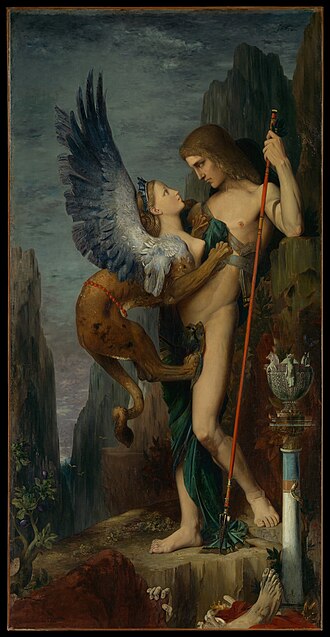 Ödipus und die Sphinx - Gustave Moreau (1864)
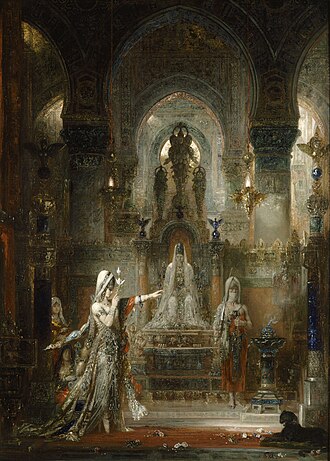 Salomé Dancing before Herod - Gustave Moreau (1876)
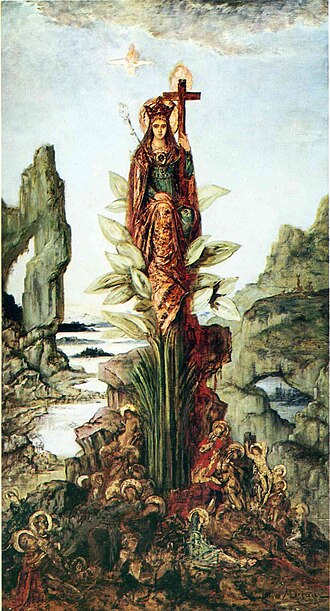 Mystic Flower - Gustave Moreau (1890)
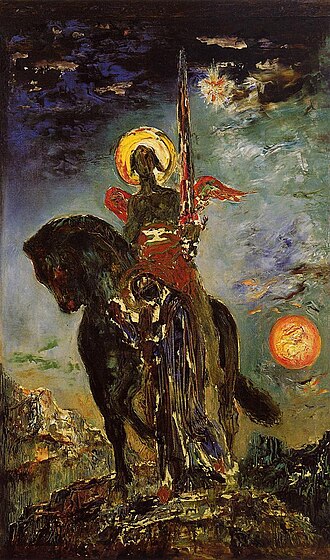 The Parca and the Angel of Death - Gustave Moreau (1890)
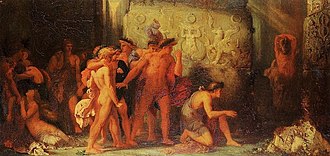 Athenians being Delivered to the Minotaur in the Cretan Labyrinth - Gustave Moreau (1855)
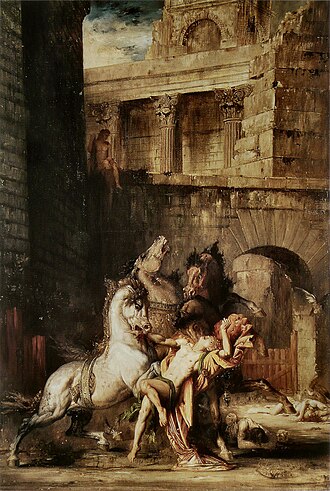 Diomede devoured by his horses - Gustave Moreau (1865)
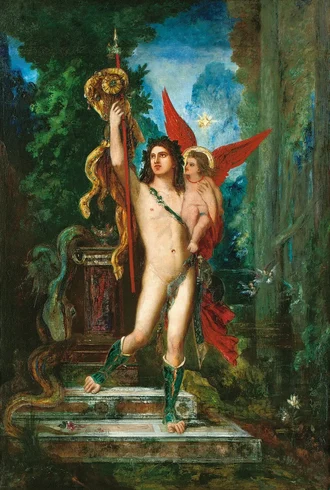 Jasón y Eros - Gustave Moreau (1891)
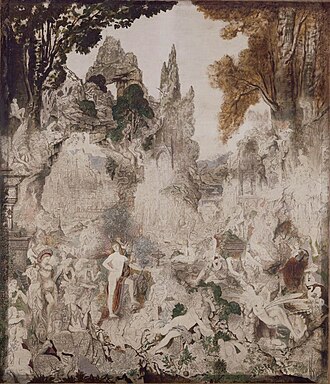 Les Chimères - Gustave Moreau (1884)
Werke verwandter Künstler
 Pollice verso - Jean-Léon Gérôme (1872)
 Der Sklavenmarkt - Jean-Léon Gérôme (1866)
 Das Frühstück im Grünen - Édouard Manet (1863)
 Olympia - Édouard Manet (1863)
 Der Ursprung der Welt - Gustave Courbet (1866)
 Ein Begräbnis in Ornans - Gustave Courbet (2020)
 Nelke, Lilie, Lilie, Rose - John Singer Sargent (1885-1886)
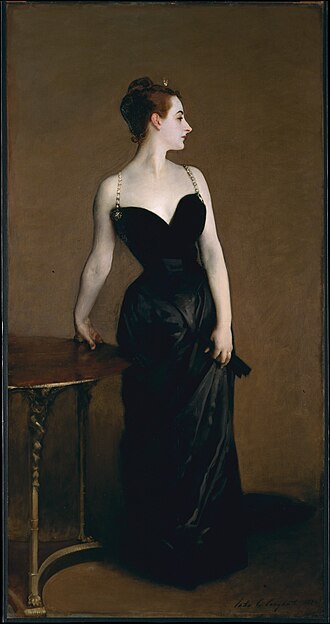 Madame X - John Singer Sargent (1884)
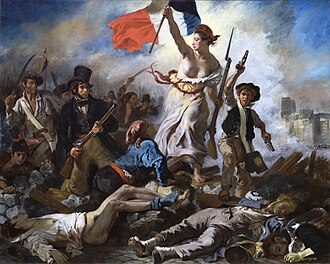 Die Freiheit führt das Volk - Eugène Delacroix (1830)
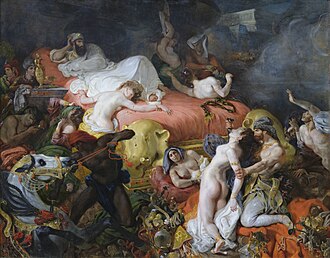 Der Tod des Sardanapal - Eugène Delacroix (1827)
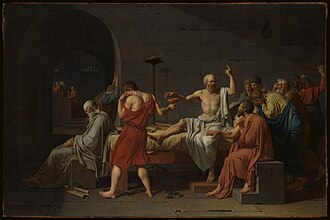 Der Tod des Sokrates - Jacques-Louis David (1787)
 Der Schwur der Horatier - Jacques-Louis David (1784)