Athenians being Delivered to the Minotaur in the Cretan Labyrinth
Gustave Moreau · 1855
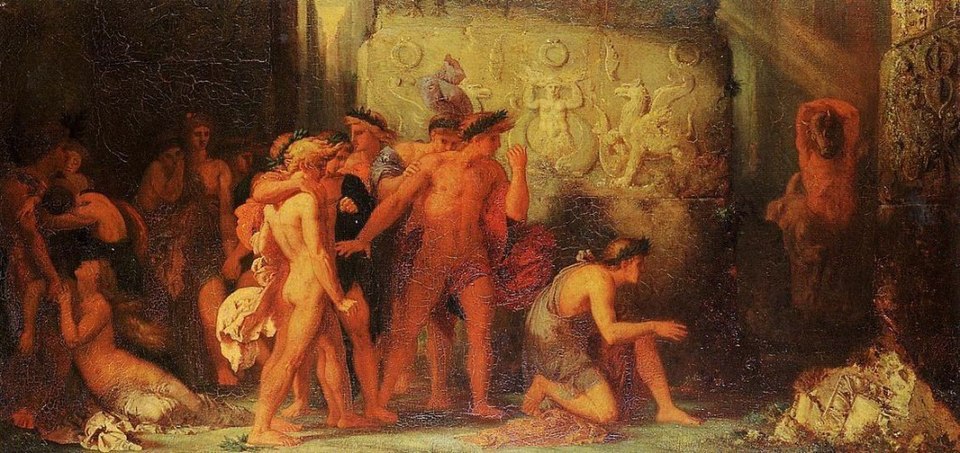
Seven frightened girls, seven young men, high carved walls, and behind them the shape of the Minotaur. The young Gustave Moreau painted the moment before the horror, then the picture was sent away and forgotten, even by him.
The story behind the painting
Moreau had given up the Prix de Rome competition in 1849 after two failures. A pupil of the neoclassical painter Picot, he was also a friend of the romantic Chassériau. He had already made two drawings of this subject in 1852 when, on 26 September 1854, a state commission arrived, signed by the minister Achille Fould, after a letter of support from a general commanding the military region of Lille. An inspector who visited his new studio on rue de La Rochefoucauld found the picture well composed and of fine colour. The jury chose it for the Exposition Universelle of 1855.
What to look for
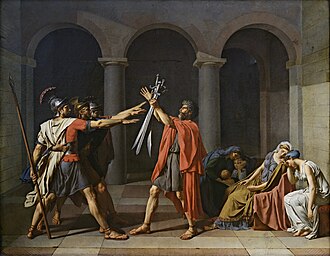
The painting, about 102.5 by 200 cm, is laid out like a frieze. On the left stand seven frightened young women; in the centre seven young men, the one furthest right crouching. Behind them rise the walls of what seems to be a labyrinth, covered with bas reliefs. On the right, beyond the walls, you can make out the Minotaur, half man, half beast. The crouching youth borrows his pose from Poussin's Shepherds of Arcadia, and the group of embracing youths echoes the three brothers of David's Oath of the Horatii.
Meaning and intent
In the myth, King Minos forced Athens to send fourteen adolescents every nine years to be devoured by the Minotaur, until Theseus killed it. Moreau chose the moment before the drama, after hesitating over a violent clash. The subject was rare, though the Prix de Rome of 1807 had asked for Theseus saving the youths. The frieze and the quotations from Poussin and David show Moreau trying to step away from romanticism toward neoclassicism. He probably drew on an 1854 article about discoveries in Crete in the Magasin Pittoresque, but Minoan art was not yet known, so his reliefs follow Hellenistic art.
Legacy
Critics showed no interest; the work won neither a mention nor a medal. It was sent to Bourg-en-Bresse and so quickly forgotten that thirty years later Moreau himself thought it was in Le Mans. Painted in haste, it deteriorated fairly fast, and it took a hundred years before it was shown with honour, at the museum's centenary exhibition in Bourg-en-Bresse. It was Moreau's last state commission before his second trip to Italy, and it records a young artist testing romanticism and neoclassicism in turn before finding his own voice.
Schon gewusst?
- State commission dated 26 September 1854.
- Shown at the Exposition Universelle of 1855.
- Poses quote Poussin and David.
- In the municipal museum of Bourg-en-Bresse.
Über den Künstler
Gustave Moreau (1826-1898)
Mehr von Gustave Moreau
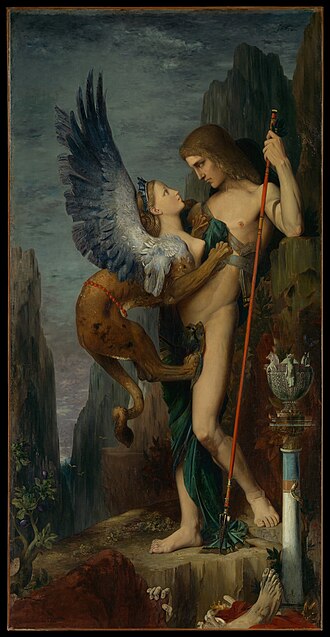 Ödipus und die Sphinx - Gustave Moreau (1864)
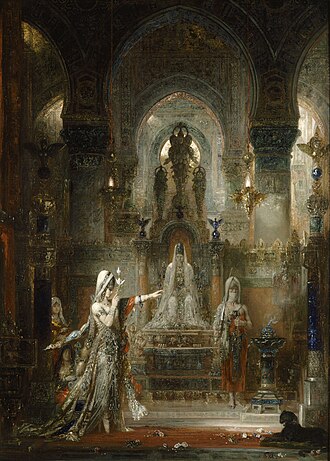 Salomé Dancing before Herod - Gustave Moreau (1876)
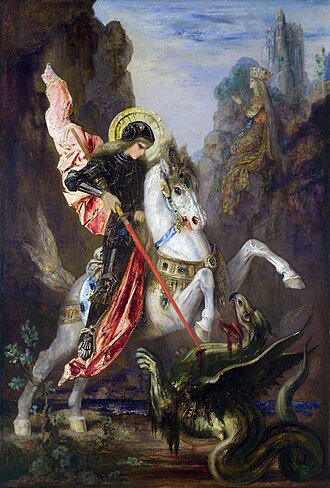 Saint George and the Dragon - Gustave Moreau (1880s)
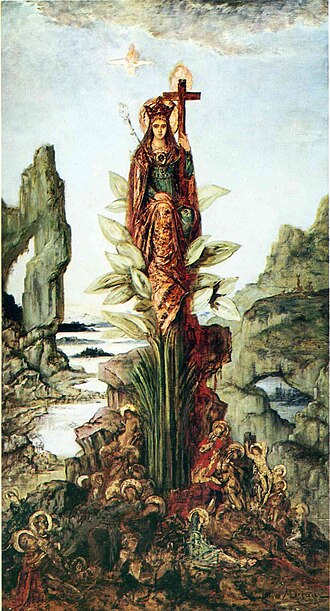 Mystic Flower - Gustave Moreau (1890)
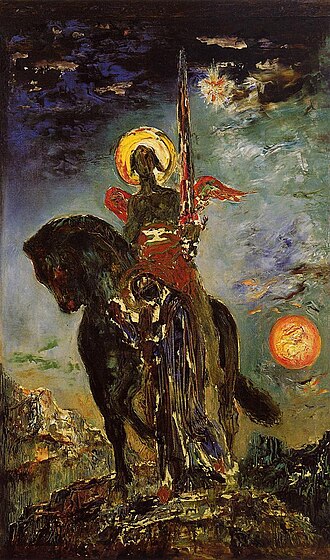 The Parca and the Angel of Death - Gustave Moreau (1890)
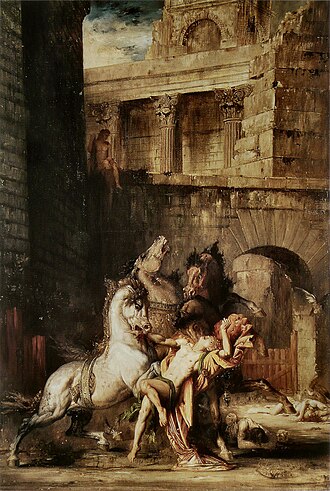 Diomede devoured by his horses - Gustave Moreau (1865)
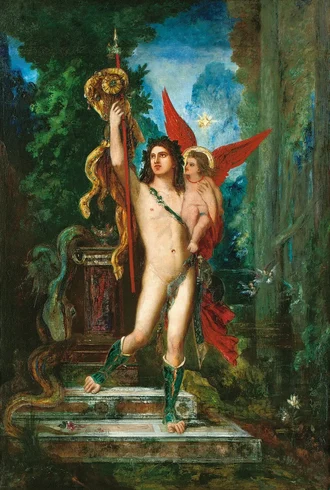 Jasón y Eros - Gustave Moreau (1891)
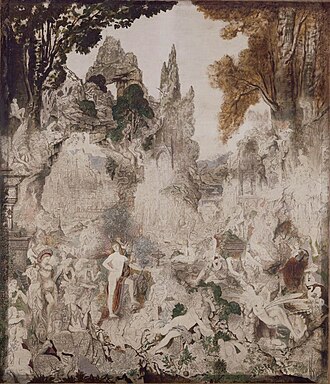 Les Chimères - Gustave Moreau (1884)
Werke verwandter Künstler
 Pollice verso - Jean-Léon Gérôme (1872)
 Der Sklavenmarkt - Jean-Léon Gérôme (1866)
 Das Frühstück im Grünen - Édouard Manet (1863)
 Olympia - Édouard Manet (1863)
 Der Ursprung der Welt - Gustave Courbet (1866)
 Ein Begräbnis in Ornans - Gustave Courbet (2020)
 Nelke, Lilie, Lilie, Rose - John Singer Sargent (1885-1886)
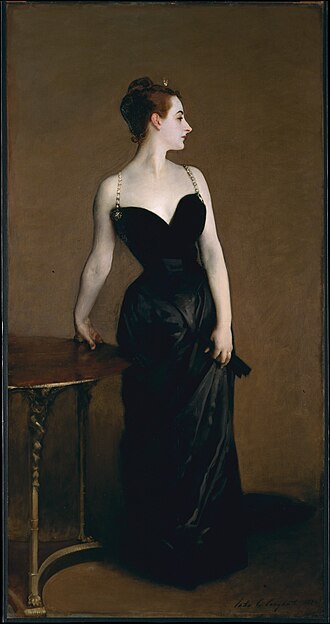 Madame X - John Singer Sargent (1884)
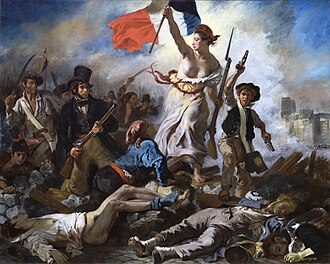 Die Freiheit führt das Volk - Eugène Delacroix (1830)
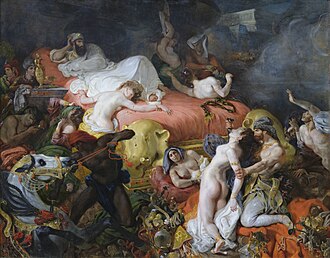 Der Tod des Sardanapal - Eugène Delacroix (1827)
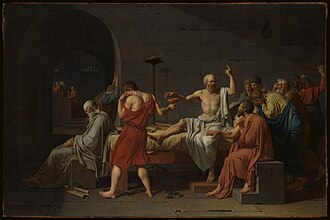 Der Tod des Sokrates - Jacques-Louis David (1787)
 Der Schwur der Horatier - Jacques-Louis David (1784)