Porträt der Maddalena Doni
Raffael · 1500s
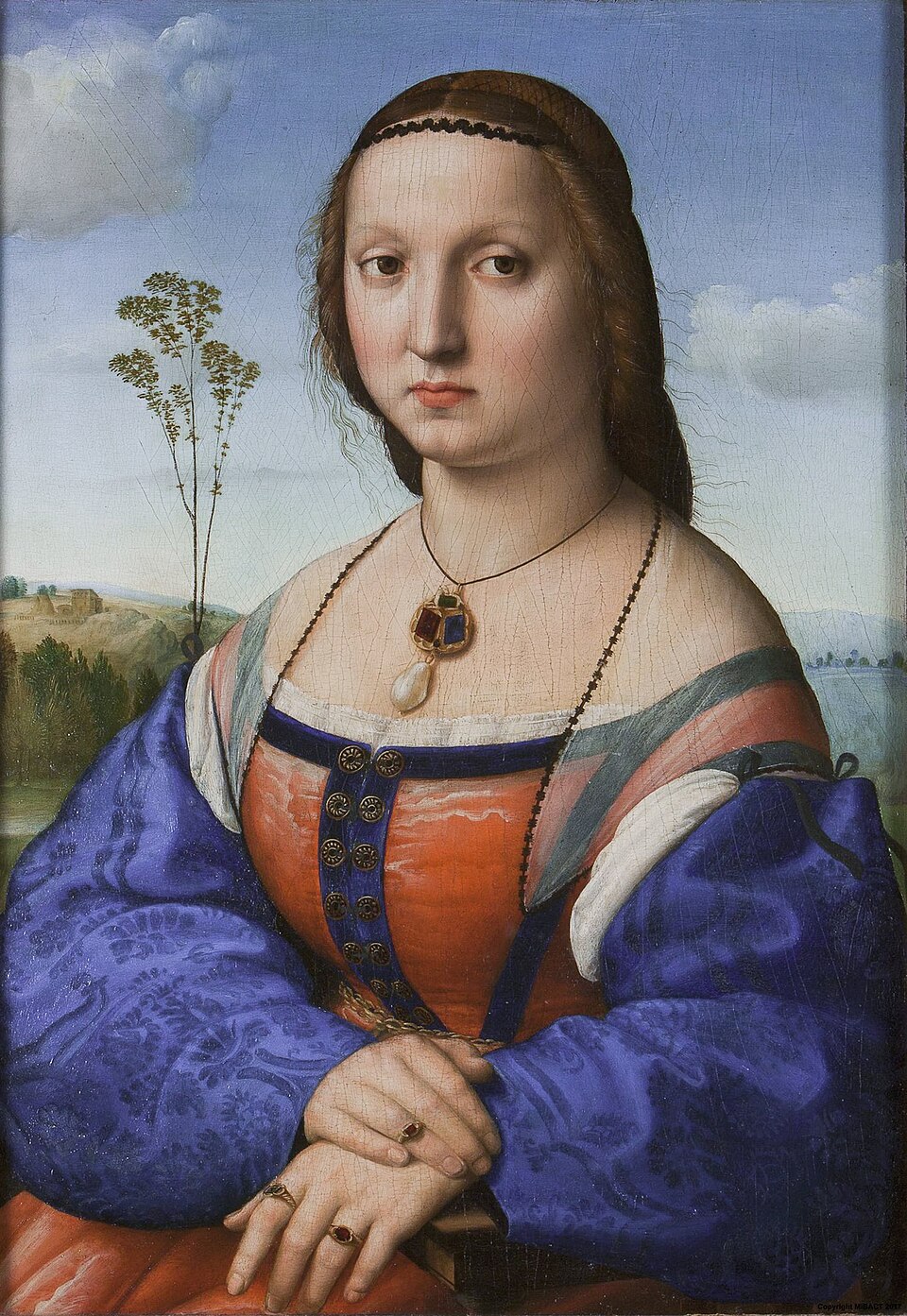
A young Florentine bride sits with her hands folded, jewels at her throat, a calm landscape behind her. Raphael painted Maddalena Doni while he was studying Leonardo most closely, and the portrait marks the start of his artistic maturity.
The story behind the painting
Maddalena Strozzi came from the noble and powerful Strozzi family, the richest in Florence from the 13th to the 15th centuries. In 1504 she married Agnolo Doni, a rich cloth merchant, the same man who commissioned the Doni Tondo from Michelangelo. Raphael painted her portrait at the same time as a portrait of Agnolo. The source dates the pair to around 1504 to 1507, and says they were most likely made in 1506, the period when Raphael studied the art of Leonardo da Vinci most closely.
What to look for
The composition recalls the Mona Lisa. Maddalena is placed in the same way in relation to the picture plane, and her hands rest one on top of the other, like those of Leonardo's sitter. Look behind her: the horizon of the landscape is set low, so an even, uniform light falls on her and defines every surface and volume of her figure. Then look at the close attention given to the materials of her clothes and to her jewels, details that draw attention to the wealth of the young couple.
Meaning and intent
Where Leonardo's backgrounds communicate the threatening presence of nature, Raphael's low landscape is quiet and supports the figure. The most notable difference, according to the source, is an overall sense of serenity, which even the rich clothes and jewels cannot weaken. Every element, even those of secondary importance, works together to create a precise balance. The portrait does not try to unsettle the viewer. It offers a young woman held in a steady, clear light, at peace with her place in the world.
Legacy
The portraits of Maddalena and Agnolo are linked by the kinship of their subjects and by their evident stylistic unity, and together they mark the beginning of Raphael's artistic maturity. The sources differ on where the painting hangs: the Wikipedia article places it in the Uffizi in Florence, while Wikidata names the Galleria Palatina, also in Florence. The painting measures about 63 by 45 cm and remains one of the clearest examples of how Raphael absorbed Leonardo and made the lesson his own.
Schon gewusst?
- Painted by Raphael around 1504 to 1507, most likely in 1506.
- Maddalena Strozzi married Agnolo Doni in 1504.
- The pose and folded hands recall the Mona Lisa.
- Made as a pair with the portrait of her husband Agnolo.
Über den Künstler
Raffael (1483-1520)
Porträt · Hochrenaissance · Galleria Palatina
Mehr von Raffael
 Sixtinische Madonna - Raphael (1510s)
 La Fornarina - Raphael
 Madonna mit dem Stieglitz - Raphael (1500s)
 Vermählung Mariä - Raphael (1504)
 Porträt einer Frau - Raphael (1510s)
 Die drei Grazien - Raphael (1504)
 Madonna Alba, Szene: Maria mit Christuskind und Johannes dem Täufer, Tondo - Raphael (1510)
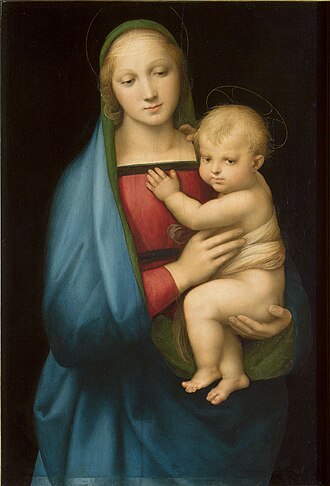 Madonna del Granduca - Raphael (1500s)
Werke verwandter Künstler
 Venus von Urbino - Titian (1538)
 Mariä Himmelfahrt - Titian (1510s)
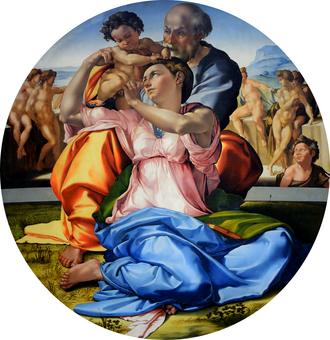 Tondo Doni - Michelangelo (1500s)
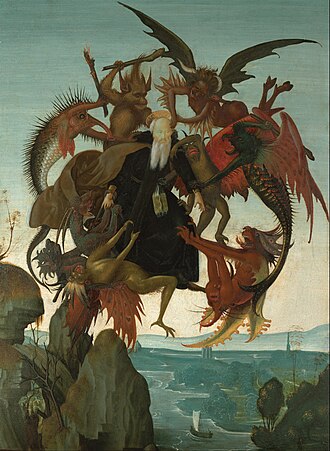 Die Versuchung des Hl. Antonius - Michelangelo (1487)
 Mona Lisa - Leonardo da Vinci (1503-1519)
 Dame mit dem Hermelin - Leonardo da Vinci (1490)
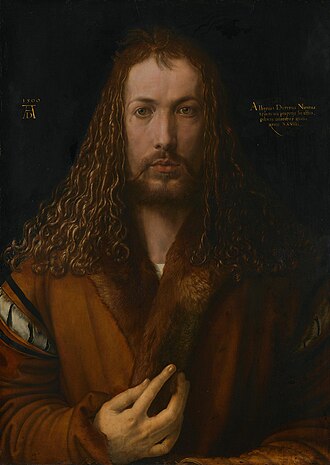 Selbstbildnis im Pelzrock - Albrecht Dürer (1500)
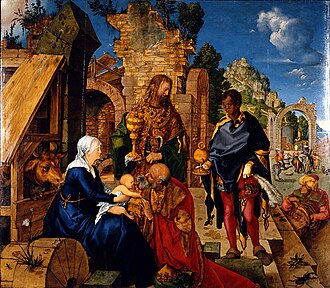 Anbetung der Könige - Albrecht Dürer (1504)
 Die Geburt der Venus - Sandro Botticelli (c. 1485)
 Primavera - Sandro Botticelli (1480s)
 Der Garten der Lüste - Hieronymus Bosch
 Das Narrenschiff - Hieronymus Bosch (1500s)