Madonna Alba, Szene: Maria mit Christuskind und Johannes dem Täufer, Tondo
Raffael · 1510
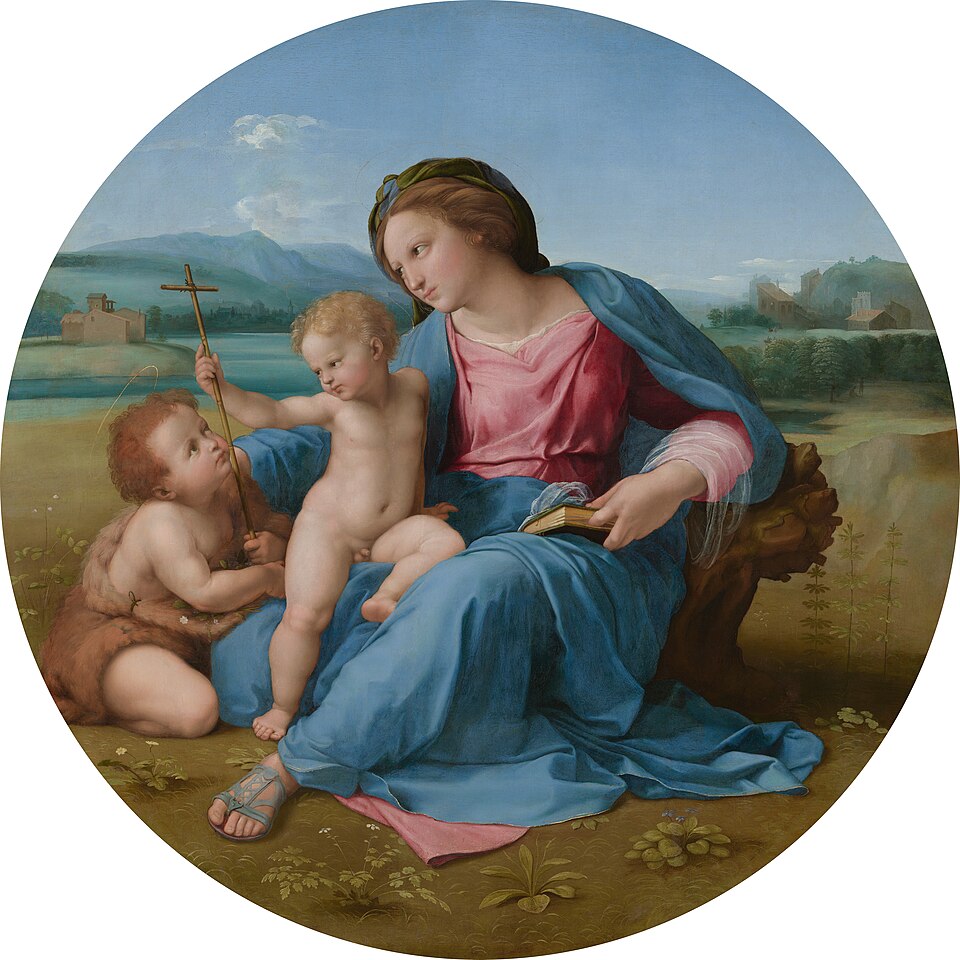
In a round world of soft Italian countryside, Mary, the Christ Child and the young John the Baptist all turn their eyes to one small cross. Raphael made a quiet meadow hold the whole weight of the Passion.
The story behind the painting
Raphael painted the Alba Madonna around 1510, after he had left Florence in 1508 to live in Rome. It was commissioned by Paolo Giovio, who later became Bishop of Nocera de' Pagani and gave the painting to the Sanctuary of Santa Maria dei Miracoli in Nocera Inferiore. In 1686 the Viceroy of Naples, the Marquis of Carpio, bought it and took it to Spain. Through his daughter's marriage it passed to the House of Alba, whose name it still carries. Later it travelled through the hands of a diplomat and a London collector to Nicholas I of Russia, who made it a highlight of the Hermitage. In 1931 the Soviet government sold it secretly to Andrew W. Mellon, and since 1937 it has belonged to the National Gallery of Art in Washington.
What to look for
The painting is a tondo, a circular picture, and Raphael uses the round shape with great care. The three figures are gathered to the left, arranged in a pyramid, yet the circle feels balanced thanks to Mary's outstretched left arm holding a book and the billowing cloth of her cloak. Follow the gaze of each figure: John holds up a cross, the baby Jesus grasps it, and all three contemplate it. Then look down at the grass. The flowers are not random. Lady's bedstraw speaks of childbirth, cyclamen of love and sorrow, violets of humility, while dandelions and red-centred anemones point to the Passion. Look closely, too, and you may sense the pattern of canvas beneath the paint, a trace of a later transfer.
Meaning and intent
The cross in the children's hands turns a gentle family scene into a meditation on what is to come: the Christ Child accepts it as a token of the Crucifixion. Mary sits on the ground, and the art historian Andrew Graham-Dixon links this pose to the tradition of the Madonna of Humility. Yet he also notes that her statuesque grandeur recalls images of the Madonna della Misericordia, the Virgin as Queen of Heaven and protectress of all humanity. Humble and monumental at once, she embraces both the child and the future. The Wikipedia text also suggests that the work shows Raphael developing beyond his earlier manner, perhaps inspired by the Sistine Chapel ceiling that Michelangelo was painting at the time.
Legacy
Few paintings have travelled so far. During its years in the Hermitage, in the early nineteenth century, the picture was transferred from its round wooden panel to canvas, because the panel was splitting badly down the centre and along the right side; the landscape at the far right was damaged in the process. During the Second World War it was one of more than a hundred works from the National Gallery of Art moved in secret by train to Biltmore House in Asheville, North Carolina, and kept behind steel doors and barred windows until 1944. Graham-Dixon called it a breathtakingly beautiful work of art, and today it remains a calm centre of Raphael's art in Washington.
Schon gewusst?
- The painting was commissioned by Paolo Giovio after Raphael moved to Rome in 1508.
- The flowers carry meanings: violets for humility, cyclamen for love and sorrow, anemones and dandelions for the Passion.
- It was transferred from a round wooden panel to canvas while in the Hermitage.
- Wikipedia gives the panel's diameter as 94.5 cm, while Wikidata lists 98 × 98 cm.
Über den Künstler
Raffael (1483-1520)
religiöse Kunst · Maria · Hochrenaissance · Jesuskind · National Gallery of Art · Landschaft · Johannesknabe · Andrew W. Mellon collection
Mehr von Raffael
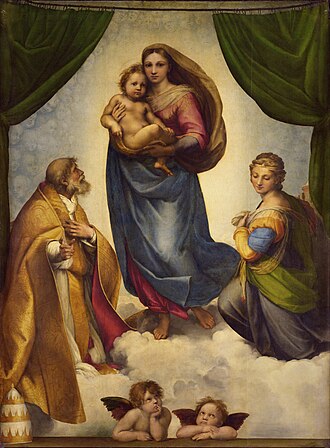 Sixtinische Madonna - Raphael (1510s)
.jpg) La Fornarina - Raphael
La Fornarina - Raphael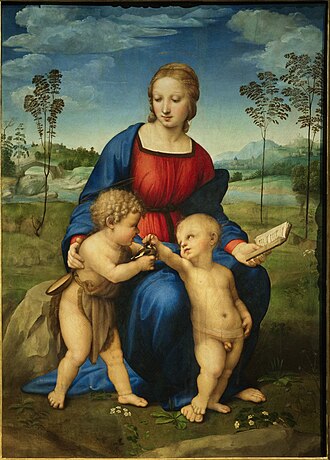 Madonna mit dem Stieglitz - Raphael (1500s)
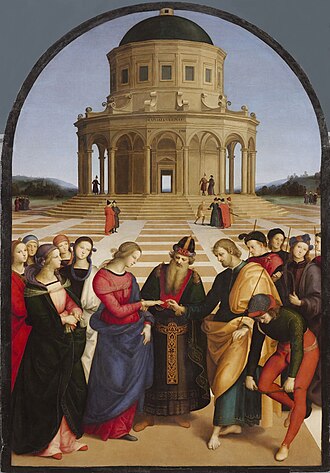 Vermählung Mariä - Raphael (1504)
 Porträt einer Frau - Raphael (1510s)
 Die drei Grazien - Raphael (1504)
%20-%20La%20Madonna%20del%20Granduca%20-%20178%20-%20Galleria%20Palatina.jpg) Madonna del Granduca - Raphael (1500s)
Madonna del Granduca - Raphael (1500s)%20September%202015-1a.jpg) Transfiguration - Raphael
Transfiguration - Raphael
Werke verwandter Künstler
.jpg) Venus von Urbino - Titian (1538)
Venus von Urbino - Titian (1538) Mariä Himmelfahrt - Titian (1510s)
 Mona Lisa - Leonardo da Vinci (1503-1519)
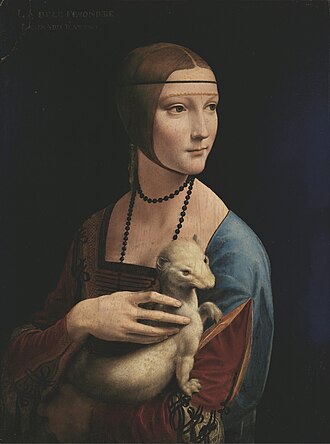 Dame mit dem Hermelin - Leonardo da Vinci (1490)
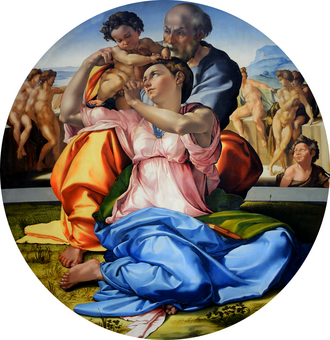 Tondo Doni - Michelangelo (1500s)
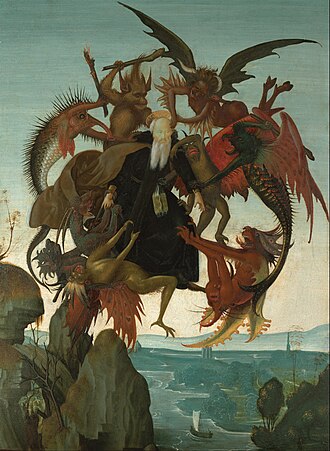 Die Versuchung des Hl. Antonius - Michelangelo (1487)
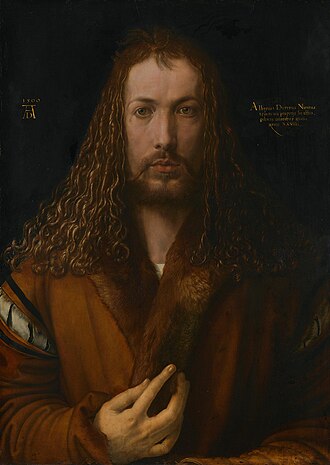 Selbstbildnis im Pelzrock - Albrecht Dürer (1500)
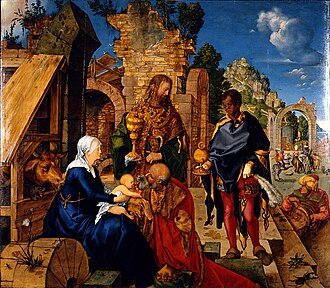 Anbetung der Könige - Albrecht Dürer (1504)
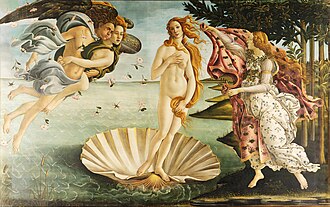 Die Geburt der Venus - Sandro Botticelli (c. 1485)
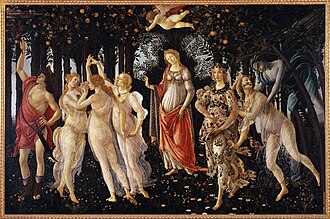 Primavera - Sandro Botticelli (1480s)
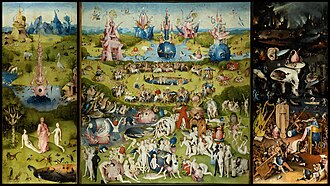 Der Garten der Lüste - Hieronymus Bosch
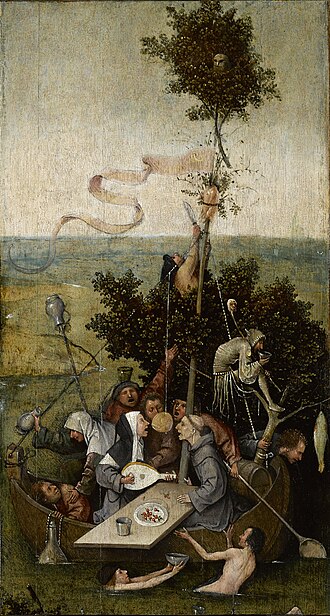 Das Narrenschiff - Hieronymus Bosch (1500s)