Porträt des Kardinals Alessandro Farnese
Tizian · 1540s
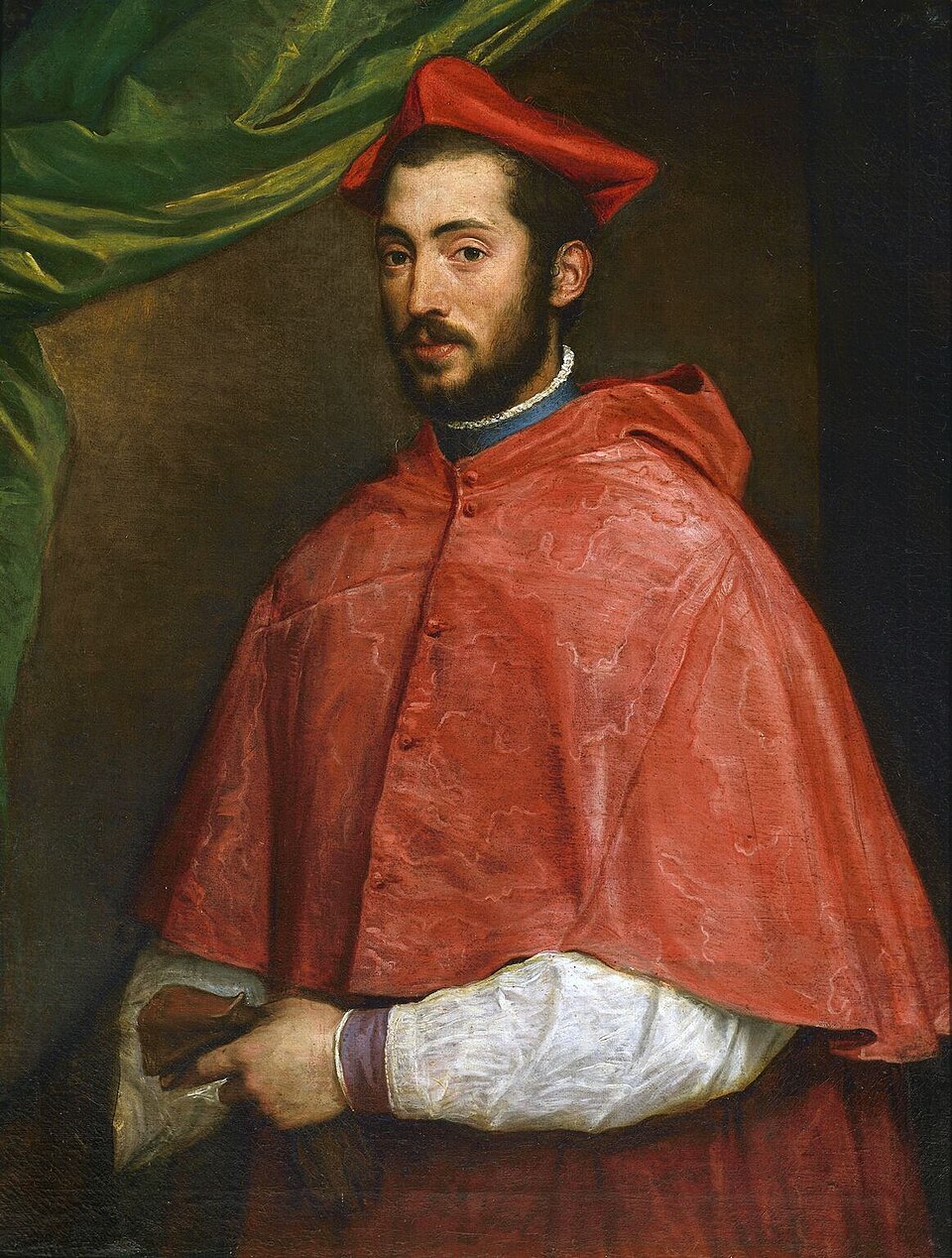
A young cardinal in red stands before a green curtain, gloves in hand like a nobleman. Titian painted him in Rome, and the canvas later survived French looters, a near shipment to France and a century of doubt about its author.
The story behind the painting
No surviving source says how, when or by whom this portrait was commissioned. Its sitter, Alessandro Farnese the Younger, was made cardinal of Sant'Angelo in Foro Piscium by his grandfather Pope Paul III in 1534, aged only fourteen. He became a major patron of the arts and the main link between Titian and the Farnese family, ordering portraits of his brother Ranuccio and of the pope, and a Danae for his own rooms. Titian was then summoned to Rome, where he probably painted this portrait. Wikipedia dates it about 1545 to 1546, while Wikidata gives only the 1540s.
What to look for
This is a three-quarter-length portrait in oil on canvas, about 97 by 73 cm. Alessandro wears a cardinal's robes and stands in front of a green curtain. In his right hand he holds a pair of gloves, an accessory more usual in portraits of gentlemen and noblemen than of churchmen. Notice the glow of light on the left side of the picture, which conservation in the 1990s brought back. On the back of the canvas are a grey wax seal with the Farnese lily, the old inventory number 66 and the inscription C.S.ANGLO, for his title of cardinal.
Meaning and intent
The gloves quietly say that this churchman was also a prince of a great family. His depiction is close to the way Titian showed him in Pope Paul III and His Grandsons, which is why the two works are dated near each other. Painted during Titian's brief stay in Rome, the portrait belongs to a run of commissions through which the young cardinal tied the most famous painter of Venice to his family. The back of the canvas, with its seal and title, still records whose picture it was.
Legacy
The portrait is listed in the Palazzo Farnese in Rome in 1641 and 1644, moved to Parma from 1663, and in 1734 passed through Elisabetta Farnese to her son Charles and on to Naples. French troops looted it in 1799. Domenico Venuti found it in Rome in 1800 waiting to be shipped to France and brought it back. Late in the 19th century some critics doubted that Titian painted it, because of its poor condition, but conservation in the 1990s restored the original pigments and showed them in harmony with his Roman works. It now hangs in the Museo di Capodimonte.
Schon gewusst?
- Painted by Titian around 1545-1546, probably in Rome.
- Alessandro Farnese became a cardinal at fourteen.
- Looted by French troops in 1799 and recovered in 1800.
- Held in the Museo di Capodimonte, Naples.
Über den Künstler
Tizian (1488-1576)
Porträt · Venezianische Schule · Museo Nazionale di Capodimonte
Mehr von Tizian
 Venus von Urbino - Titian (1538)
 Mariä Himmelfahrt - Titian (1510s)
 Himmlische und Irdische Liebe - Titian (1510s)
 Kaiser Karl V. nach der Schlacht bei Mühlberg - Titian (1548)
 Flora - Titian (1517)
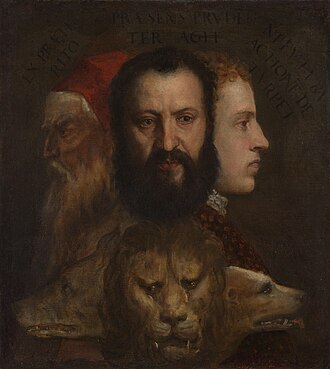 Allegorie der von der Klugheit beherrschten Zeit - Titian (1550)
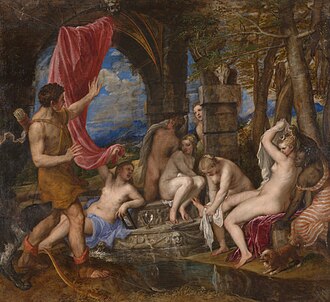 Diana und Actaeon - Titian (1550s)
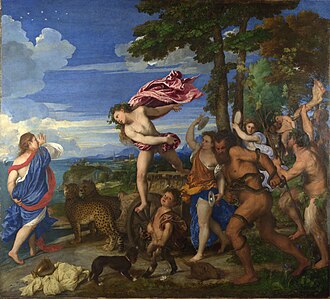 Bacchus und Ariadne - Titian (1520s)
Werke verwandter Künstler
 Das letzte Abendmahl - Jacopo Tintoretto (1563)
 Der heilige Markus befreit den gefesselten Sklaven - Jacopo Tintoretto (1540s)
 Die Hochzeit zu Kana - Paolo Veronese (1560s)
 Das Gastmahl im Hause des Levi - Paolo Veronese (1573)