Oddi Altarpiece
Raffael · 1502
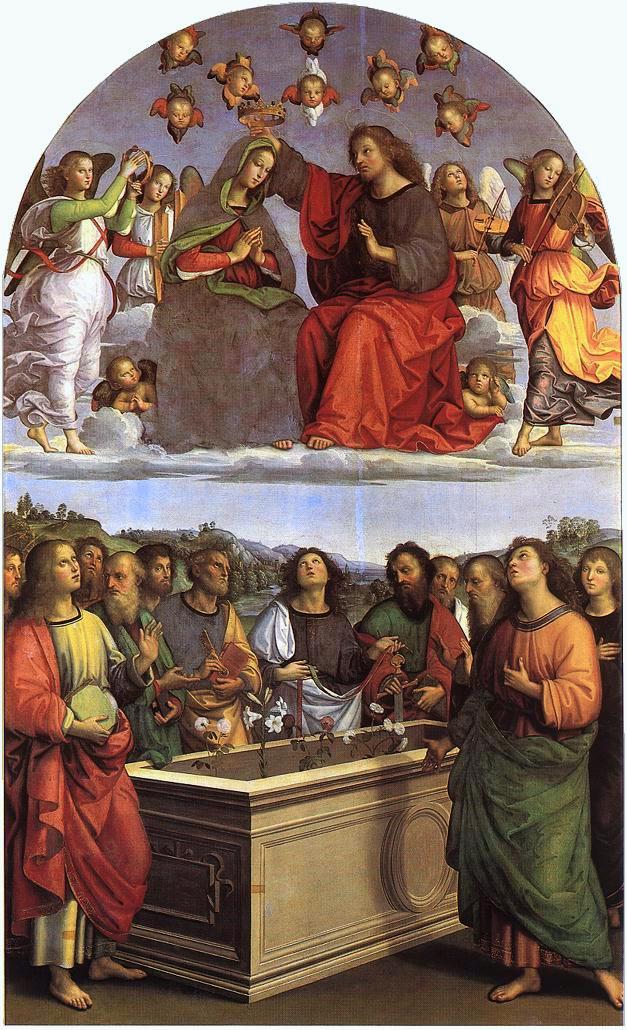
Above, Christ crowns his mother among angel musicians. Below, the apostles gather around her empty tomb. Raphael painted this altarpiece as a young man for a widow in Perugia.
The story behind the painting
The Oddi Altarpiece, more correctly the degli Oddi altarpiece, was painted by Raphael in 1502 to 1504 for the altar of the Oddi family chapel in the church of San Francesco al Prato in Perugia. It was commissioned by Leandra Baglioni, widow of Simone degli Oddi. In Perugia there were different Oddi and degli Oddi families, a distinction that English sources, including the English version of the Vatican Museums website, often ignore. Wikidata gives the date simply as 1502 and the size of the main panel as about 272 by 165 cm.
What to look for
The painting unfolds in two related scenes, one in heaven and one on earth. In the upper part, the Virgin is crowned by Jesus while angels play music around them. In the lower part, the apostles gather around the empty tomb of Mary, whose body was raised to heaven without corruption. Look for St Thomas: he holds in his hands the girdle that Mary let fall to him as a sign of her assumption. The saints below raise their eyes towards the heavenly scene above, so that the gaze of the viewer is led upward with theirs.
Meaning and intent
The altarpiece joins two moments of one story: the Assumption, seen in the empty tomb and the falling girdle, and the Coronation, which completes it in heaven. The lifted faces of the apostles tie earth to heaven. Below the main panel is a predella, about 39 by 190 cm, made of three small paintings of about 27 by 50 cm each, showing scenes from the Life of the Virgin: the Annunciation, the Adoration of the Magi and the Presentation in the Temple. Together they tell the Virgin's life from its beginning to her crowning.
Legacy
The altarpiece did not stay in Perugia. In 1797 it was taken to Paris for the Musée Napoléon. In 1815 it was brought back to Italy, yet it did not return to the Oddi chapel in Perugia: it went instead to the Vatican Pinacoteca, where it remains. So a work made for one family's chapel in San Francesco al Prato now hangs in the papal collection in Rome, its journey marked by the Napoleonic removals of art and their partial return after 1815.
Schon gewusst?
- Painted by Raphael in 1502-1504 for a chapel in Perugia.
- Commissioned by Leandra Baglioni, widow of Simone degli Oddi.
- Taken to Paris in 1797, returned to Italy in 1815.
- Now in the Vatican Pinacoteca.
Über den Künstler
Raffael (1483-1520)
religiöse Kunst · Frau · Maria · Jesuskind · Hochrenaissance · Junge · Vatikanische Pinakothek
Mehr von Raffael
 Sixtinische Madonna - Raphael (1510s)
 La Fornarina - Raphael
 Madonna mit dem Stieglitz - Raphael (1500s)
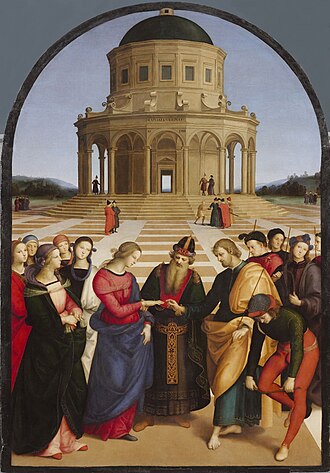 Vermählung Mariä - Raphael (1504)
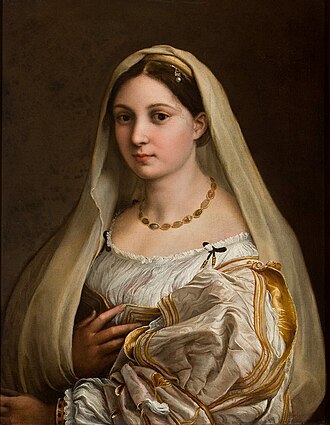 Porträt einer Frau - Raphael (1510s)
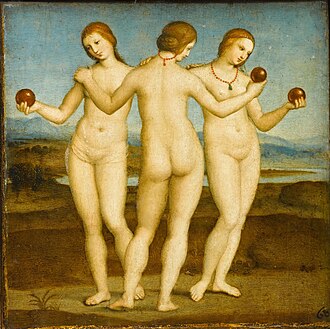 Die drei Grazien - Raphael (1504)
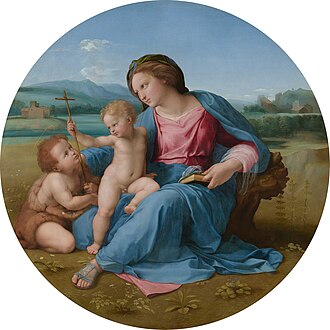 Madonna Alba, Szene: Maria mit Christuskind und Johannes dem Täufer, Tondo - Raphael (1510)
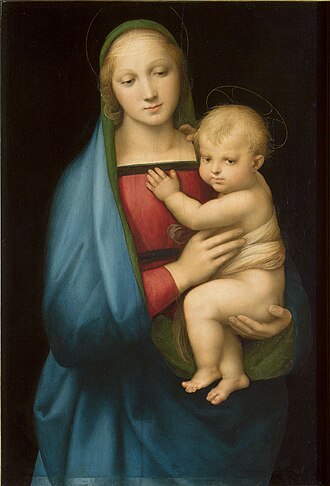 Madonna del Granduca - Raphael (1500s)
Werke verwandter Künstler
 Venus von Urbino - Titian (1538)
 Mariä Himmelfahrt - Titian (1510s)
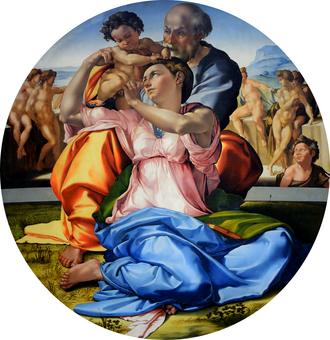 Tondo Doni - Michelangelo (1500s)
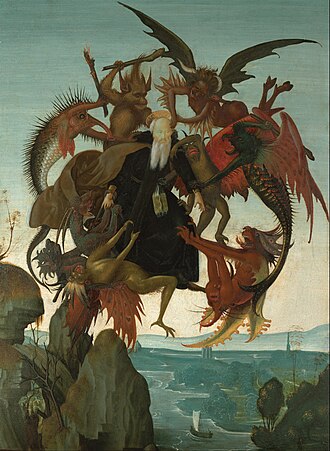 Die Versuchung des Hl. Antonius - Michelangelo (1487)
 Mona Lisa - Leonardo da Vinci (1503-1519)
 Dame mit dem Hermelin - Leonardo da Vinci (1490)
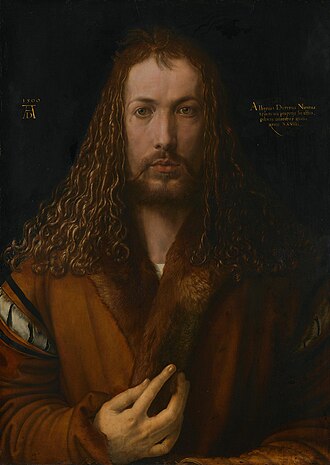 Selbstbildnis im Pelzrock - Albrecht Dürer (1500)
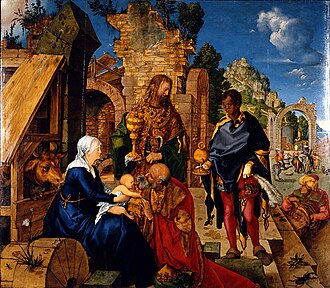 Anbetung der Könige - Albrecht Dürer (1504)
 Die Geburt der Venus - Sandro Botticelli (c. 1485)
 Primavera - Sandro Botticelli (1480s)
 Der Garten der Lüste - Hieronymus Bosch
 Das Narrenschiff - Hieronymus Bosch (1500s)