Die alte Battersea Brücke: Nocturne-Blau und Gold
James McNeill Whistler · 1872
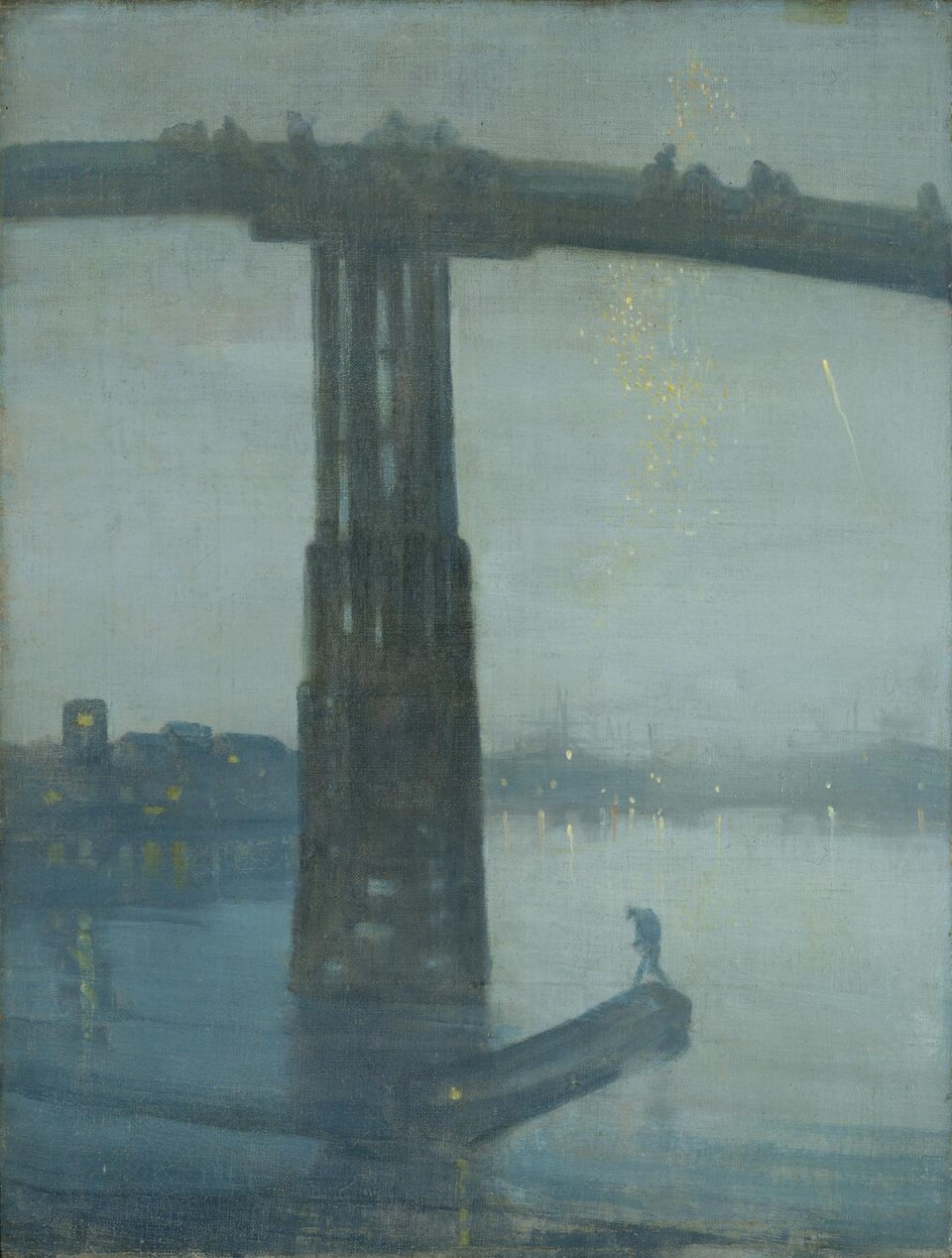
A wooden bridge rises out of blue night over the Thames, a few fireworks falling in the sky. Whistler painted it from memory, and it ended up as evidence in his famous libel suit against John Ruskin.
The story behind the painting
Whistler painted this nocturne around 1872 to 1875; Wikidata gives 1872. Its exact dating remains a mystery: the Albert Bridge, visible in the picture, opened to the public only in 1873, the painting was first exhibited in 1875, and Whistler said in 1877 that it was not complete. Like many of his nocturnes, it was made from memory or in studios overlooking the river, since he felt the fleeting light could not be caught outdoors. He sometimes went out in a boat rowed by the Greaves brothers to sketch scenes for later.
What to look for
The old wooden Battersea Bridge is seen from below on the river, with Chelsea Old Church on the left and the Albert Bridge to the right. Whistler exaggerated the bridge's height. Sky and water share almost the same blues, and the brown and gold of the bridge sit coolly within them. People stand on the bridge, and a boat with a lone man floats below. Lit windows suggest early morning or late night, and fireworks scatter at upper right. Some were painted in Naples yellow, found nowhere else in the picture, so he may have added them later.
Meaning and intent
Whistler named his works like music; a nocturne is a piano piece meant to evoke the night. He described his nocturnes as arrangements of line, form and colour, as music arranges notes. He would stare at a scene, turn his back, recite it to a listener who corrected him, and paint it next morning if it stayed in his head. The source also notes the other side: he painted serene water while Gustave Dore etched the hard reality of the industrial docks, often overlooking the struggles of the poor.
Legacy
In 1877 Ruskin attacked Whistler's nocturnes at the Grosvenor Gallery, accusing him of flinging a pot of paint in the public's face. Whistler sued, and this painting was discussed at the 1878 trial; he was awarded token damages of one farthing. In 1905 it became the first significant acquisition of the new National Art Collections Fund, which presented it to the Tate. It now hangs in Tate Britain. Oscar Wilde had written a poem on the same scene in 1881.
Schon gewusst?
- Painted around 1872 to 1875; Wikidata gives 1872.
- Discussed at the 1878 Whistler v. Ruskin libel trial.
- First major acquisition of the National Art Collections Fund, 1905.
- Now in Tate Britain.
Über den Künstler
James McNeill Whistler (1834-1903)
Mehr von James McNeill Whistler
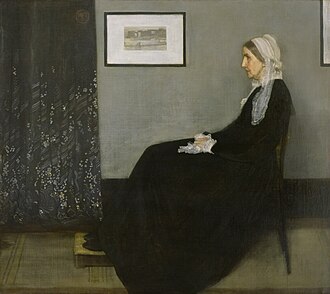 Arrangement in Grau und Schwarz: Porträt der Mutter des Künstlers - James McNeill Whistler (1871)
%201862.jpg) Symphony in weiss, No. 1: Mädchen in weiss - James McNeill Whistler (1860s)
Symphony in weiss, No. 1: Mädchen in weiss - James McNeill Whistler (1860s)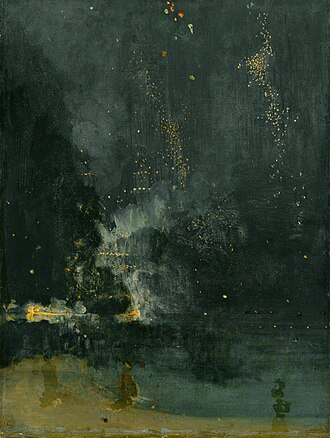 Nocturne in Schwarz und Gold: Die fallende Rakete - James McNeill Whistler (1875)
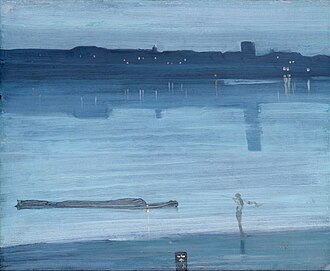 Nocturne: Blau und Silber – Chelsea - James McNeill Whistler (1871)
%201864.jpg) Symphonie in Weiß Nr. 2, Mädchen in Weiß - James McNeill Whistler (1864)
Symphonie in Weiß Nr. 2, Mädchen in Weiß - James McNeill Whistler (1864)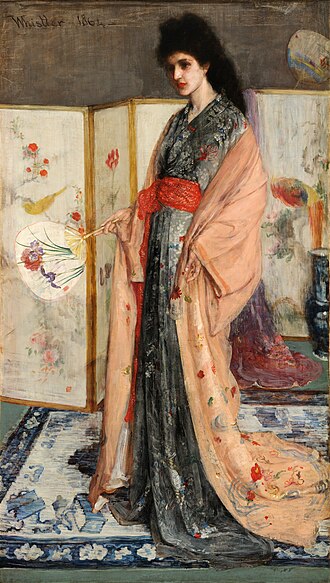 The Princess from the Land of Porcelain - James McNeill Whistler (1860s)
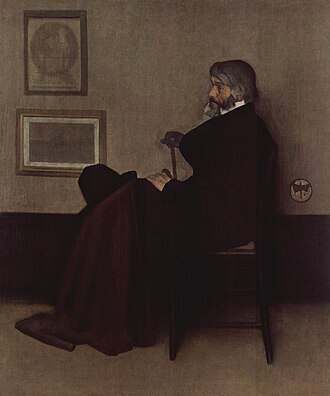 Arrangement in Grau und Schwarz, Porträt des Thomas Carlyle - James McNeill Whistler (1870s)
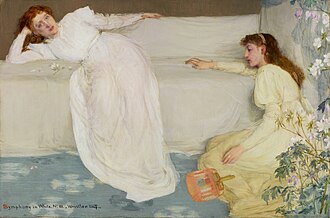 Symphonie in Weiß Nr. 3 - James McNeill Whistler (1860s)