Lucretia
Artemisia Gentileschi · 1623
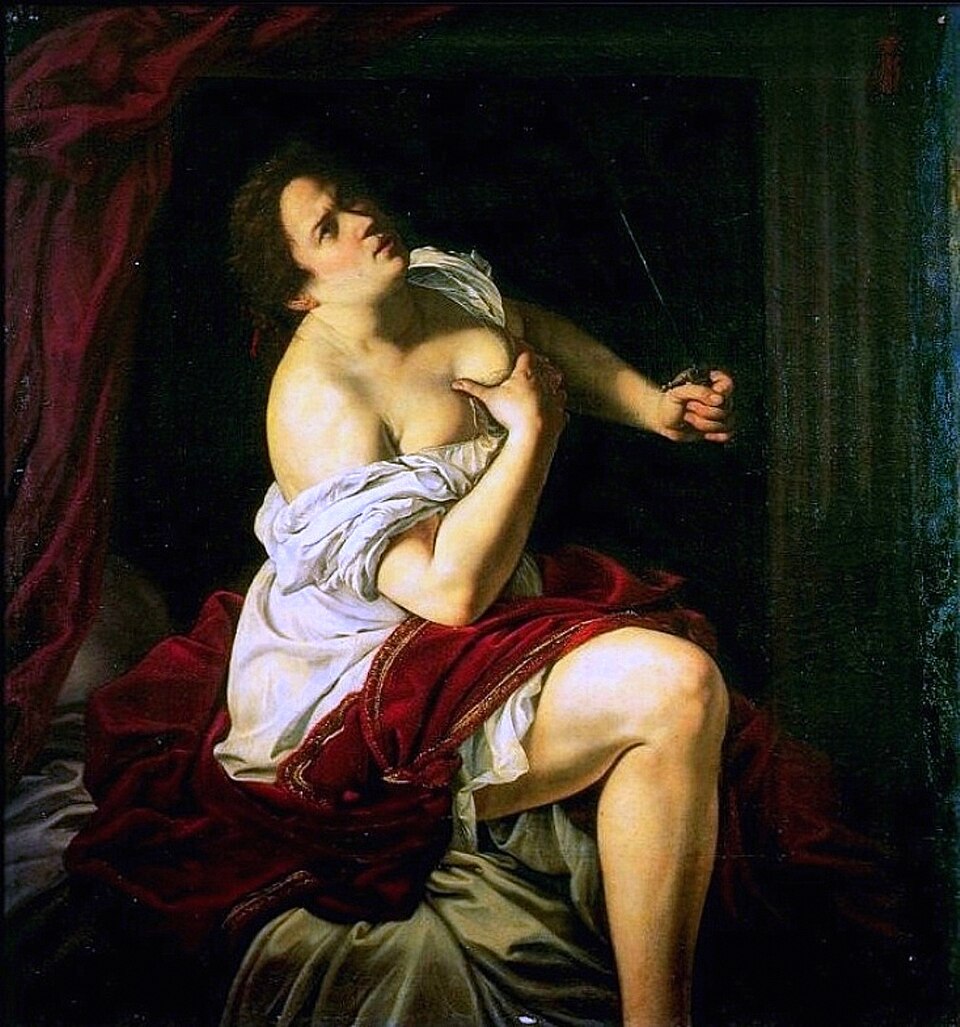
Alone on a disordered bed, dagger in hand, Lucretia looks upward in anguish. Where male painters often made her erotic, Artemisia Gentileschi painted a brave woman in pain, and perhaps her own face.
The story behind the painting
Lucretia was an ancient Roman heroine, praised by her husband Collatinus for her virtue, as Livy tells it in his History of Rome. She was raped by Sextus Tarquinius, son of King Tarquin the Proud and a relative of her husband, who threatened to kill her and shame her corpse if she resisted. Afterwards she told her husband and her father what had happened and took her own life. Her death sparked a rebellion that ended the monarchy and began the Roman Republic. Artemisia Gentileschi painted this version between 1623 and 1625; Wikidata gives 1623.
What to look for
Lucretia sits alone in a dark room on a bed, seen in three-quarter view, her eyes raised and her expression distressed. Strong light from the left falls on her face, her bare chest and right leg, and the blade of the dagger. The red velvet bedding and her clothes are in disorder, a reference to the violence just done. With powerful, realistic physicality she grasps her left breast with her right hand while holding the dagger in the other. The bright, almost glowing figure against the shadowy setting is a clear example of the chiaroscuro Artemisia learned as one of Caravaggio's most gifted followers.
Meaning and intent
Male artists of the time often showed Lucretia erotically; Gentileschi painted a brave, anguished woman. It is one of several works in which she turned to virtuous women ill-treated by men. In 1611, at 17, Artemisia had been raped by Agostino Tassi, a colleague of her father. At the trial she was tortured with tightened rings on her fingers to prove she told the truth, while Tassi, though convicted and banished, never served the sentence. Some scholars think she drew on her own experience for Lucretia's face, which may be a self-portrait; others see a woman determined to choose her own destiny.
Legacy
The painting hung in the Palazzo Gentile in Genoa, in the collection of Pietro Gentile until 1640 to 1641, beside her Cleopatra. It stayed in that family until the early nineteenth century, when it is recorded in the Adorno collection, which is why Wikidata places it at the Palazzo Cattaneo Adorno. It passed to Piero Pagano in the 1980s and in 2001 to the collection of Gerolamo Etro in Milan. A restoration in 1991 revealed heavy overpainting, and strips added to every side in the late eighteenth century were later removed. Some scholars think the painting now looks unbalanced.
Schon gewusst?
- Painted between 1623 and 1625.
- Possibly a self-portrait of the artist.
- Once beside her Cleopatra in the Palazzo Gentile in Genoa.
- Restored in 1991; later additions to the canvas were removed.
Über den Künstler
Artemisia Gentileschi (1593-1653)
Frau · Historienmalerei · Lucretia
Mehr von Artemisia Gentileschi
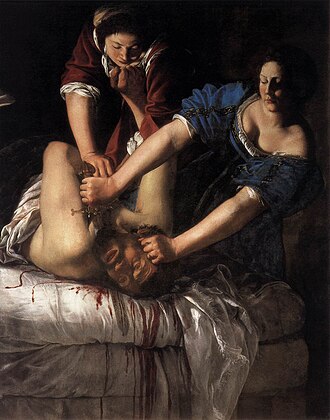 Judith enthauptet Holofernes - Artemisia Gentileschi (1613)
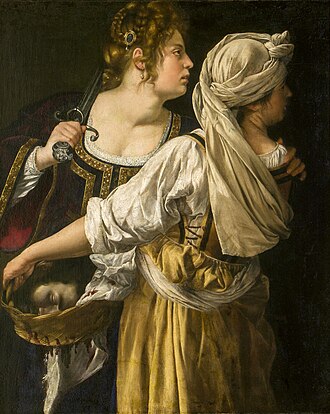 Judith mit ihrer Magd - Artemisia Gentileschi (1618)
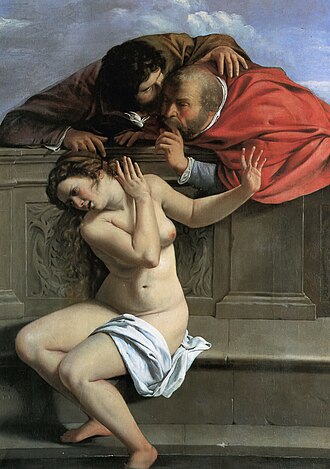 Susanna und die Ältesten - Artemisia Gentileschi (1610)
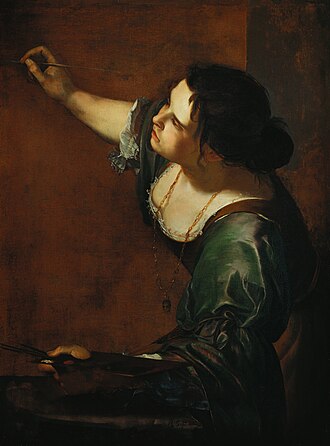 Selbstporträt als Allegorie der Malerei - Artemisia Gentileschi (1638)
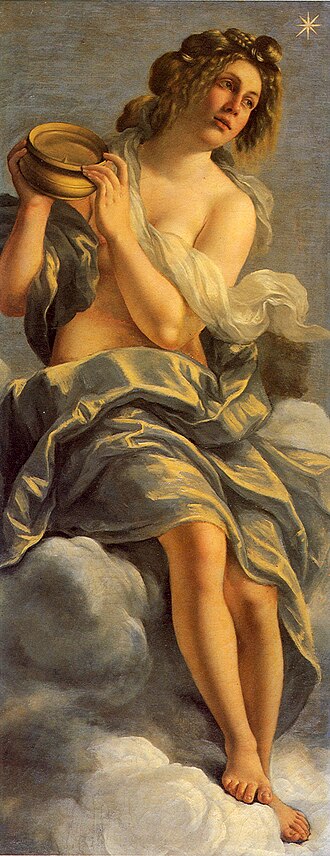 Das natürliche Talent - Artemisia Gentileschi (1615)
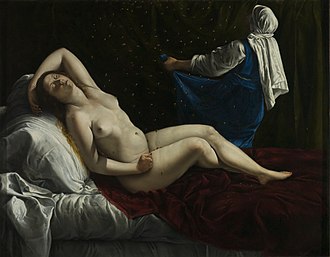 Danaë - Artemisia Gentileschi (1612)
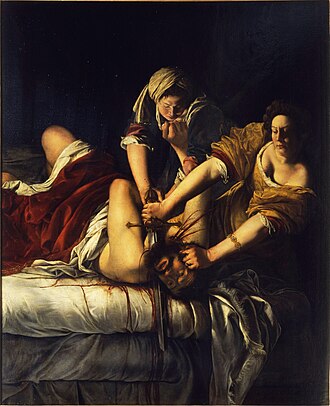 Judith enthauptet Holofernes - Artemisia Gentileschi (1620)
 Esther vor Ashaver - Artemisia Gentileschi (1620s)
Werke verwandter Künstler
 Das Abendmahl in Emmaus - Caravaggio (1601)
 Die Berufung des Hl. Matthäus - Caravaggio (1609)
 Las Meninas - Diego Velázquez (1656)
 Die Übergabe von Breda - Diego Velázquez (1635)
 Saint Francis in Meditation - Francisco de Zurbarán (1639)
 The Immaculate Conception - Francisco de Zurbarán (1661)
 Dreifachporträt von Karl I. - Anthony van Dyck (1635)
 Karl I mit M. de St. Antoine - Anthony van Dyck (1636)
 Die Aufrichtung des Kreuzes - Peter Paul Rubens (1609)
 Der Raub der Töchter des Leukippos - Peter Paul Rubens (1618)
 Die Nachtwache - Rembrandt van Rijn (1642)
 Selbstbildnis - Rembrandt van Rijn (1659)