Lukrezia und ihr Gemahl Lucius Tarquinius Collatinus
Tizian · 1515
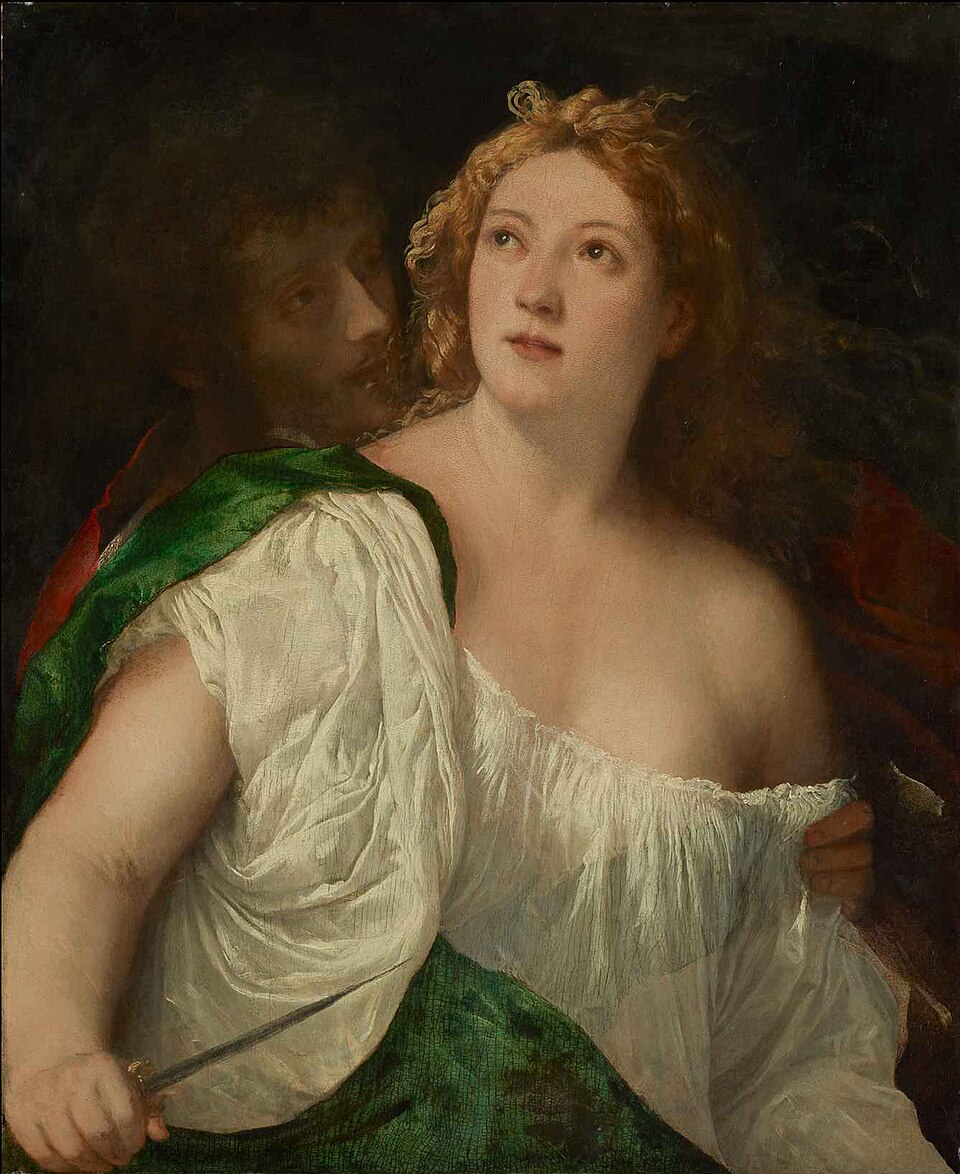
A woman holds a dagger and lifts her eyes to a light from above. Behind her, almost touching, a man's face in shadow. Who he is, husband or attacker, is still argued over.
The story behind the painting
This oil painting in the Kunsthistorisches Museum in Vienna is dated to around 1515 and traditionally given to Titian. The attribution is uncertain: its brightened palette suggests it could be by Palma Vecchio instead. Others place it in Titian's series of half-length women from 1514 to 1515, with the Flora in the Uffizi, the Woman with a Mirror in the Louvre and the Salome in the Galleria Doria Pamphilj. The subject comes from Roman history. Lucretia, raped by Sextus Tarquinius, revealed the crime and then took her own life to preserve her honour, becoming the model of Roman female virtue.
What to look for
Lucretia is poised with the dagger, her face turned up toward a divine light coming from above, as if it gives her strength. Her robe is falling and her breast is almost bare, a sensual note common in other versions of the subject. Look at the green of the robe: it is especially bright, a sign of the high quality pigments available in Venice. Then look just behind her shoulder. A male figure stands there, his head close to hers, something almost unique in paintings of Lucretia with the dagger.
Meaning and intent
That man is the puzzle. The Kunsthistorisches Museum calls him Lucius Tarquinius Collatinus, Lucretia's husband, which is where the title comes from. The Royal Collection and most sources identify him instead as her rapist, Sextus Tarquinius. In most Roman accounts her husband was present at her death and Tarquinius was not. If the figure is Tarquinius, the scene must be the night before, with Lucretia perhaps making her plan. The painting also fits a Venetian fashion of the 1510s for two or three half-length figures with heads close together and enigmatic expressions.
Legacy
There is an early copy in the Royal Collection. Either the Vienna painting or that copy may be the one Ridolfi mentioned in 1648 in the gallery of Charles I of England, whose Italian pictures came mostly from the Gonzaga collection in Mantua. The Vienna version may then have passed to Archduke Leopold Wilhelm of Austria. Titian returned to the story more than fifty years later, in 1571, with his better known Tarquin and Lucretia, now in the Fitzwilliam Museum in Cambridge, showing the rape itself rather than the quiet moment of decision.
Schon gewusst?
- Dated around 1515; attributed to Titian, possibly Palma Vecchio.
- The man behind Lucretia is called her husband by the museum, Tarquinius by most sources.
- An early copy is in the Royal Collection.
- Now in the Kunsthistorisches Museum, Vienna.
Über den Künstler
Tizian (1488-1576)
Hochrenaissance · Venezianische Schule · Kunsthistorisches Museum Wien · Historienmalerei · Lucretia
Mehr von Tizian
.jpg) Venus von Urbino - Titian (1538)
Venus von Urbino - Titian (1538)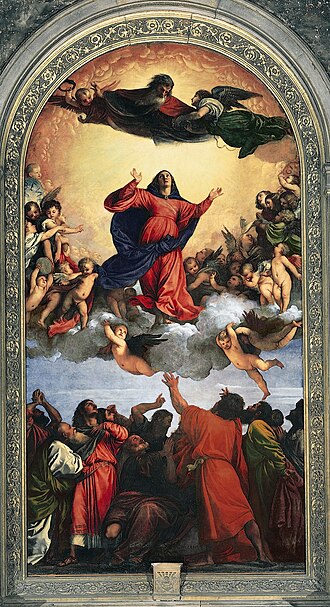 Mariä Himmelfahrt - Titian (1510s)
FXD.jpg) Himmlische und Irdische Liebe - Titian (1510s)
Himmlische und Irdische Liebe - Titian (1510s)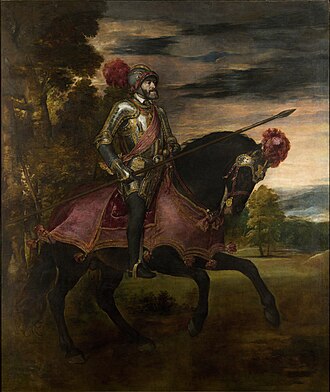 Kaiser Karl V. nach der Schlacht bei Mühlberg - Titian (1548)
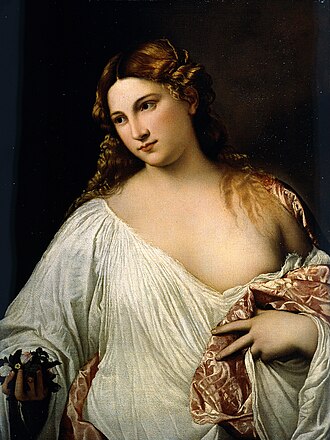 Flora - Titian (1517)
 Allegorie der von der Klugheit beherrschten Zeit - Titian (1550)
 Bacchus und Ariadne - Titian (1520s)
%20nave%20left%20-%20Altar%20of%20Madona%20di%20Ca'Pesaro.jpg) Pesaro Madonna - Titian
Pesaro Madonna - Titian