Diana und Kallisto
Tizian · 1550s
.jpg)
A secret comes into the open: the goddess Diana discovers that her maid Callisto is pregnant by Jupiter. Lucian Freud called this and its pair simply the most beautiful pictures in the world.
The story behind the painting
Titian completed this canvas between 1556 and 1559 as one of the seven poesie, scenes from Ovid's Metamorphoses, painted for Philip II of Spain after the emperor Maximilian II had declined Titian's offer to paint them for him. It shows the moment when Diana discovers that her maid Callisto has become pregnant by Jupiter. It was made alongside its companion, Diana and Actaeon, and the two have stayed together for most of their history. A later version by Titian and his workshop is in the Kunsthistorisches Museum in Vienna.
What to look for
The scene is a group of women: Diana and her nymphs, many of them nude, gathered to bathe, with Callisto exposed among them. The source stresses the richness of Titian's colour here. He used an exceedingly wide palette, nearly all the pigments of the Renaissance, among them natural ultramarine, vermilion, malachite, verdigris, ochres, lead-tin yellow, smalt and carmine. As you look, follow how these blues, reds, greens and warm earth tones move across the bodies, the drapery and the landscape. The canvas is large, about 187.5 by 205.5 cm according to Wikidata, close in size to its pair.
Meaning and intent
The painting turns on discovery and judgement: a secret revealed in front of everyone, among the goddess and her companions. Its meaning has also been made by those who looked at it. When the critic William Hazlitt first saw the collection at Bridgewater House in London, he wrote that he was staggered, as if a new heaven and a new earth stood before him. During their long years on public display the two Titians inspired artists such as J. M. W. Turner and Lucian Freud, who described the pair as simply the most beautiful pictures in the world.
Legacy
The canvas stayed in the Spanish royal collection until 1704, when Philip V gave it to the French ambassador. It soon entered the famous collection of Philippe II, Duke of Orléans, was sold after the French Revolution, and in 1793 reached London, where the Duke of Bridgewater bought it with Diana and Actaeon. On display at Bridgewater House for a century and a half, it moved to Scotland in 1939 and hung in Edinburgh from 1945. In March 2012 the National Gallery and the National Galleries of Scotland bought it together after a long public appeal, and it now alternates between London and Edinburgh.
Schon gewusst?
- Painted 1556 to 1559 for Philip II of Spain.
- Shows Diana discovering that Callisto is pregnant by Jupiter.
- Titian used nearly every pigment of the Renaissance.
- Jointly bought in 2012 by the National Gallery and National Galleries of Scotland.
Über den Künstler
Tizian (1488-1576)
mythologische Malerei · National Gallery · Akt · Venezianische Schule · Schottische Nationalgalerien · Diana
Mehr von Tizian
.jpg) Venus von Urbino - Titian (1538)
Venus von Urbino - Titian (1538)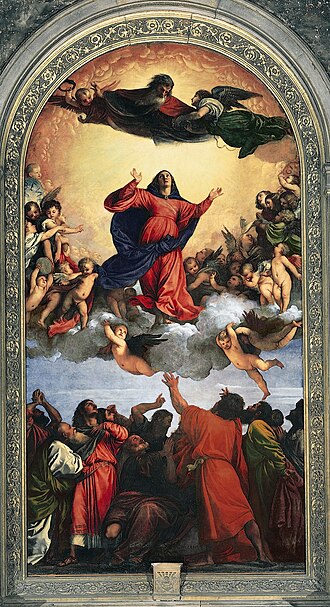 Mariä Himmelfahrt - Titian (1510s)
FXD.jpg) Himmlische und Irdische Liebe - Titian (1510s)
Himmlische und Irdische Liebe - Titian (1510s)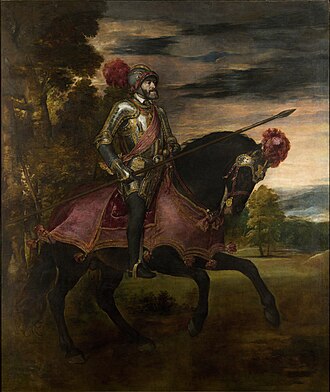 Kaiser Karl V. nach der Schlacht bei Mühlberg - Titian (1548)
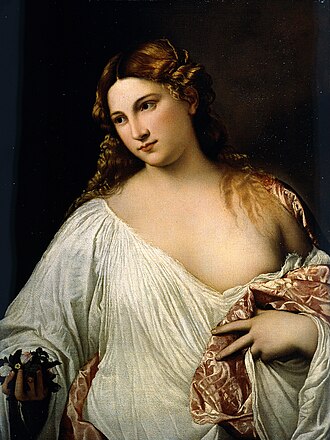 Flora - Titian (1517)
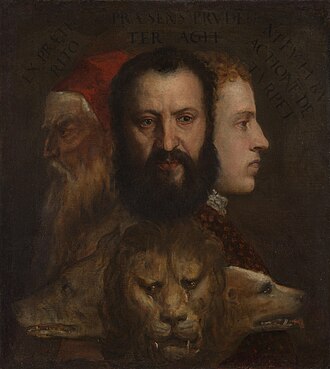 Allegorie der von der Klugheit beherrschten Zeit - Titian (1550)
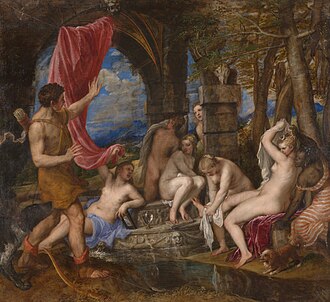 Diana und Actaeon - Titian (1550s)
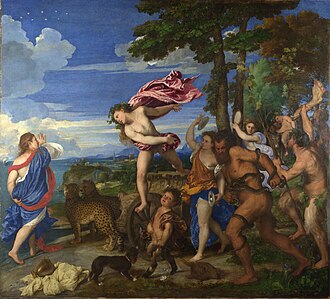 Bacchus und Ariadne - Titian (1520s)
Werke verwandter Künstler
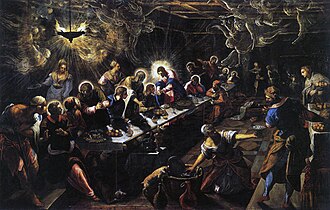 Das letzte Abendmahl - Jacopo Tintoretto (1563)
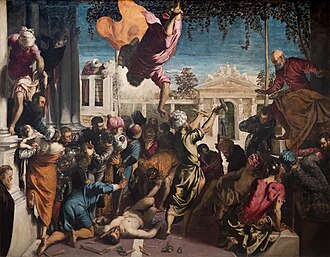 Der heilige Markus befreit den gefesselten Sklaven - Jacopo Tintoretto (1540s)