Ceres
Raffael · 1516
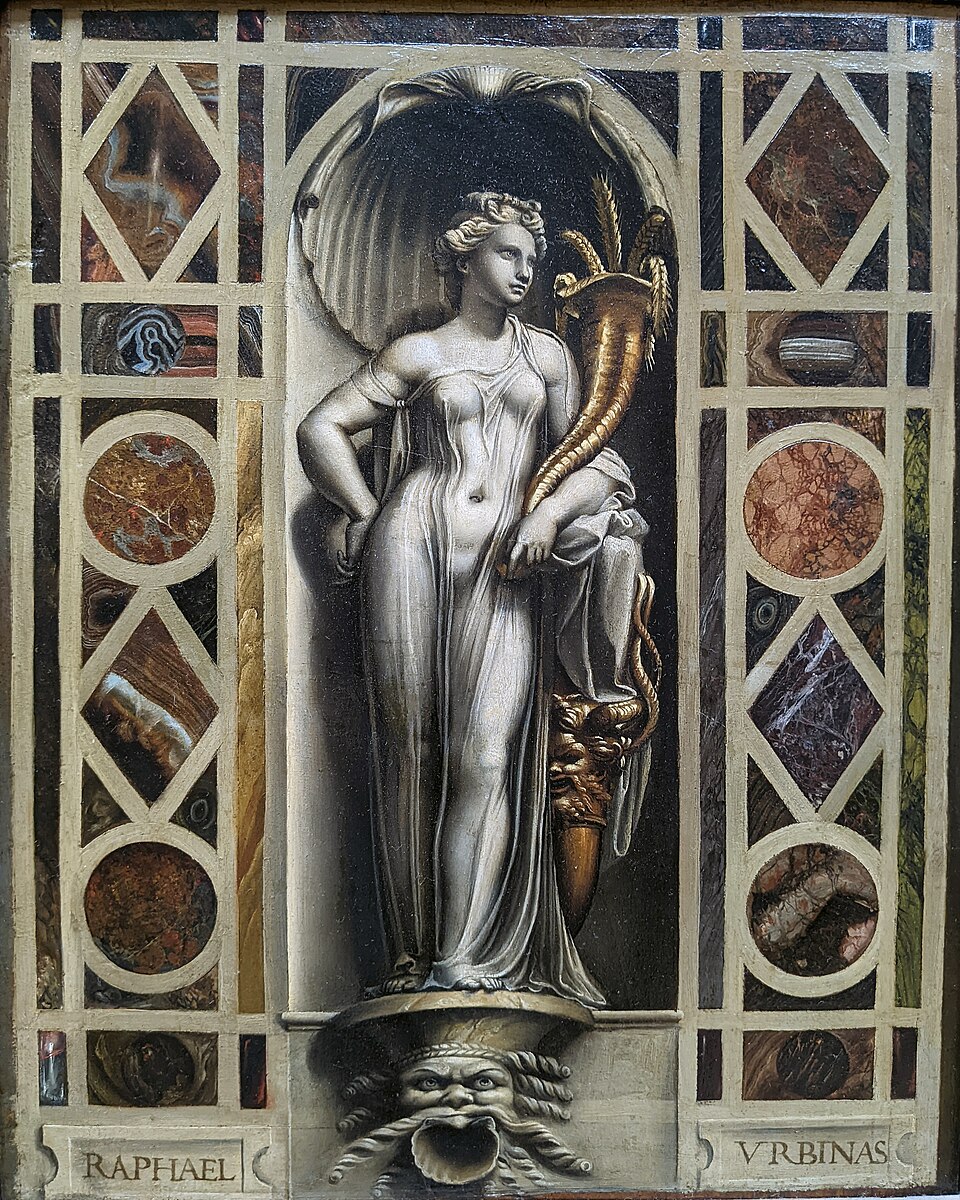
A small grey goddess stands in a painted niche, holding a horn of plenty with six ears of wheat. It once served as the protective cover of a travelling devotional picture, and its name hides a cardinal's pun.
The story behind the painting
This little panel was a shutter: it protected a devotional painting of the same size, made to travel with its owner. It was probably made around 1516 for Cardinal Bernardo Dovizi da Bibbiena, the papal prelate in France, whose name means Abundance (dovizia) and whose coat of arms showed six ears of wheat. It later belonged to the Gouffier family, most likely to Claude Gouffier, Grand Squire of France and a collector. Around 1663 Loménie de Brienne sold it to the royal collections of Louis XIV.
What to look for
The panel is only about 38 by 31 cm and painted in grisaille, shades of grey that imitate sculpture. Ceres, veiled, stands with a slight sway of the hip as she leans, and in her bent left arm holds a cornucopia from which six ears of wheat spring. She rests on a cup-shaped base set on a carved head whose mouth is a scallop shell, with twisted hair and moustache. Another shell crowns her niche. Panels of speckled marble, round and diamond-shaped, frame the architecture, and at the bottom a trompe l'oeil inscription reads RAPHAEL on the left and VRBINAS on the right.
Meaning and intent
The six ears of wheat do double work: they are the attribute of Ceres, goddess of the harvest, and they repeat the six ears on the cardinal's arms, while the theme of Abundance echoes his name. The composition is inspired by the Este Aphrodite, now in the Kunsthistorisches Museum in Vienna, which once stood in the Loggia dei Marmi of the ducal palace in Mantua, a room decorated by Giulio Romano. Although the painted inscription names Raphael and Wikidata lists him as the artist, art historians attribute the work to Giulio Romano, his pupil.
Legacy
In 1683 the royal inventory listed the picture as a grisaille cover by the same hand as the Small Holy Family, the devotional painting it protected. The two panels were separated between 1683 and 1695 and have lived separate lives since. Ceres is now in the Department of Paintings of the Louvre in Paris. It is a rare survival: a humble protective shutter, painted to look like carved stone, that still carries a witty tribute to the man who first owned it.
Schon gewusst?
- Painted around 1516, probably for Cardinal Bibbiena, whose name means Abundance.
- A grisaille shutter that covered the Small Holy Family.
- Signed RAPHAEL VRBINAS but attributed by historians to Giulio Romano.
- Sold to Louis XIV around 1663; now in the Louvre.
Über den Künstler
Raffael (1483-1520)
Frau · Hochrenaissance · mythologische Malerei · Gemäldeabteilung des Louvre · Schlange
Mehr von Raffael
 Sixtinische Madonna - Raphael (1510s)
 La Fornarina - Raphael
 Madonna mit dem Stieglitz - Raphael (1500s)
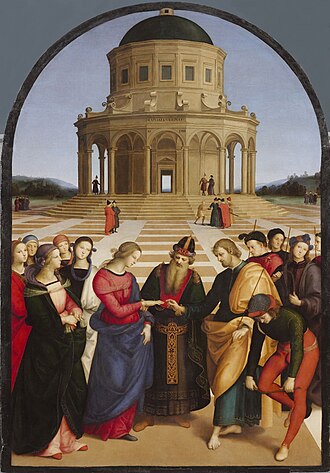 Vermählung Mariä - Raphael (1504)
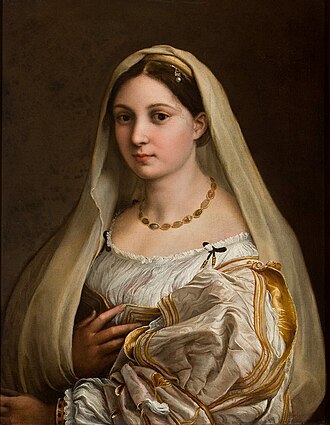 Porträt einer Frau - Raphael (1510s)
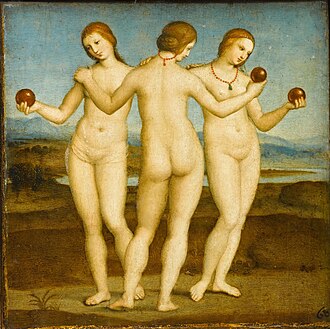 Die drei Grazien - Raphael (1504)
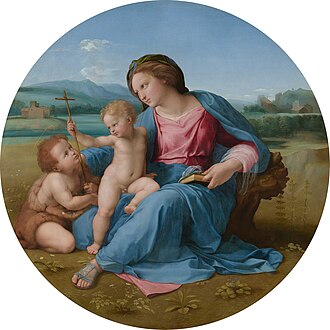 Madonna Alba, Szene: Maria mit Christuskind und Johannes dem Täufer, Tondo - Raphael (1510)
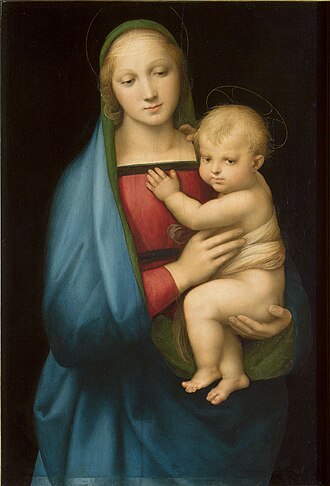 Madonna del Granduca - Raphael (1500s)
Werke verwandter Künstler
 Venus von Urbino - Titian (1538)
 Mariä Himmelfahrt - Titian (1510s)
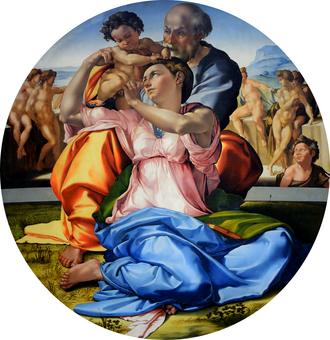 Tondo Doni - Michelangelo (1500s)
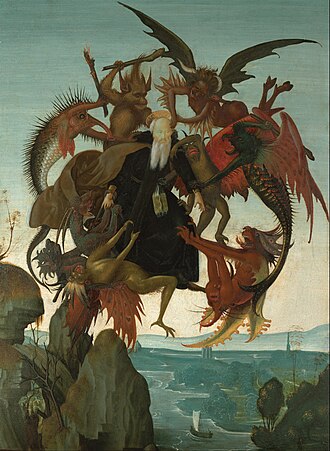 Die Versuchung des Hl. Antonius - Michelangelo (1487)
 Mona Lisa - Leonardo da Vinci (1503-1519)
 Dame mit dem Hermelin - Leonardo da Vinci (1490)
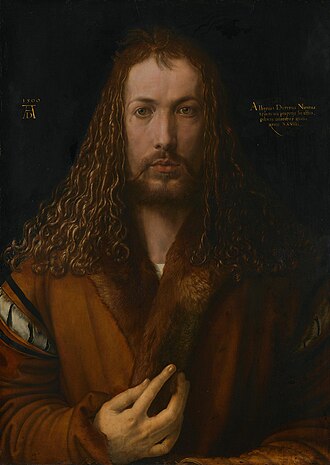 Selbstbildnis im Pelzrock - Albrecht Dürer (1500)
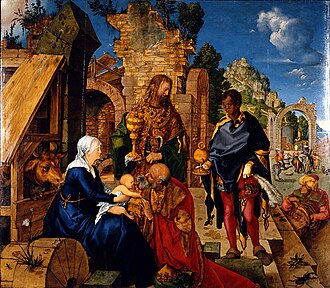 Anbetung der Könige - Albrecht Dürer (1504)
 Die Geburt der Venus - Sandro Botticelli (c. 1485)
 Primavera - Sandro Botticelli (1480s)
 Der Garten der Lüste - Hieronymus Bosch
 Das Narrenschiff - Hieronymus Bosch (1500s)