Pala vom seligen Nikolaus von Tolentino
Raffael · 1500
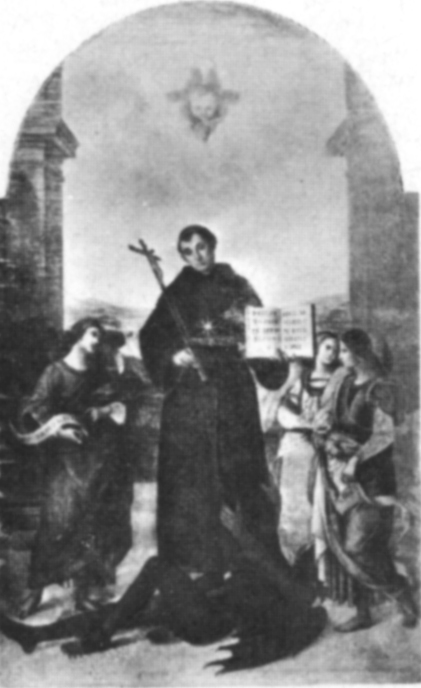
Raphael's first recorded commission once filled a chapel altar in Città di Castello. An earthquake in 1789 broke it, the damaged panel was sawn apart, and today only scattered fragments remain in different collections.
The story behind the painting
On 10 December 1500 Raphael and Evangelista da Pian di Meleto, an older painter from the workshop of Raphael's father Giovanni Santi, were jointly commissioned to paint a large altarpiece dedicated to Saint Nicholas of Tolentino. It was for Andrea Baronci's chapel in the church of Sant'Agostino in Città di Castello, near Urbino. In the documents it is Raphael, not his older partner, who is called magister, master. The work was finished on 13 September 1501. This was Raphael's first recorded commission.
What to look for
The original composition placed Nicholas of Tolentino in an archway with the devil at his feet and three angels beside him. Above him God the Father held a crown, surrounded by the heads of angels, with the Virgin Mary and Saint Augustine on his left. Since the whole altarpiece no longer exists, the best impression of it comes from an 18th-century copy in the Pinacoteca Comunale of Città di Castello. That copy misses some surviving elements, such as the God the Father now in Naples. The fragment shown here, about 51 by 41 cm according to Wikidata, is one of these surviving pieces.
Meaning and intent
Preliminary drawings by Raphael survive in the Palais des Beaux-Arts in Lille and in the Ashmolean Museum in Oxford, and they differ from the composition seen in the copy. From these drawings scholars assume that the design of the altarpiece was entirely Raphael's own, while he shared the execution with Evangelista da Pian di Meleto. Raphael probably painted the main altarpiece himself, and the predellas are attributed to Pian di Meleto. It is a glimpse of a very young master already leading the work.
Legacy
A heavy earthquake in 1789 damaged the painting so badly that it was sawn into pieces so that only the undamaged parts could be shown. That same year Pope Pius VI acquired the fragments for the Vatican collections, where they stayed until 1849. What happened to them next is unclear. Only many years later did scholars trace six pieces, four fragments of the main painting and two predellas, which had ended up in different collections. The altarpiece now survives as a puzzle spread across museums.
Schon gewusst?
- Commissioned on 10 December 1500, finished on 13 September 1501.
- Raphael's first recorded commission, for the Baronci chapel in Città di Castello.
- Damaged by an earthquake in 1789 and cut into fragments.
- Six surviving pieces have been traced to different collections.
Über den Künstler
Raffael (1483-1520)
religiöse Kunst · Hochrenaissance
Mehr von Raffael
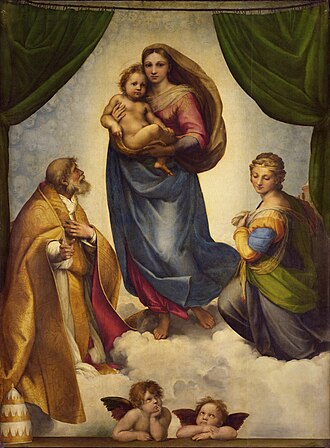 Sixtinische Madonna - Raphael (1510s)
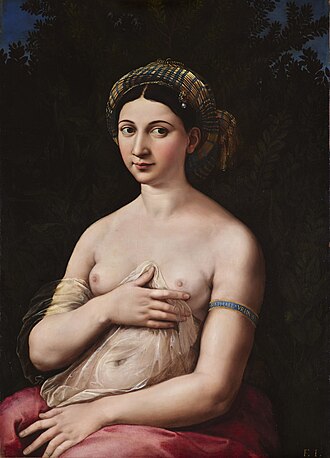 La Fornarina - Raphael
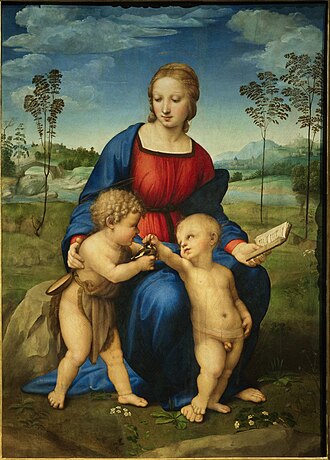 Madonna mit dem Stieglitz - Raphael (1500s)
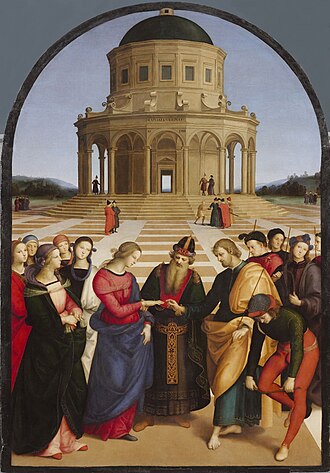 Vermählung Mariä - Raphael (1504)
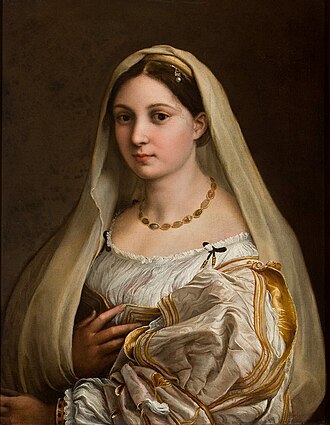 Porträt einer Frau - Raphael (1510s)
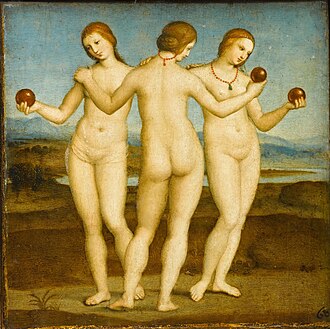 Die drei Grazien - Raphael (1504)
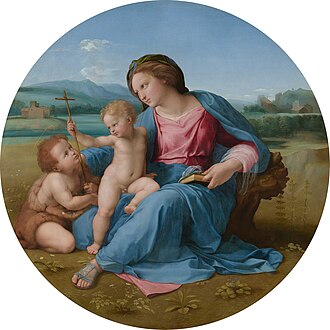 Madonna Alba, Szene: Maria mit Christuskind und Johannes dem Täufer, Tondo - Raphael (1510)
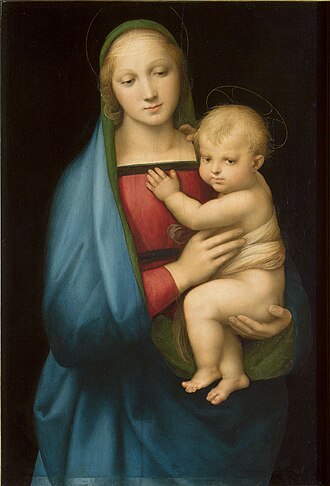 Madonna del Granduca - Raphael (1500s)
Werke verwandter Künstler
 Venus von Urbino - Titian (1538)
 Mariä Himmelfahrt - Titian (1510s)
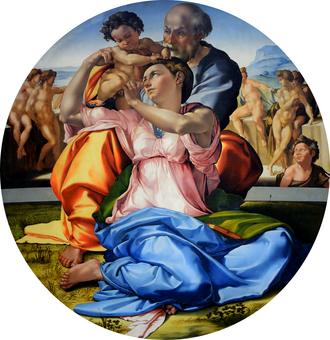 Tondo Doni - Michelangelo (1500s)
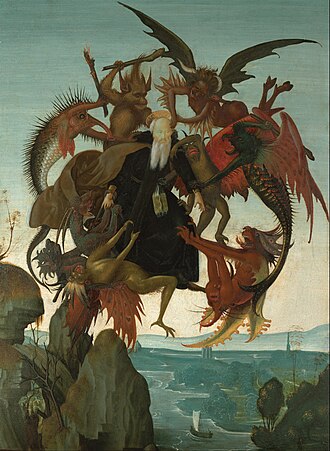 Die Versuchung des Hl. Antonius - Michelangelo (1487)
 Mona Lisa - Leonardo da Vinci (1503-1519)
 Dame mit dem Hermelin - Leonardo da Vinci (1490)
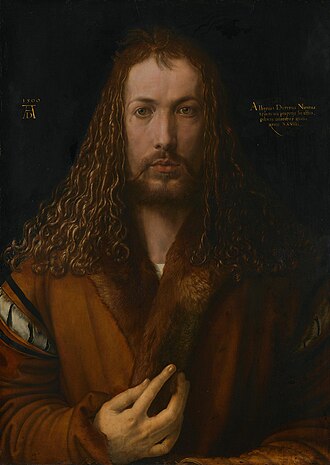 Selbstbildnis im Pelzrock - Albrecht Dürer (1500)
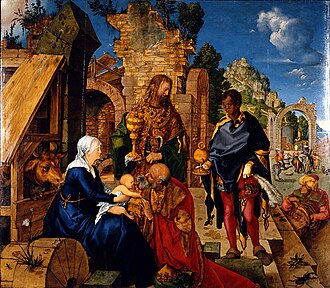 Anbetung der Könige - Albrecht Dürer (1504)
 Die Geburt der Venus - Sandro Botticelli (c. 1485)
 Primavera - Sandro Botticelli (1480s)
 Der Garten der Lüste - Hieronymus Bosch
 Das Narrenschiff - Hieronymus Bosch (1500s)