Geißlerprozession
Francisco Goya · 1815
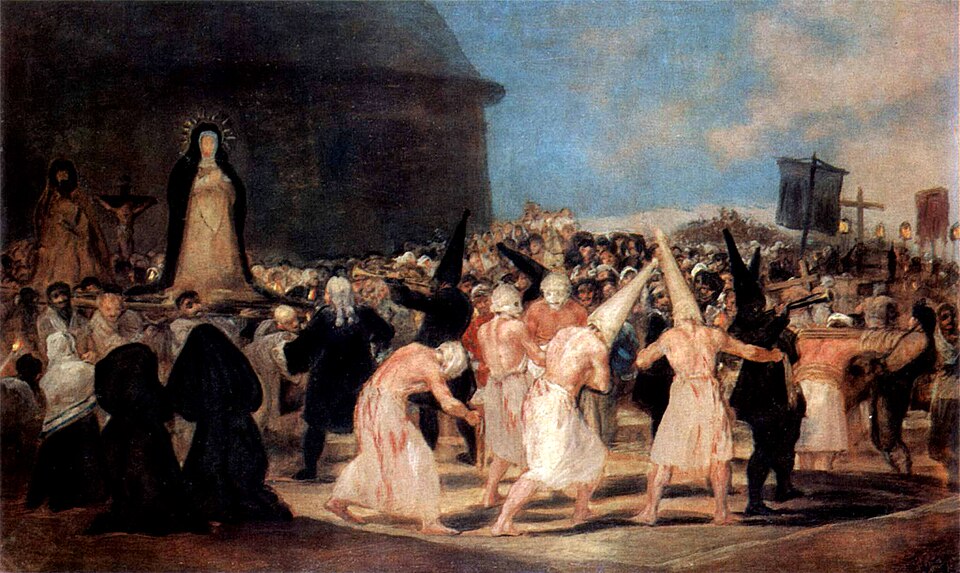
Men in white robes and tall pointed hoods whip their own bare, bleeding backs as they drag huge holy statues through the street. Goya painted this procession after the war, when he wanted Spain to change.
The story behind the painting
Francisco de Goya painted this small oil on panel between 1814 and 1816. It belongs to a series that also includes The Inquisition Tribunal, The Madhouse and The Bullfight. The series shows sides of Spanish life that liberals, Goya among them at the time, wanted to reform, but whose reform was blocked by the absolutist policy of King Ferdinand VII. Wikidata dates the painting to 1815, within that span. It belongs to the Real Academia de Bellas Artes de San Fernando in Madrid and measures 46 by 73 cm.
What to look for
In the foreground Roman Catholic men in white, wearing capirotes, whip their bared backs in penitence. Their backs bleed, and blood runs onto the white garment of the central figure. They pull over-life-size statues of Our Lady of Solitude, the Ecce Homo and the Crucified Christ. Kneeling devotees in black hoods line the route, and everyone carries banners, crosses and lamps. On the right a man is impaled. The figures in front stand in light, each one individual, while the background is an anonymous crowd, dimly lit under a cloudy blue sky.
Meaning and intent
Cruelty is the common thread of the series, and here it is the blood on white cloth. The picture is built on two contrasting zones of light and dark, divided by a dark wall that may symbolise the heavy weight of religion. The bright, sharply drawn penitents in front and the faceless crowd behind turn a religious ritual into a scene of fear and excess. For Goya, the painting was a way of showing customs he believed his country should leave behind.
Legacy
The series played an important part in creating the legend of Black Spain. According to the source, it did not go much beyond the way most other Europeans of the time saw Spain, as an exotic and picturesque land, an interest first stirred by French contact with Spain during the Peninsular War. Paintings like these, with their terrible and romantic aura, inspired several later prints. Today the panel stays in Madrid, where its bleeding penitents still confront visitors with the cruelty Goya wanted his country to see.
Schon gewusst?
- Oil on panel, painted between 1814 and 1816.
- Part of a series with The Inquisition Tribunal, The Madhouse and The Bullfight.
- A dark wall divides the lit penitents from the dim crowd.
- In the Real Academia de Bellas Artes de San Fernando, Madrid.
Über den Künstler
Francisco Goya (1746-1828)
Selbstbildnis · Real Academia de Bellas Artes de San Fernando · Francisco de Goya
Mehr von Francisco Goya
 Die Erschießung der Aufständischen - Francisco Goya (1814)
.jpg) Die nackte Maja - Francisco Goya (1800)
Die nackte Maja - Francisco Goya (1800).jpg) Saturn verschlingt seinen Sohn - Francisco Goya (1819)
Saturn verschlingt seinen Sohn - Francisco Goya (1819) Die Familie Karls IV. - Francisco Goya (1800)
 Die Bekleidete Maja - Francisco Goya (1800)
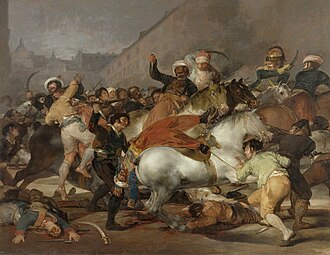 Kampf mit den Mamelucken am 2. Mai 1808 in Madrid - Francisco Goya (1814)
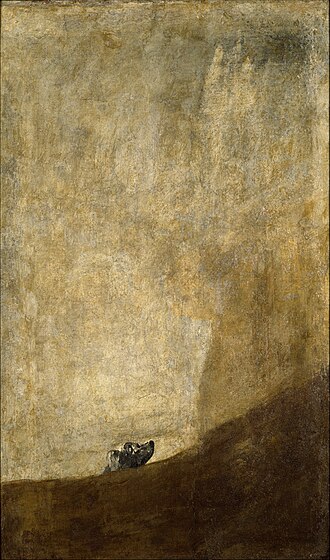 Hund - Francisco Goya (1819)
 Hexensabbat - Francisco Goya (1820s)
Werke verwandter Künstler
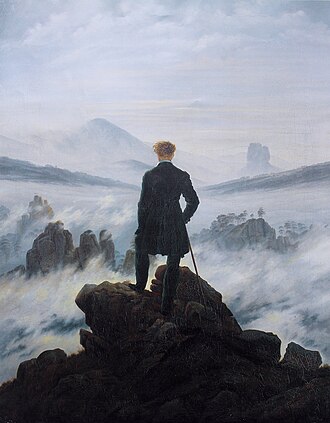 Der Wanderer über dem Nebelmeer - Caspar David Friedrich (c. 1818)
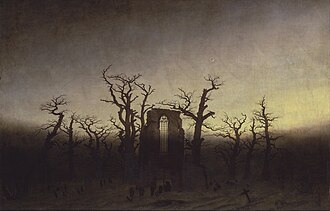 Abtei im Eichwald - Caspar David Friedrich (1800s)
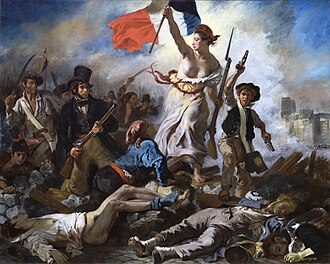 Die Freiheit führt das Volk - Eugène Delacroix (1830)
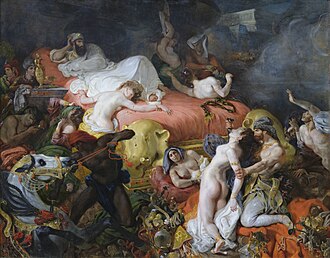 Der Tod des Sardanapal - Eugène Delacroix (1827)
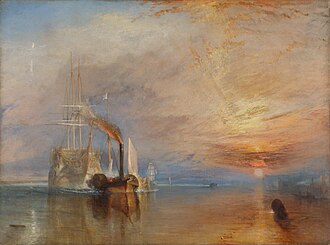 Die letzte Fahrt der Temeraire - J. M. W. Turner (1839)
 Rain, Steam and Speed - The Great Western Railway - J. M. W. Turner (1844)
.jpg) Knabe in Blau - Thomas Gainsborough (1770)
Knabe in Blau - Thomas Gainsborough (1770).jpg) Mr. und Mrs. Andrews - Thomas Gainsborough (1748)
Mr. und Mrs. Andrews - Thomas Gainsborough (1748)