Three Bathers
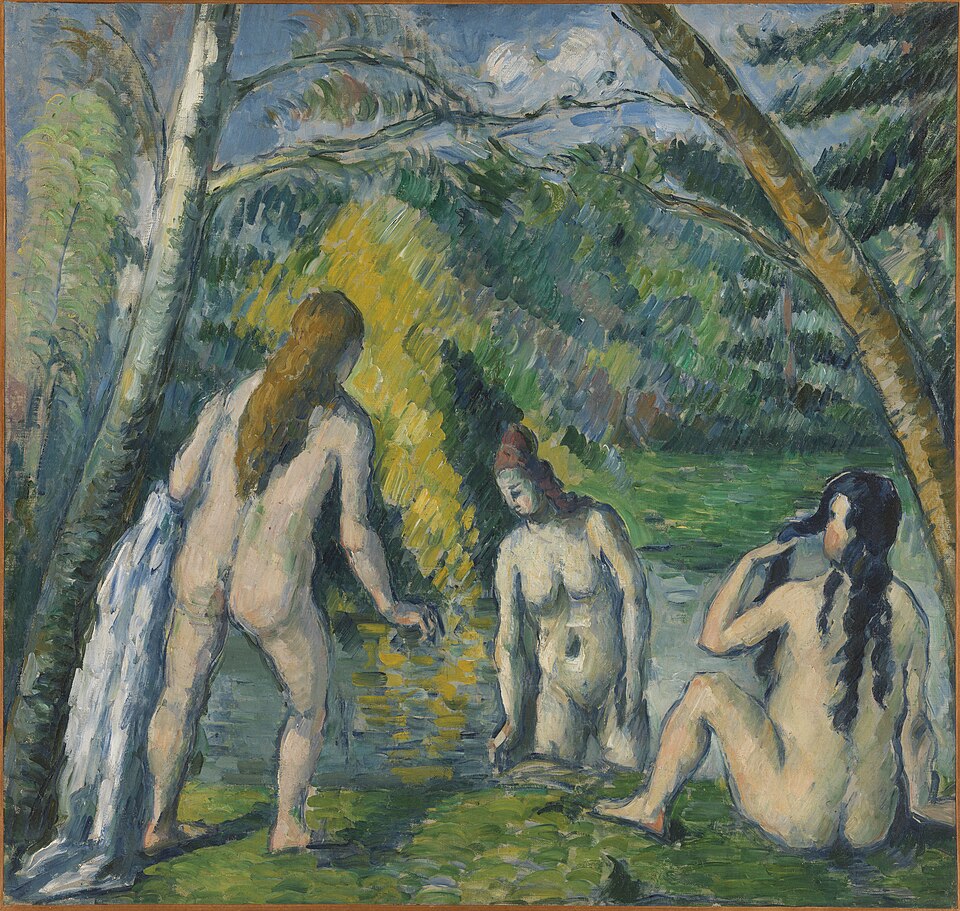
Three bathers framed by an arch of trees, solid and stocky rather than idealised. Matisse bought this small Cézanne in 1899, kept it for more than thirty years, and said it gave him his faith.
The story behind the painting
Bathers preoccupied Cézanne all his life: across his career he made about 200 paintings, watercolours and drawings of male and female bathers. This canvas, painted between 1879 and 1882, is one of them. Its subject, nude women in an idealised natural setting, recalls the classical scenes of semi-nude figures in Venetian Renaissance art. The dates in our sources differ slightly: Wikipedia gives 1879 to 1882 while Wikidata gives no single year. The painting is now housed in the Petit Palais, the city of Paris fine arts museum.
What to look for
Three nude women bathe in a wood, framed by two trees on either side that form an arch. Their bodies are stocky rather than shaped as figures of beauty. The group forms a pyramid, and the three are blonde, dark and red-haired. Light enters the wood from several angles, catching their bodies and reflecting in the water. Look at the brushwork: oblique, regular strokes build the structure of the picture. The canvas is almost square, about 52 by 55 cm, which gives the scene a feeling of density and abundance.
Meaning and intent
In this picture Cézanne's main concerns are structural form and pictorial composition rather than beauty or story. The short, heavy strokes and strong colours belong to the Impressionist manner, but they are used to build the scene like architecture, with the trees as columns and the bathers as a solid block. That is why other artists studied it so closely. Cézanne returned to the subject again and again, including a Three Bathers of around 1875 and another of 1876 to 1877, now at the Barnes Foundation in Philadelphia.
Legacy
Henri Matisse admired this painting enormously and considered it a work of great importance. He bought it in 1899 from the influential dealer Ambroise Vollard at great financial cost to himself and owned it for more than thirty years, often using it as an example when teaching at the Académie Matisse. He said he had drawn from it his faith and his perseverance. In 1936 he gave it to the Petit Palais. In 1978 the sculptor Henry Moore recreated Three Bathers in bronze, and he also drew Cézanne's Bathers from the Front in charcoal.
豆知識
- Painted between 1879 and 1882.
- Owned by Henri Matisse for more than thirty years.
- Given by Matisse to the Petit Palais in 1936.
- Inspired a bronze by Henry Moore in 1978.
画家について
ポール・セザンヌ (1839-1906)
風俗美術 · ヌード · パリ市立プティ・パレ美術館 · 裸婦
同じ画家の作品: ポール・セザンヌ
 大水浴図 - Paul Cézanne (1900s)
 赤いチョッキの少年 - Paul Cézanne
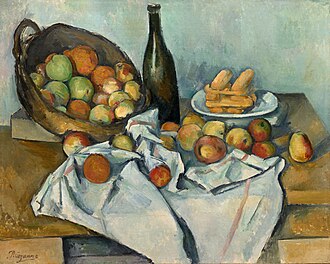 The Basket of Apples - Paul Cézanne (1893)
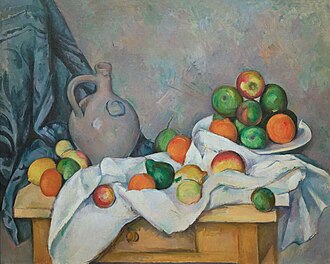 カーテン、水差しと果物入れ - Paul Cézanne (1890s)
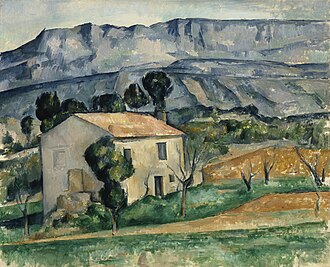 Maison devant la Sainte-Victoire près de Gardanne - Paul Cézanne (1880s)
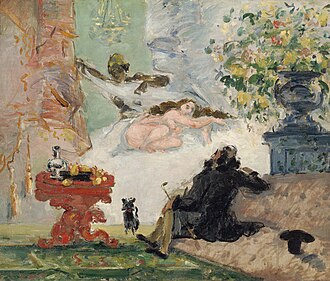 モデルヌ・オランピア - Paul Cézanne (1873)
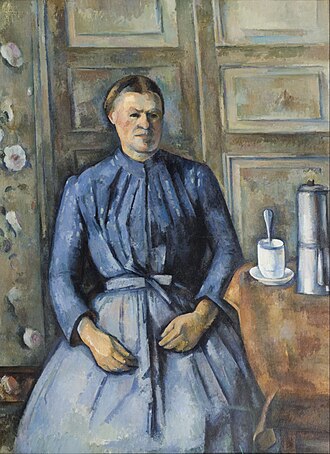 La Femme à la cafetière - Paul Cézanne (1895)
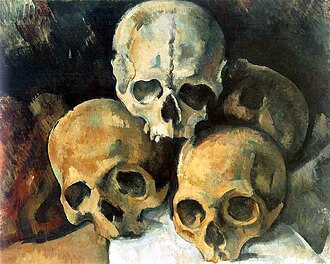 積み重ねた骸骨 - Paul Cézanne (1899)
関連する画家の作品
 星月夜 - Vincent van Gogh (1889)
 夜のカフェテラス - Vincent van Gogh (1888)
 我々はどこから来たのか 我々は何者か 我々はどこへ行くのか - Paul Gauguin (1897-1898)
 黄色いキリスト - Paul Gauguin (1889)
 Walk on the mountain - Joaquín Sorolla (1909)
 Sad Inheritance - Joaquín Sorolla (1898)
 ムーラン・ド・ラ・ギャレットの舞踏会 - Pierre-Auguste Renoir (1876)
 舟遊びの昼食 - Pierre-Auguste Renoir (1881)
 ムーラン・ルージュ - Henri de Toulouse-Lautrec (1892)
 La Toilette - Henri de Toulouse-Lautrec (1896)