The Mother and Sister of the Artist
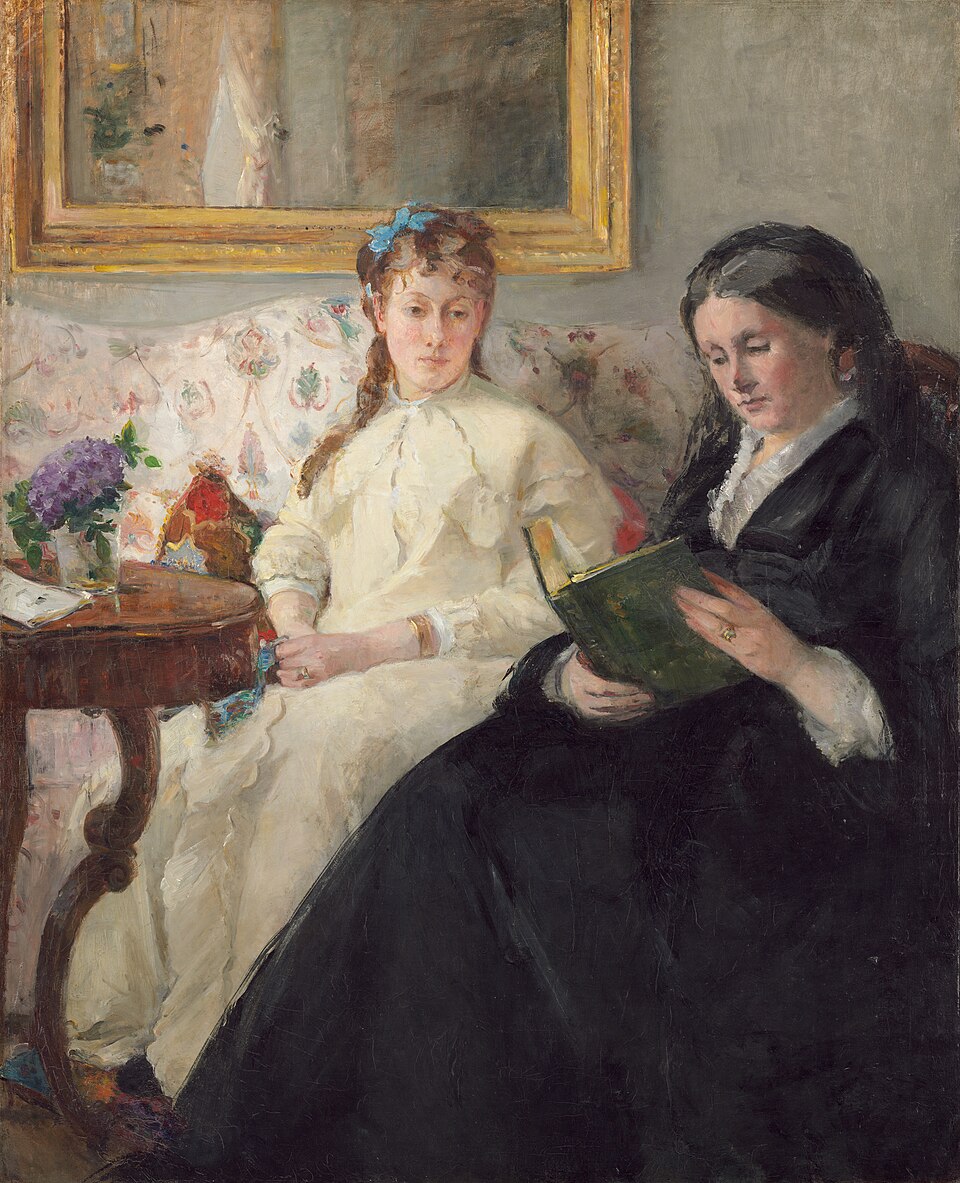
A mother reads aloud while a pregnant young woman in white stares into the distance. It looks like a calm afternoon, but behind it lies a sister who gave up painting, and a friend who took Berthe Morisot's brushes without asking.
The story behind the painting
Berthe Morisot painted this double portrait in 1869 to 1870. It shows her mother, Marie-Joséphine, and her favourite sister, Edma Pontillon. The two sisters had learned to paint together from the start, but in 1869 Edma married and gave up painting at her husband's insistence. Here she is pregnant with her first child. Her letters to Berthe ache with what she had lost: she wrote that she was often in Berthe's studio in spirit, longing to breathe for a quarter of an hour the air they had shared for years.
What to look for
The scene is the living room of Morisot's parents' house. Madame Morisot, in a black dress, reads from a book, the activity that gave the painting its other title, The Reading. Edma sits beside her in a pale robe, her expression pensive. She is bathed in light from the window while her mother sits more in shadow, and their attitudes, passive and active, set them apart. In the background a mirror reflects a curtained door. The large upholstered sofa and the wooden table speak of the family's social class.
Meaning and intent
Unsure about the picture at the end of 1869, Morisot asked Pierre Puvis de Chavannes for advice; he told her only to work on her mother's head. Then Édouard Manet came, took her brushes and began adding black to her mother's dress, his own favourite colour, then to the head and even the background. Morisot was furious. She wished the Salon would refuse the work and called the result a caricature. This explains its unusual amount of black, rare in Impressionism but common in Manet. The story shows how hard the art world made it for a woman painter to trust her own eye.
Legacy
Despite her anger, the painting was accepted at the Salon, alongside her Harbour at Lorient; Morisot showed at the Salon from 1864 until 1874, when she joined the first Impressionist exhibition with The Cradle. The work received a positive review, even as a so called feminine painting. After her death it stopped being exhibited, and only in the middle of the twentieth century did experts take interest again. It now hangs in the National Gallery of Art in Washington.
豆知識
- Painted 1869-1870.
- Shows Morisot's mother and her pregnant sister Edma.
- Manet repainted parts of it, to Morisot's anger.
- In the National Gallery of Art, Washington.
画家について
ベルト・モリゾ (1841-1895)
ナショナル・ギャラリー・オブ・アート · double portrait · エドマ・モリゾ
同じ画家の作品: ベルト・モリゾ
 ゆりかご - Berthe Morisot (1872)
 Summer's Day - Berthe Morisot (1879)
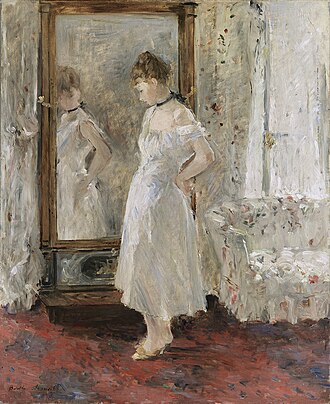 The Psyche mirror - Berthe Morisot (1876)
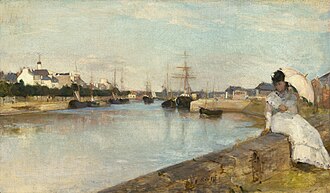 ロリアンの港 - Berthe Morisot (1869)
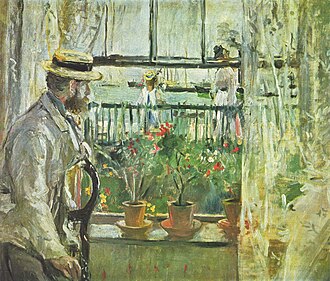 Eugène Manet on Isle of Wight - Berthe Morisot (1875)
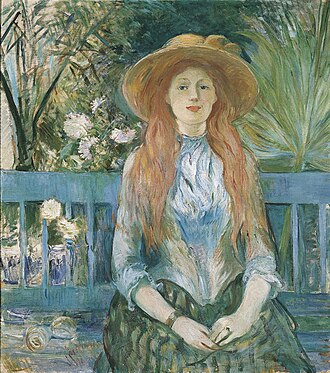 Young girl in a park - Berthe Morisot (1893)
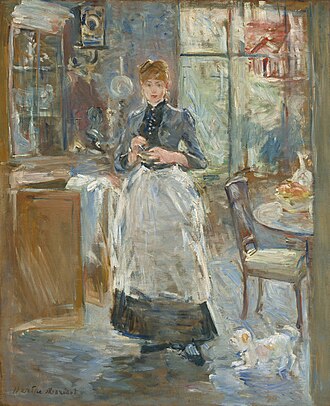 In the Dining Room - Berthe Morisot (1886)
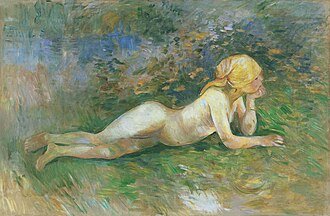 Reclining Nude Shepherdess - Berthe Morisot (1891)
関連する画家の作品
 印象・日の出 - Claude Monet (1872)
 睡蓮 - Claude Monet (1906)
 草上の昼食 - Édouard Manet (1863)
 オランピア - Édouard Manet (1863)
 ムーラン・ド・ラ・ギャレットの舞踏会 - Pierre-Auguste Renoir (1876)
 舟遊びの昼食 - Pierre-Auguste Renoir (1881)
 アブサントを飲む人 - Edgar Degas (1875)
 The Bellelli Family - Edgar Degas (1858)
 The Canal du Loing at Moret - Alfred Sisley (1892)
 The Watering Pond at Marly with Hoarfrost - Alfred Sisley (1876)
 パリの通り、雨 - Gustave Caillebotte (1877)
 床削り - Gustave Caillebotte (1875)