La Belle Impéria
ロヴィス・コリント · 1925
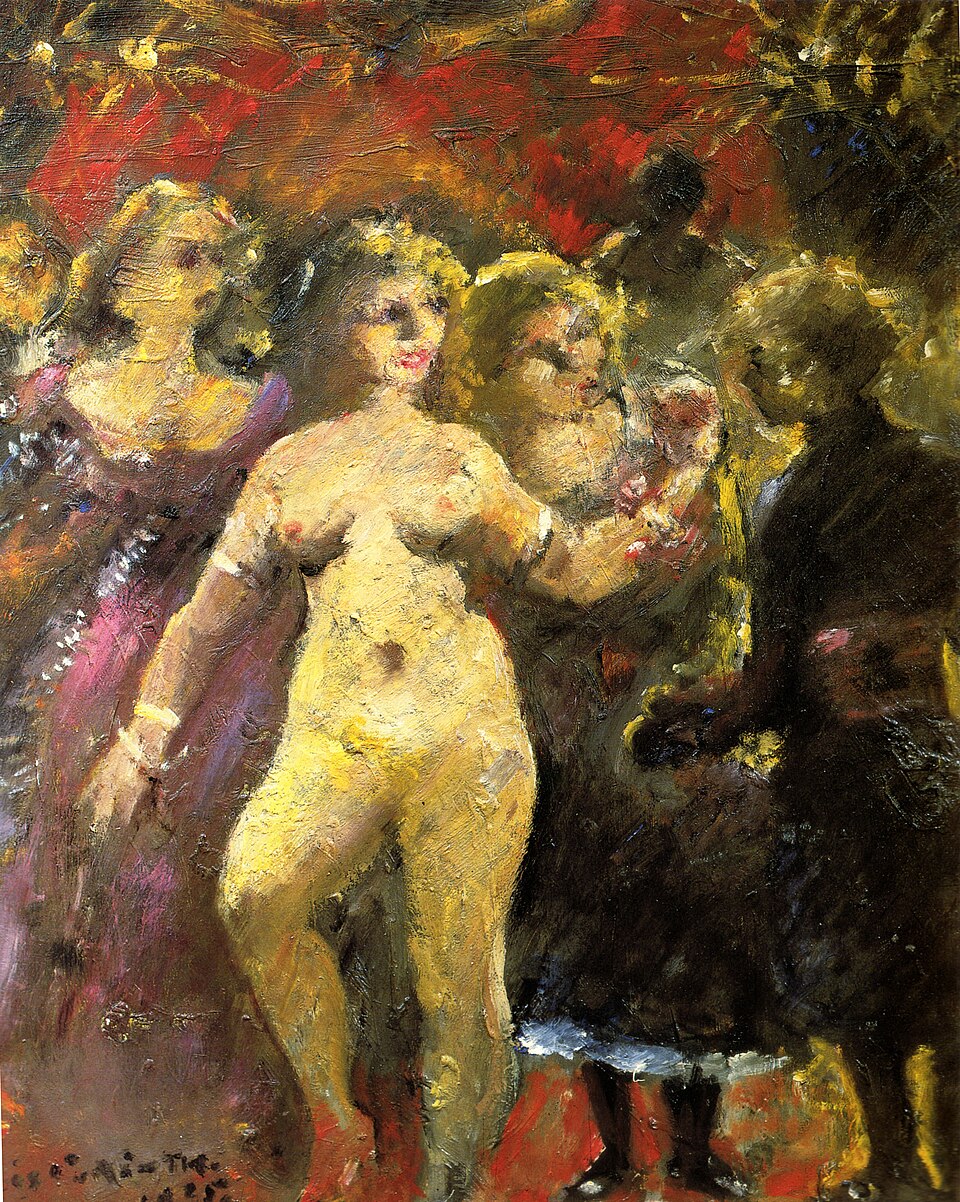
A nude courtesan stands among her maids before a young priest who cannot stop staring. It is one of the last paintings Lovis Corinth ever made, and even on his deathbed he told his family: it is a good picture.
The story behind the painting
Corinth painted The Beautiful Imperia in 1925, the year of his death on 17 July. It illustrates La Belle Impéria, a tale from Honoré de Balzac's Droll Stories, published in 1832, 1833 and 1837. Corinth already knew the book well: in 1913 he had made a series of eleven lithographs for it, though Imperia was not among them. This was the last painting he finished before his journey to Amsterdam, where he fell ill with pneumonia; he died in Zandvoort in the Netherlands.
What to look for
In this upright canvas, 75 by 48 cm according to Wikipedia, the naked Imperia stands slightly off centre, almost fully frontal, her right leg bent to show a red shoe. Bracelets circle her wrists and upper arm. Her left arm reaches toward a dark figure at the right edge, and her eyes and slightly open mouth turn to him. He wears a dark robe and a violet sash like those of clergy, and he stares straight at her. Behind her, blurred women in long dresses and jewels. There is no room to read, only red fields lit with touches of yellow.
Meaning and intent
In Balzac's tale, a young cleric, Philippus of Mala, accompanies the Archbishop of Bordeaux to the Council of Constance. Seeing how loosely the council's visitors live, he decides to do the same, slips into the finest house in town, and finds Imperia undressing among her maids, which draws from him a heartfelt exclamation. Corinth paints the moment she addresses the priest and notes that he has very beautiful eyes. In the story she falls in love with him and invites him back, leading to tangles with high-ranking clerical suitors.
Legacy
According to his wife, Corinth still thought about this picture on his sickbed in Amsterdam and urged his family to look after it, telling her: it is a good picture. After his death it passed to his daughter Wilhelmine Corinth, who kept it in New York City. The canvas closes a long career with a theatrical, sensual scene, painted in fierce reds in 1925, the year he died at Zandvoort.
豆知識
- One of Corinth's last paintings, 1925.
- Illustrates a tale from Balzac's Droll Stories.
- His last finished painting before the trip to Amsterdam.
- Passed to his daughter Wilhelmine Corinth in New York.
画家について
ロヴィス・コリント (1858-1925)
女性 · ヌード · 裸 · ドレス · へそ · ブレスレット · 笑み · 靴
同じ画家の作品: ロヴィス・コリント
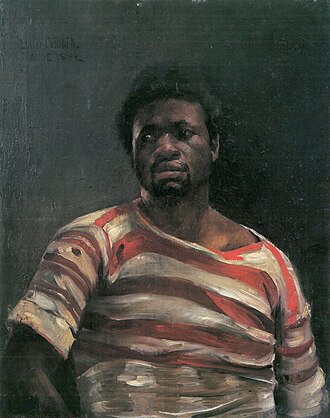 Black Othello - Lovis Corinth (1884)
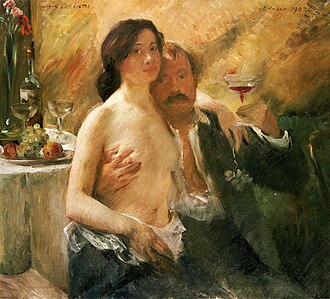 Self portrait with his wife Charlotte Berend-Corinth and a sekt glass - Lovis Corinth (1902)
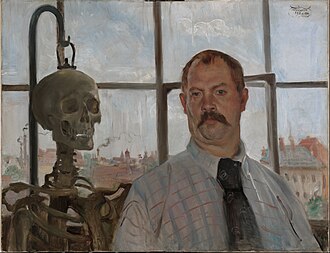 自画像 - Lovis Corinth (1896)
 Innocentia - Lovis Corinth (1890)
 Susanna in the Bath - Lovis Corinth (1890)
 The Red Christ - Lovis Corinth (1922)
 Reading Woman - Lovis Corinth (1911)
 Carmencita - Lovis Corinth (1924)