Kuhstall
ロヴィス・コリント · 1879
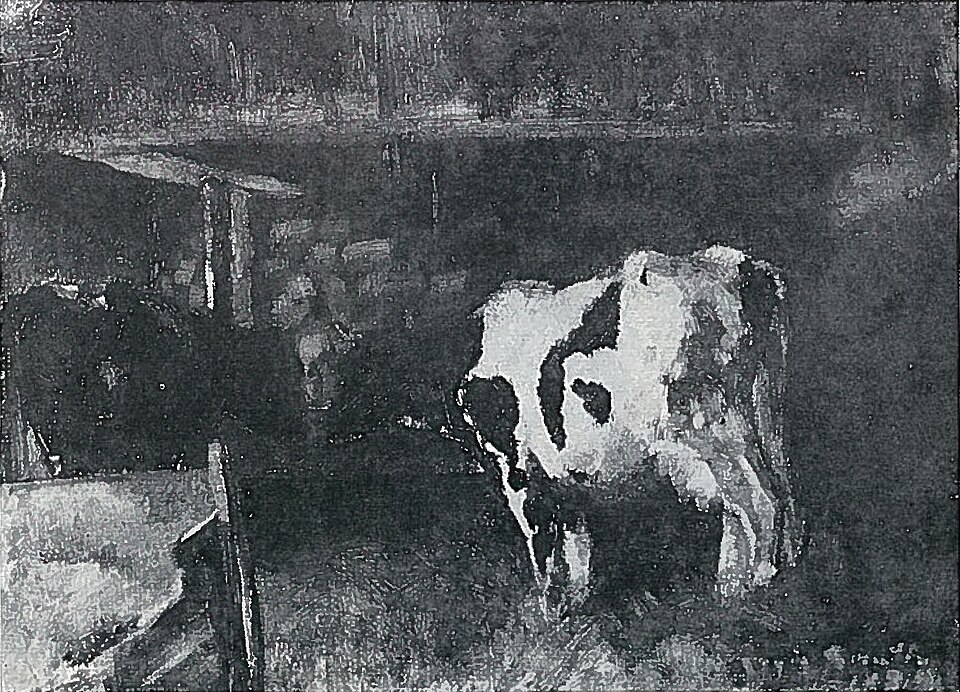
Two cows in a low, straw-floored stable: one of the very first oil paintings by the young Lovis Corinth. He kept it in his studio all his life, and his widow carried it with her when she fled Germany.
The story behind the painting
Corinth painted Kuhstall, Cow Stable, in 1879 at the farm of his uncle Friedrich in Moterau, today Sabarje, while he was a young student at the Königsberg Art Academy, where he trained from 1876 until he left for Munich in 1880 on his teachers' advice. In 1879 he also drew the stables and kitchen of his uncle's farm, and the following year he made early oil sketches of the uncle and aunt. His wife Charlotte Berend-Corinth listed Kuhstall as number 2 in her 1958 catalogue of his paintings.
What to look for
The small canvas, 27 by 37 cm, shows two cows standing head to head in a low, closed stable. In the right foreground stands a white cow with a dark head and black patches, seen from the side with its neck stretched. The cow in the left third is entirely black and seen from behind, its rump toward us. Behind them you can make out the brown ceiling and its supporting beams and reddish brickwork on the back wall. In the left foreground is a trough, and the floor is covered with straw.
Meaning and intent
For a young student, this was a subject from daily life on a family farm, painted directly and without ornament. Farm buildings such as pig sties and cow stables, along with slaughtered animals and slaughterhouses, recur in Corinth's work right up to his last years. Another well-known cow stable dates from around 1922, three years before his death. That he kept this early picture in his studio for his whole life suggests how much this first step meant to him.
Legacy
After Corinth's death in 1925 the painting stayed with the family, and Charlotte Berend-Corinth took it with her when she fled Germany for the United States in the late 1930s. It belonged to their daughter Wilhelmine until 1987, when it was bought with federal funds, together with the portrait of Uncle Friedrich, for the newly founded East Prussian Regional Museum in Lüneburg. It was shown at Berlin Secession exhibitions in 1913 and 1918, in memorial shows in 1926, and in New York in 1964.
豆知識
- One of Corinth's earliest oil paintings, 1879.
- Painted at his uncle's farm in Moterau as a Königsberg student.
- Kept in Corinth's studio until his death in 1925.
- In the East Prussian Regional Museum, Lüneburg, since 1987.
画家について
ロヴィス・コリント (1858-1925)
同じ画家の作品: ロヴィス・コリント
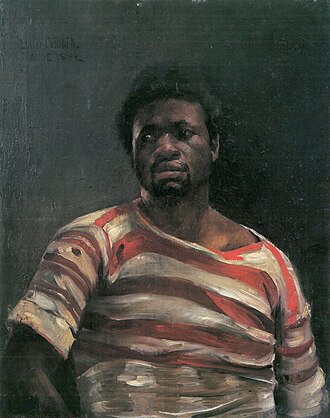 Black Othello - Lovis Corinth (1884)
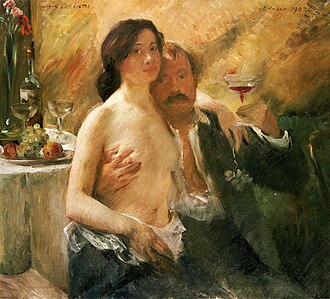 Self portrait with his wife Charlotte Berend-Corinth and a sekt glass - Lovis Corinth (1902)
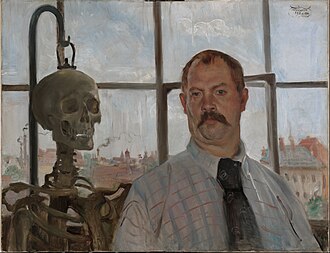 自画像 - Lovis Corinth (1896)
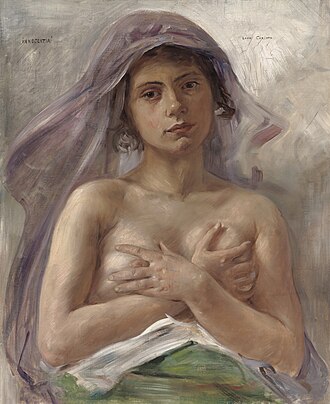 Innocentia - Lovis Corinth (1890)
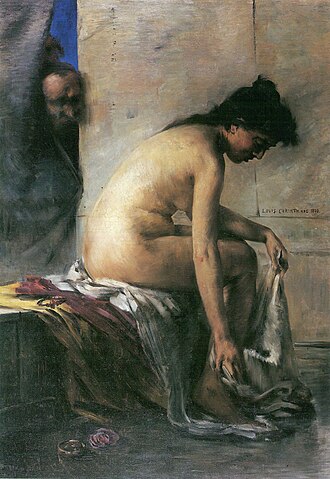 Susanna in the Bath - Lovis Corinth (1890)
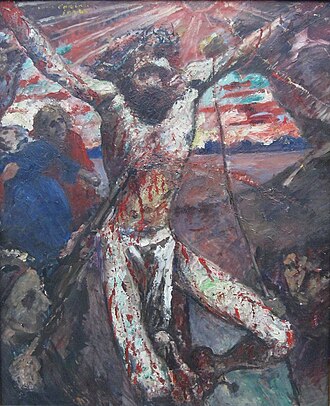 The Red Christ - Lovis Corinth (1922)
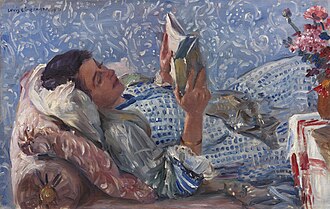 Reading Woman - Lovis Corinth (1911)
 Carmencita - Lovis Corinth (1924)