La Bella Principessa
Leonardo da Vinci · 1495
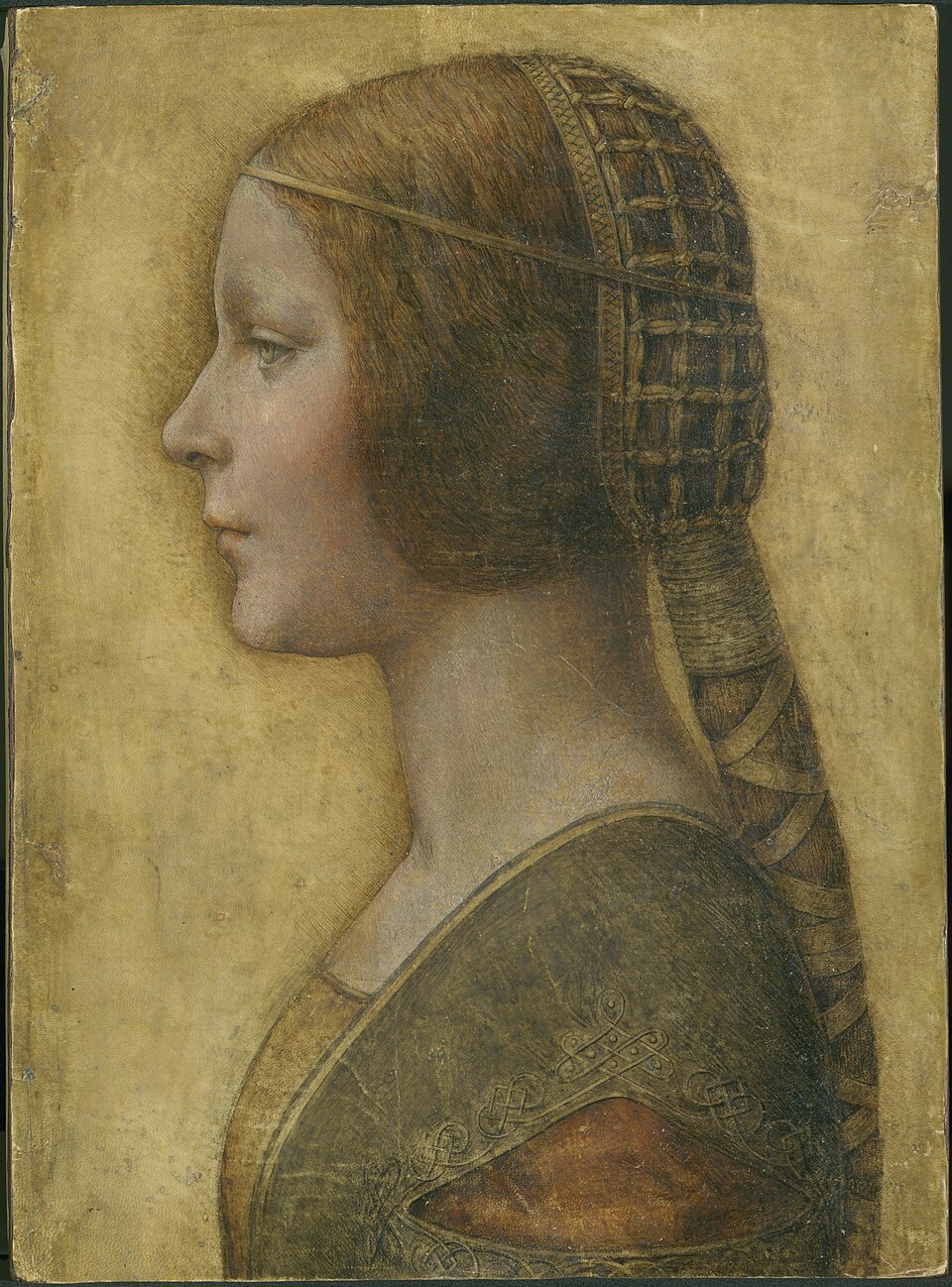
A girl of the Milanese court, seen in perfect profile on a small sheet of vellum: some scholars believe Leonardo da Vinci drew her, others insist he never touched it. Few portraits ask the viewer to weigh so much evidence before simply enjoying a face.
The story behind the painting
This work, known as La Bella Principessa and also as Portrait of a Young Fiancée, is a drawing in coloured chalks and ink on vellum showing a young lady in the costume and hairstyle of Milan in the 1490s. Its origins are genuinely disputed. Supporters, led by Martin Kemp and Pascal Cotte, attribute it to Leonardo and propose that the sitter is Bianca Giovanna Sforza, illegitimate daughter of Ludovico Sforza, Leonardo's employer. They argue the sheet was cut from a vellum copy of La Sforziada now in Warsaw, a book linked to Bianca's marriage to Galeazzo Sanseverino in 1496. If the sitter is Bianca, the drawing would date from that year, the year of both her marriage and her death. Other scholars believe it is the work of an early nineteenth-century German artist imitating the Renaissance, and some have called it a forgery.
What to look for
The portrait mixes pen and brown ink with red, black and white chalk, on a sheet about 33 by 24 centimetres that has been laid down on an oak board. The girl, in her early teens, is shown in strict profile, the usual way fifteenth-century Italian artists portrayed women. Follow the line of her brow, nose and lips against the plain ground, then let your eye travel to her dress and the long braid, the coazzone, a hairstyle fashionable in Milan at the time. Close examination reveals details the naked eye might miss: thin paint applied with a brush where it was restored, and three stitch holes in the left margin showing that the leaf was once bound in a volume.
Meaning and intent
For its supporters, the drawing carries the marks of Leonardo's hand. The scholar Cristina Geddo pointed to its very high quality, to hatching made by a left-handed artist, and to the combination of black, white and red chalks, a technique Leonardo is said to have learned from the French artist Jean Perréal in Milan. The costume historian Elisabetta Gnignera supported the attribution by comparing dress and hairstyles of the period. Kemp gave it the name La Bella Principessa to reflect a girl of high nobility, while acknowledging that Sforza ladies were not princesses. Sceptics read the same clean profile and polished finish as a later imitation of Renaissance style. The image therefore means two things at once: a tender court portrait, and a test case for how art history decides who made a work.
Legacy
The drawing's documented history is short. It appeared at Christie's in New York in 1998, catalogued as German School, early nineteenth century, and was bought in 2007 by the dealer Peter Silverman, who has championed the Leonardo attribution. It was shown as a Leonardo in an exhibition in Sweden in 2010 and later in Urbino, Monza and Nanjing. Scientific tests added fuel to the debate: radiocarbon dating gave the vellum a much earlier date than the nineteenth century, while a claimed fingerprint match was later dropped from Kemp's publications. The drawing is reported to be kept in a vault in Switzerland. Whatever its maker, it remains one of the most argued-over images connected with Leonardo's name.
Lo sapevi?
- The sheet has three stitch holes in its left margin, showing it was once bound in a book.
- Its 1998 auction catalogue called it German School, early 19th century.
- The sitter wears a long braid known as a coazzone, fashionable in 1490s Milan.
- Martin Kemp named it La Bella Principessa, though Sforza ladies were not princesses.
L'artista
Leonardo da Vinci (1452-1519)
portrait · High Renaissance · waist-length hair · dress · girl
Altre opere di Leonardo da Vinci
 Mona Lisa - Leonardo da Vinci (1503-1519)
 Lady with an Ermine - Leonardo da Vinci (1490)
 Salvator Mundi - Leonardo da Vinci (1490)
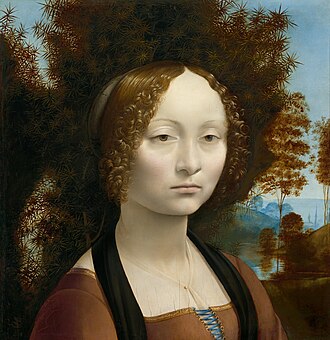 Ginevra de' Benci - Leonardo da Vinci (1470s)
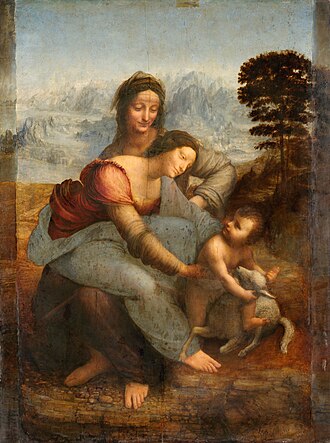 La Vergine e il Bambino con sant'Anna - Leonardo da Vinci
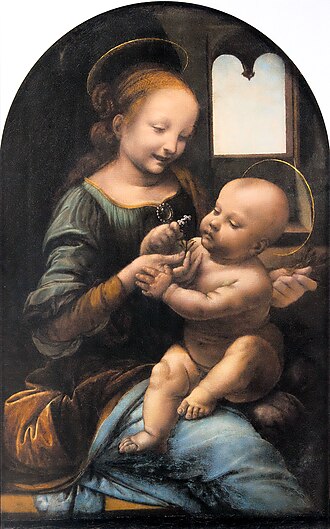 Benois Madonna - Leonardo da Vinci
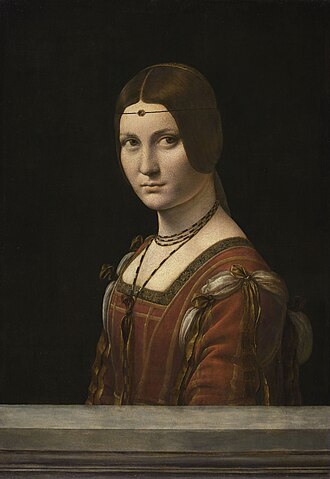 La Belle Ferronnière - Leonardo da Vinci (1495)
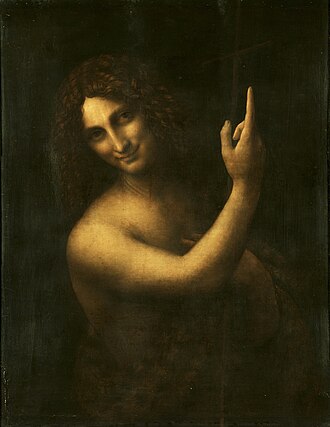 Saint John the Baptist - Leonardo da Vinci (1510s)
Dipinti di artisti collegati
.jpg) Venus of Urbino - Titian (1538)
Venus of Urbino - Titian (1538)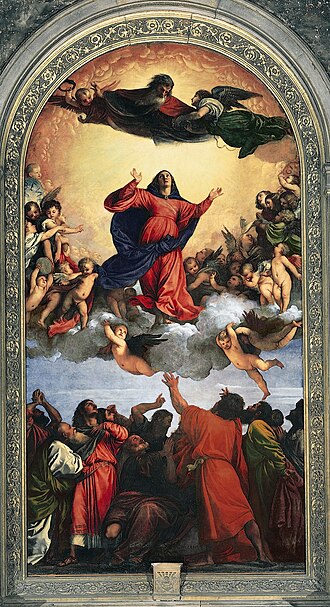 Assumption of the Virgin - Titian (1510s)
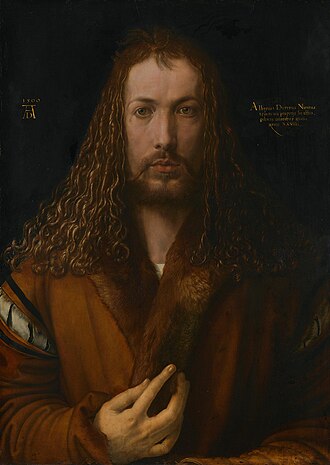 Self-Portrait with Fur-Trimmed Robe - Albrecht Dürer (1500)
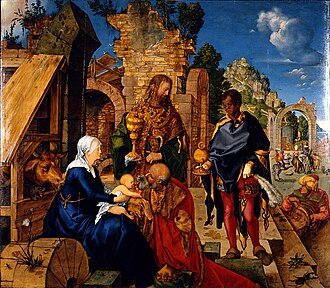 Adoration of the Magi - Albrecht Dürer (1504)
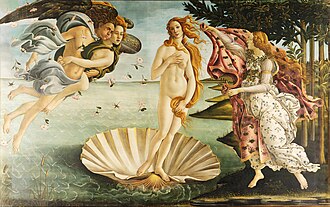 The Birth of Venus - Sandro Botticelli (c. 1485)
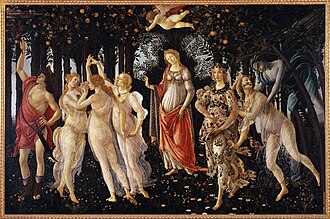 Primavera - Sandro Botticelli (1480s)