La Madonna de Bogota
Raphael · 1517
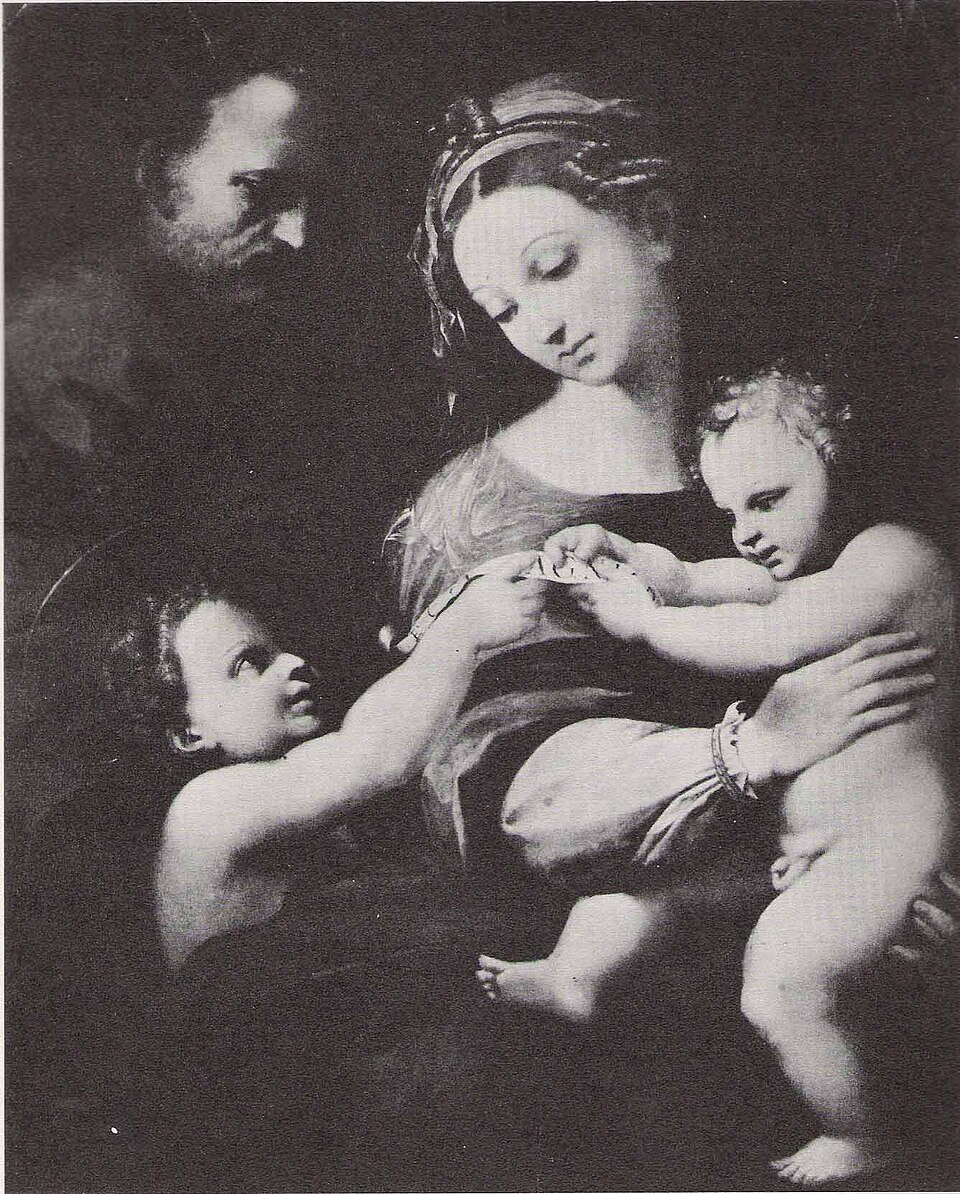
In 1938, in a house in Bogotá, a painting split in two and held together with wire was waiting for someone to recognise it. The man who did believed it was a Raphael, and a long debate began.
The story behind the painting
According to the account, the Madonna and Child was brought to what is now Colombia, then the Nuevo Reino de Granada, by the conquistador Gonzalo Suárez Rendón, who had received it from Emperor Charles V as a war trophy after the Battle of Pavia. Centuries later it belonged to Maria Mendoza in Bogotá. She thought it was by the Colombian painter Gregorio Vázquez de Arce y Ceballos and, in 1938, asked her friend Santiago Martínez Delgado, who had written a book on that artist, to look at it. As soon as he saw it, he felt it was by Raphael or someone from his school. Wikidata dates the work 1517.
What to look for
What Martínez Delgado saw first was damage: the painting was in very poor condition, split in two and kept together by a piece of wire. He took it away to study, ordered x-rays and other examinations, and became convinced it was an original. Critics answered that it was only a copy of a Raphael in Madrid; the newspaper El Tiempo argued it copied the Prado picture. Enrique Restrepo showed that, although similar, the Bogotá painting differed in many respects, and that the Madrid version had hung for a long time in the chapel of El Escorial, out of reach for a sixteenth century copyist.
Meaning and intent
For Martínez Delgado this was more than an attribution; he defended it in public. He called a symposium at the municipal theatre, attended by experts such as Enrique Uribe White, Antonio Bergmann, Domingo Otero and Ines Acevedo Biester, and explained the provenance and the scientific work. He also said the painting had reached Colombia with Caballero Góngora, a second account alongside the story of Suárez Rendón. In 1939 he took it to New York, where it was studied at the Metropolitan Museum and Columbia University by scholars including Adolfo Venturi and Wilhelm Valentiner, and in June 1939 it was declared an original Raphael.
Legacy
The painting was restored at the Art Institute of Chicago. In 1939 Ruth VanSickle Ford, president of the Chicago Academy of Fine Arts, issued a certificate of authenticity, and in 1940 the Brooklyn Museum issued another attributing it to Raphael. In Colombia, Joaquín Piñeros Corpas announced in El Tiempo that it was confirmed as a Raphael, and many American papers praised Martínez Delgado. Today the Madonna is kept in an unidentified New York bank vault. His will stipulates that it should pass to the San Agustín Church in Bogotá, bringing it home to the city where it was found.
Lo sapevi?
- Rediscovered in Bogotá in 1938, split in two and held with wire.
- Declared an original Raphael in New York in June 1939.
- Two accounts of how it reached Colombia exist in the source.
- Kept in a New York bank vault, meant for San Agustín Church in Bogotá.
L'artista
Raphael (1483-1520)
religious art · woman · Mary · Christ Child · High Renaissance · boy · mother
Altre opere di Raphael
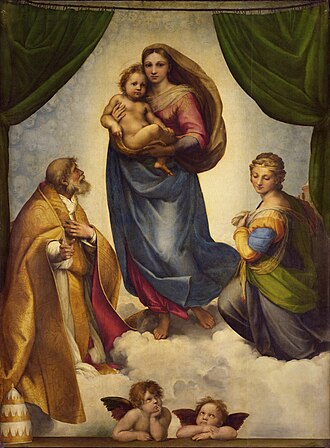 Sistine Madonna - Raphael (1510s)
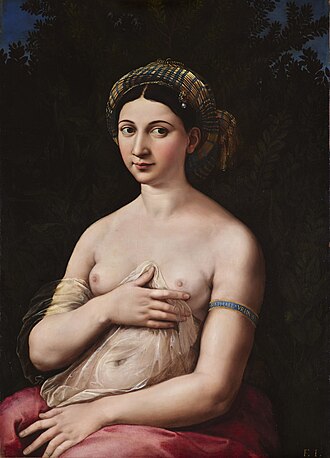 La fornarina - Raphael
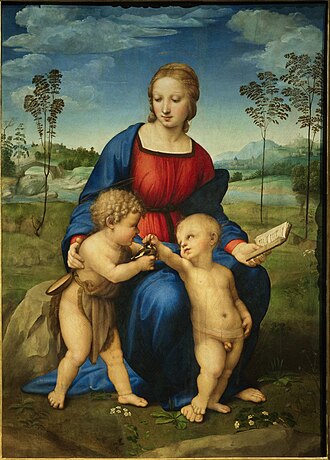 Madonna of the Goldfinch - Raphael (1500s)
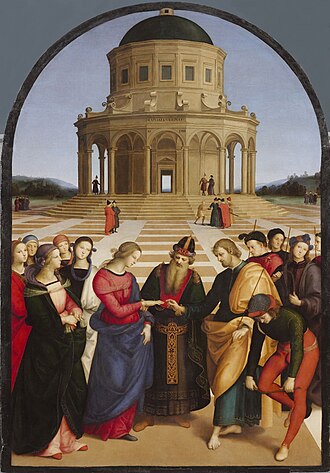 The Marriage of the Virgin - Raphael (1504)
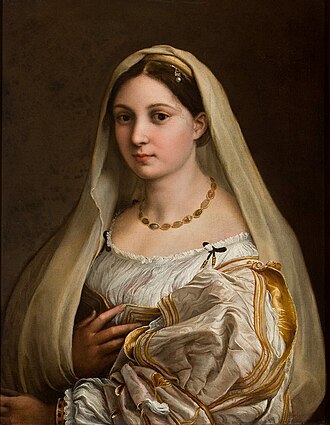 La velata - Raphael (1510s)
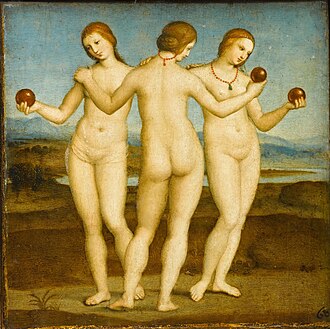 Three Graces - Raphael (1504)
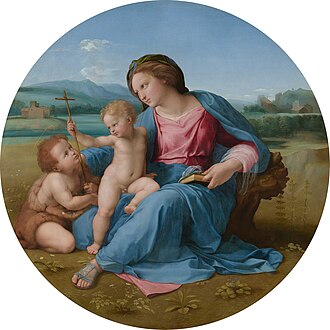 Alba Madonna - Raphael (1510)
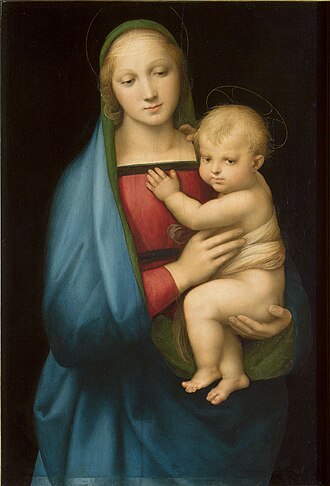 Madonna del Granduca - Raphael (1500s)
Dipinti di artisti collegati
 Venus of Urbino - Titian (1538)
 Assumption of the Virgin - Titian (1510s)
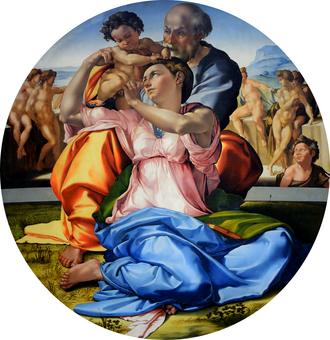 Doni Tondo - Michelangelo (1500s)
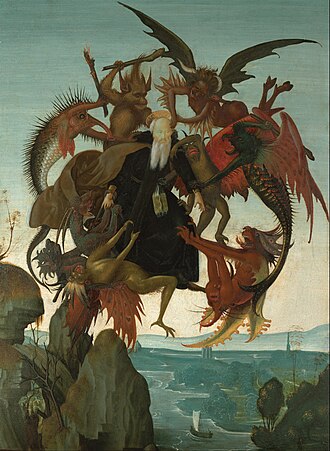 The Torment of Saint Anthony - Michelangelo (1487)
 Mona Lisa - Leonardo da Vinci (1503-1519)
 Lady with an Ermine - Leonardo da Vinci (1490)
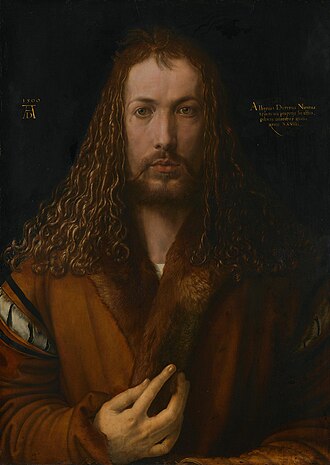 Self-Portrait with Fur-Trimmed Robe - Albrecht Dürer (1500)
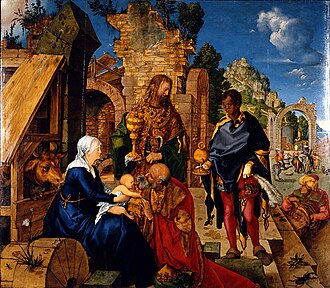 Adoration of the Magi - Albrecht Dürer (1504)
 The Birth of Venus - Sandro Botticelli (c. 1485)
 Primavera - Sandro Botticelli (1480s)
 The Garden of Earthly Delights - Hieronymus Bosch
 Ship of Fools - Hieronymus Bosch (1500s)