La Belle Jardinière
Raphael · 1500s
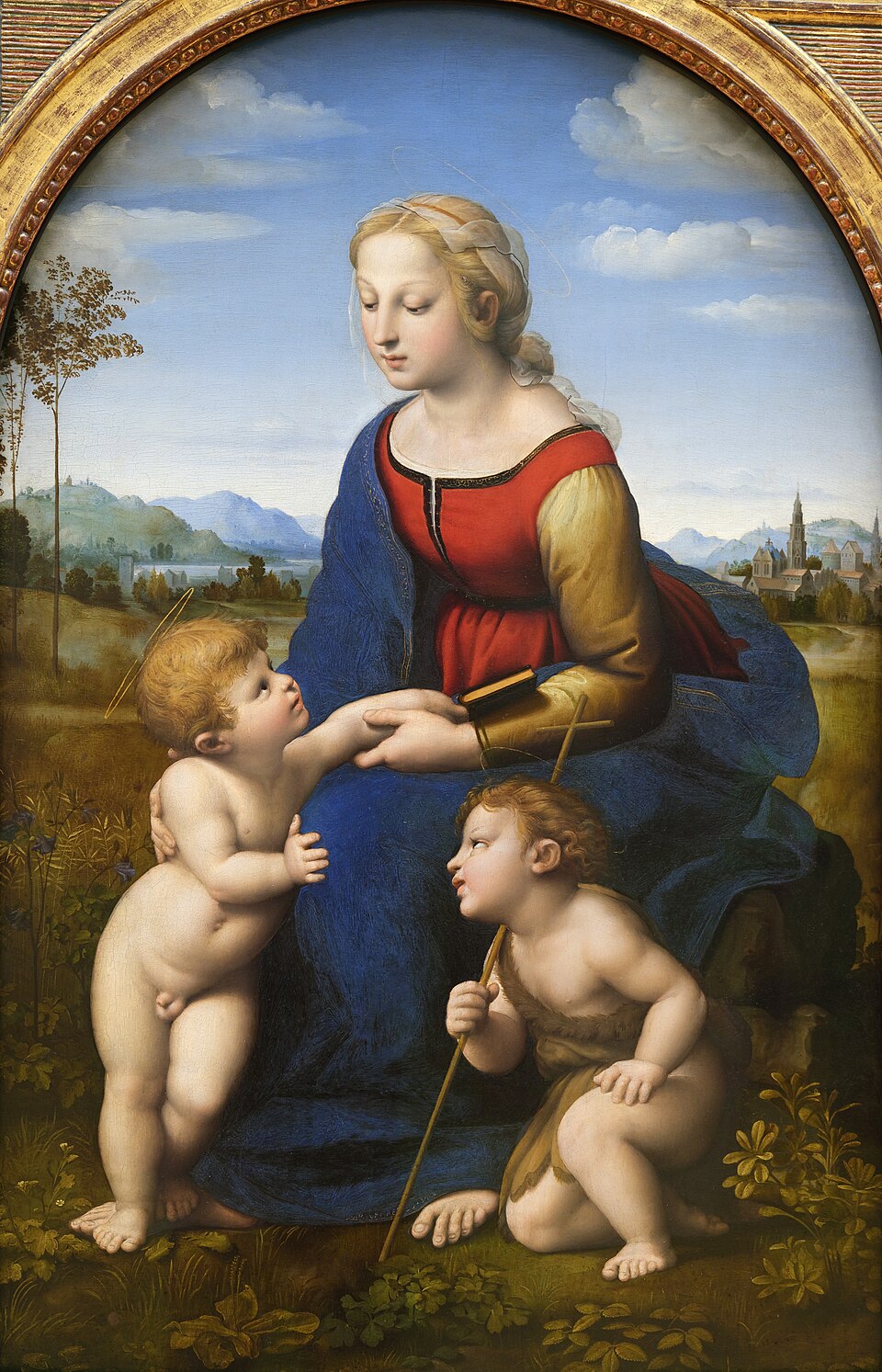
The little Christ stands on his mother's foot and looks up at her, while the young John the Baptist kneels with his reed cross in a flowering countryside. Raphael left Florence before finishing it, and another painter completed Mary's blue robe.
The story behind the painting
La Belle Jardiniere, also called the Madonna and Child with Saint John the Baptist, was begun by Raphael and is believed to have been commissioned by the Sienese patrician Fabrizio Sergardi around 1507. Raphael started it after finishing the Madonna of the Goldfinch, and it mirrors his next work, the Madonna of the Meadow. He could not complete it before leaving Florence, and it was finished by Ridolfo del Ghirlandaio, who is especially credited with Mary's blue robe.
What to look for
The panel, about 122 by 80 cm, is built as a pyramid with Mary's face at its apex and her body filling most of the rest. The Christ Child stands at her right, on one of her feet, and looks up at her as she wraps a protective arm around him. John the Baptist kneels on the ground at left, holding his reed cross. Mary holds a book in the hand resting on her lap. Faint haloes circle all three heads. Behind them lies a lovely countryside garden in rich, luminous colours, with light and shadow softly blended.
Meaning and intent
The child's trust is shown by his pose, dependent and looking up, while John is the witness to their closeness. The book Mary holds is believed to contain the foretelling of Christ's death, and the positions of the figures prefigure the Passion. Rather than crowding in symbols, Raphael used only two, the reed cross and the faint haloes, joining sacred subject and landscape to show both humanism and Church teaching. In Florence he studied Leonardo, Michelangelo and Fra Bartolommeo; this work appears derived from Leonardo's Virgin and Child with Saint Anne, echoes Perugino's spacious landscapes, and uses sfumato.
Legacy
Many art historians see this painting as a peak of Raphael's achievement and one of the strongest works of his Florentine phase, and it is among his most famous Madonnas. King Francis I of France later took it to Paris, where it grew in popularity and was copied by many artists. It is now displayed in the Louvre. The idealised beauty and grace of the Madonna show how Raphael, though learning from others, moved past imitation to a style of his own.
Lo sapevi?
- Begun by Raphael around 1507, finished by Ridolfo del Ghirlandaio.
- Possibly commissioned by Fabrizio Sergardi of Siena.
- Taken to Paris by King Francis I.
- In the Louvre, Paris.
L'artista
Raphael (1483-1520)
religious art · woman · Mary · Christ Child · High Renaissance · Department of Paintings of the Louvre · boy · Madonna and Child
Altre opere di Raphael
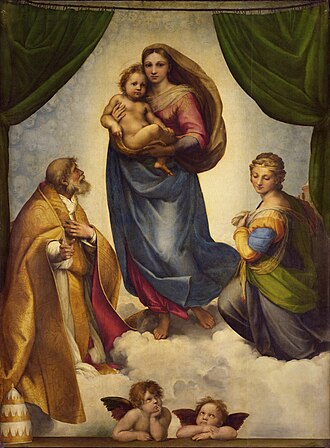 Sistine Madonna - Raphael (1510s)
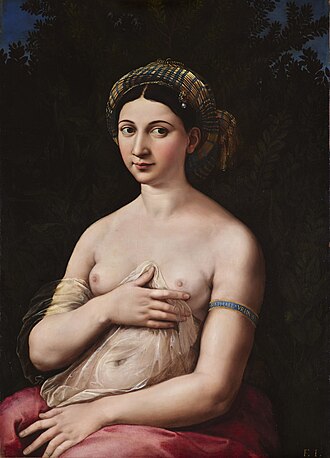 La fornarina - Raphael
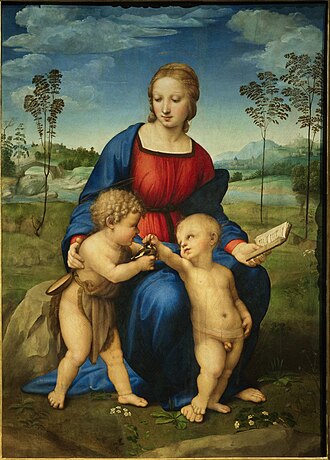 Madonna of the Goldfinch - Raphael (1500s)
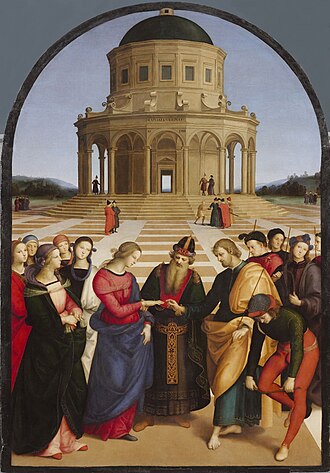 The Marriage of the Virgin - Raphael (1504)
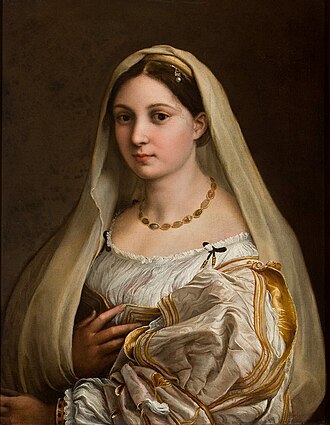 La velata - Raphael (1510s)
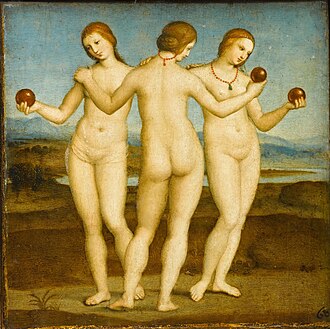 Three Graces - Raphael (1504)
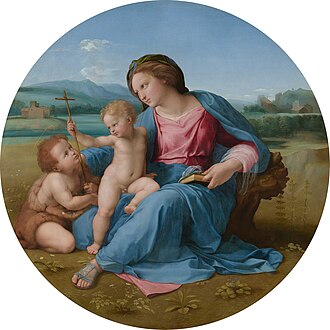 Alba Madonna - Raphael (1510)
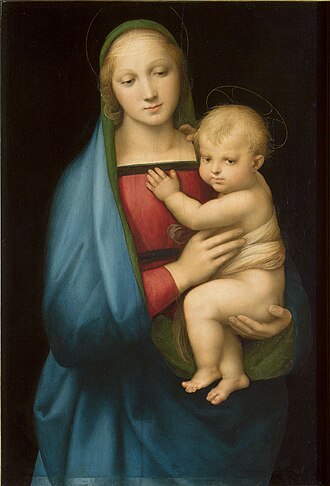 Madonna del Granduca - Raphael (1500s)
Dipinti di artisti collegati
 Venus of Urbino - Titian (1538)
 Assumption of the Virgin - Titian (1510s)
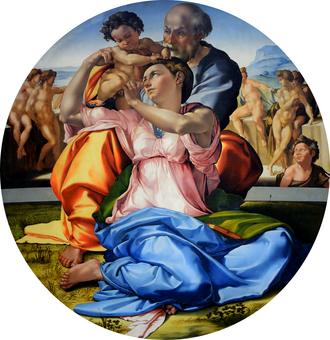 Doni Tondo - Michelangelo (1500s)
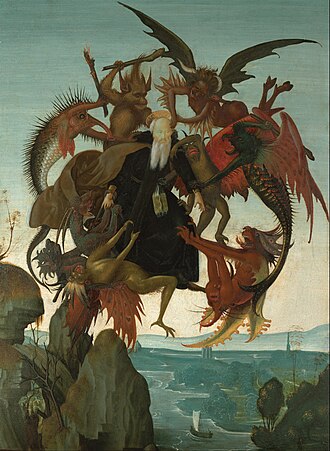 The Torment of Saint Anthony - Michelangelo (1487)
 Mona Lisa - Leonardo da Vinci (1503-1519)
 Lady with an Ermine - Leonardo da Vinci (1490)
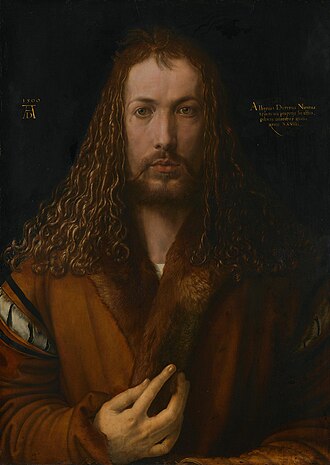 Self-Portrait with Fur-Trimmed Robe - Albrecht Dürer (1500)
 Adoration of the Magi - Albrecht Dürer (1504)
 The Birth of Venus - Sandro Botticelli (c. 1485)
 Primavera - Sandro Botticelli (1480s)
 The Garden of Earthly Delights - Hieronymus Bosch
 Ship of Fools - Hieronymus Bosch (1500s)