La Balançoire
Pierre-Auguste Renoir · 1876
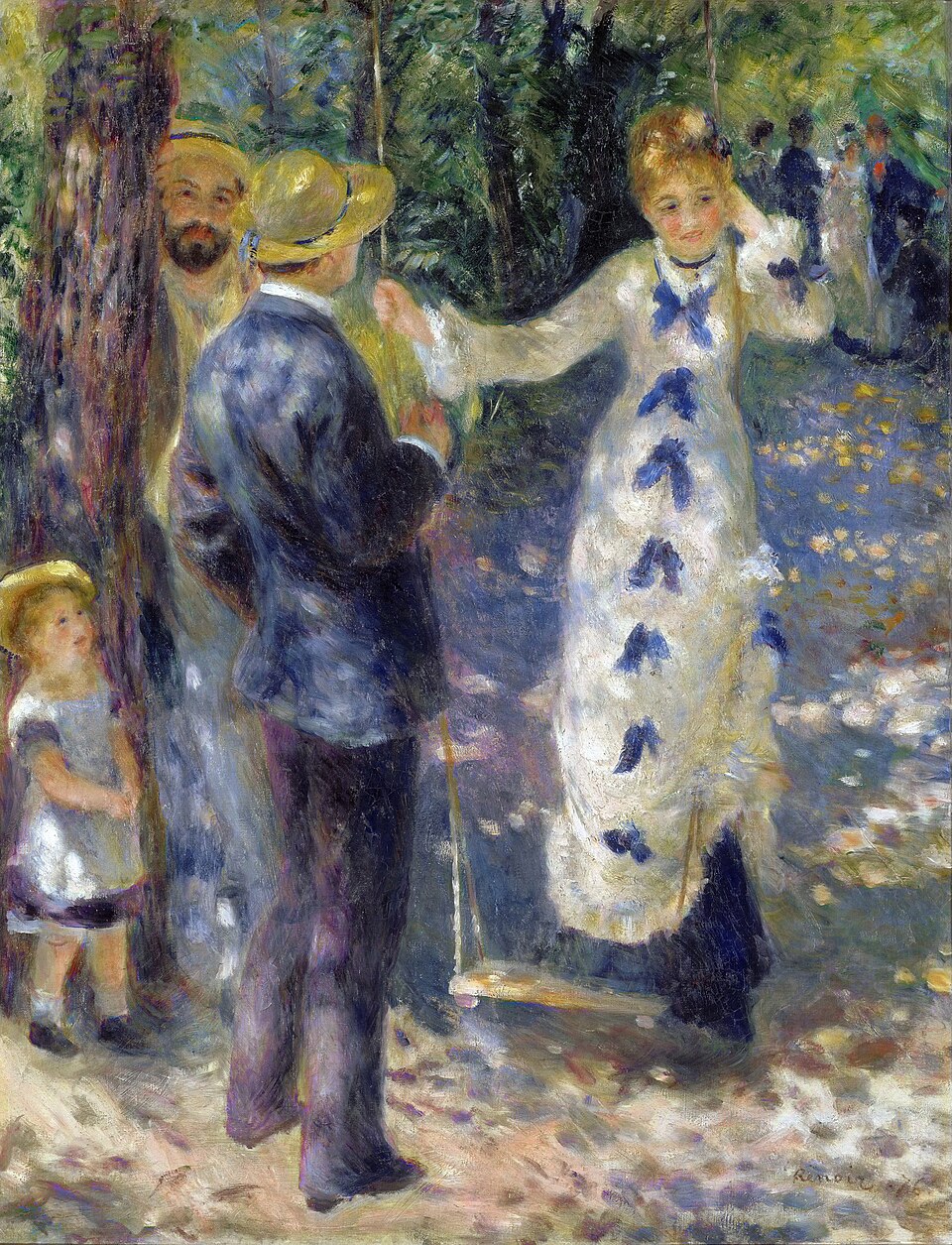
A young woman stands on a swing in a sunlit Montmartre garden, two men try to catch her attention, and a little girl looks on. Renoir never tells us what is happening, and that is the charm.
The story behind the painting
Renoir painted The Swing in the summer of 1876. He had rented a cottage in gardens in Montmartre, today the gardens of the Musée de Montmartre, to be close to the Moulin de la Galette, where he was working at the same time on his Bal du moulin de la Galette. In this garden, a place where many artists came to paint in natural light, he posed his models: Jeanne Samary, a young working woman of Montmartre and a favourite model, with Norbert Goeneutte and the painter's brother Edmond. Renoir told his friend Georges Rivière that a neighbourhood girl had been watching him as he worked. Without her knowing, he put her into the finished painting.
What to look for
Find Jeanne first, standing on the swing, seemingly lost in thought as the man in front of her talks. Her white dress, which the fashion historian Birgit Haase reads as muslin in the close-fitting princess style, carries a row of blue bows down the front that match the petticoat glimpsed under the lifted hem. Below, the little girl in everyday clothes gazes up at the scene. Behind Jeanne, a small group stands chatting. Now look at the light: loose, short brushstrokes make sunlight seem to filter through leaves, and patches of pale colour quiver on the clothes and on the ground, which is flecked with pink, white and lavender blossoms. The canvas measures 92 by 73 cm.
Meaning and intent
Renoir loved the eighteenth-century painters Watteau, Boucher and Fragonard, and The Swing recalls their fêtes galantes: an idyllic park, a light flirtation, a soft palette, a wistful mood. Yet he deliberately leaves the story open. We are never told why the woman gestures, how she knows the two men, or why the child is there. The art historian John House suggests that, in a time of social control when clear meanings made censorship easier, this ambiguity protected Renoir's work. The informal, working-class clothes add to the relaxed, intimate feeling. Robert Herbert saw the garden as a kind of oasis, insulated from the busy city around it.
Legacy
The Swing was shown with the Bal du moulin de la Galette at the third Impressionist exhibition in 1877, and reactions were mixed. Georges Rivière praised its serene picture of young people enjoying a sunlit garden and compared it to Watteau's The Embarkation for Cythera. Other critics were harsh: one said the light effects looked like grease stains, another found Renoir's blue violent. Shortly after the exhibition, in 1877, the painter Gustave Caillebotte acquired it. The painting later entered the Musée d'Orsay in Paris, where those dappled patches of light that once shocked critics are now among the most loved passages of Impressionism.
Lo sapevi?
- Painted in summer 1876 in Montmartre (Wikipedia).
- Shown at the third Impressionist exhibition in 1877 (Wikipedia).
- Acquired by Gustave Caillebotte in 1877; now in the Musée d'Orsay (Wikipedia, Wikidata).
- Size 92 × 73 cm (Wikidata).
L'artista
Pierre-Auguste Renoir (1841-1919)
woman · genre art · man · Musée d'Orsay · dress · girl
Altre opere di Pierre-Auguste Renoir
 Dance at Le Moulin de la Galette - Pierre-Auguste Renoir (1876)
 Luncheon of the Boating Party - Pierre-Auguste Renoir (1881)
 The Great Bathers - Pierre-Auguste Renoir (1884)
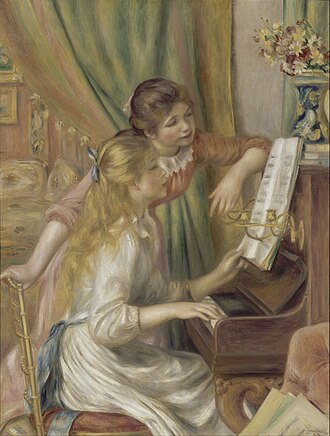 Girls at the Piano - Pierre-Auguste Renoir (1892)
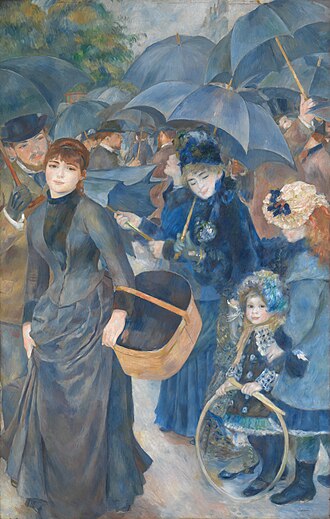 The Umbrellas - Pierre-Auguste Renoir (1880s)
%20(46499625955).jpg) La loge - Pierre-Auguste Renoir (1874)
La loge - Pierre-Auguste Renoir (1874)%20-%201933.455%20-%20Art%20Institute%20of%20Chicago.jpg) Two Sisters - Pierre-Auguste Renoir (1881)
Two Sisters - Pierre-Auguste Renoir (1881)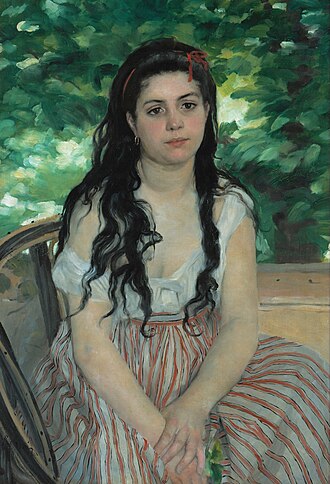 In the Summer - Pierre-Auguste Renoir (1868)
Dipinti di artisti collegati
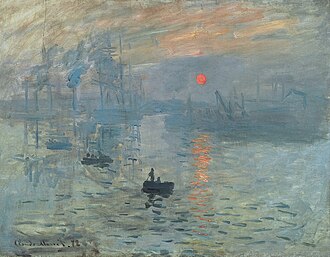 Impression, Sunrise - Claude Monet (1872)
 Water Lilies - Claude Monet (1906)
 The Starry Night - Vincent van Gogh (1889)
.jpg) Café Terrace at Night - Vincent van Gogh (1888)
Café Terrace at Night - Vincent van Gogh (1888) Where Do We Come From? What Are We? Where Are We Going? - Paul Gauguin (1897-1898)
%201889.jpg) Cristo giallo - Paul Gauguin (1889)
Cristo giallo - Paul Gauguin (1889) Luncheon on the Grass - Édouard Manet (1863)
 Olympia - Édouard Manet (1863)