Crucifixion of Strasbourg
Giotto · 1315
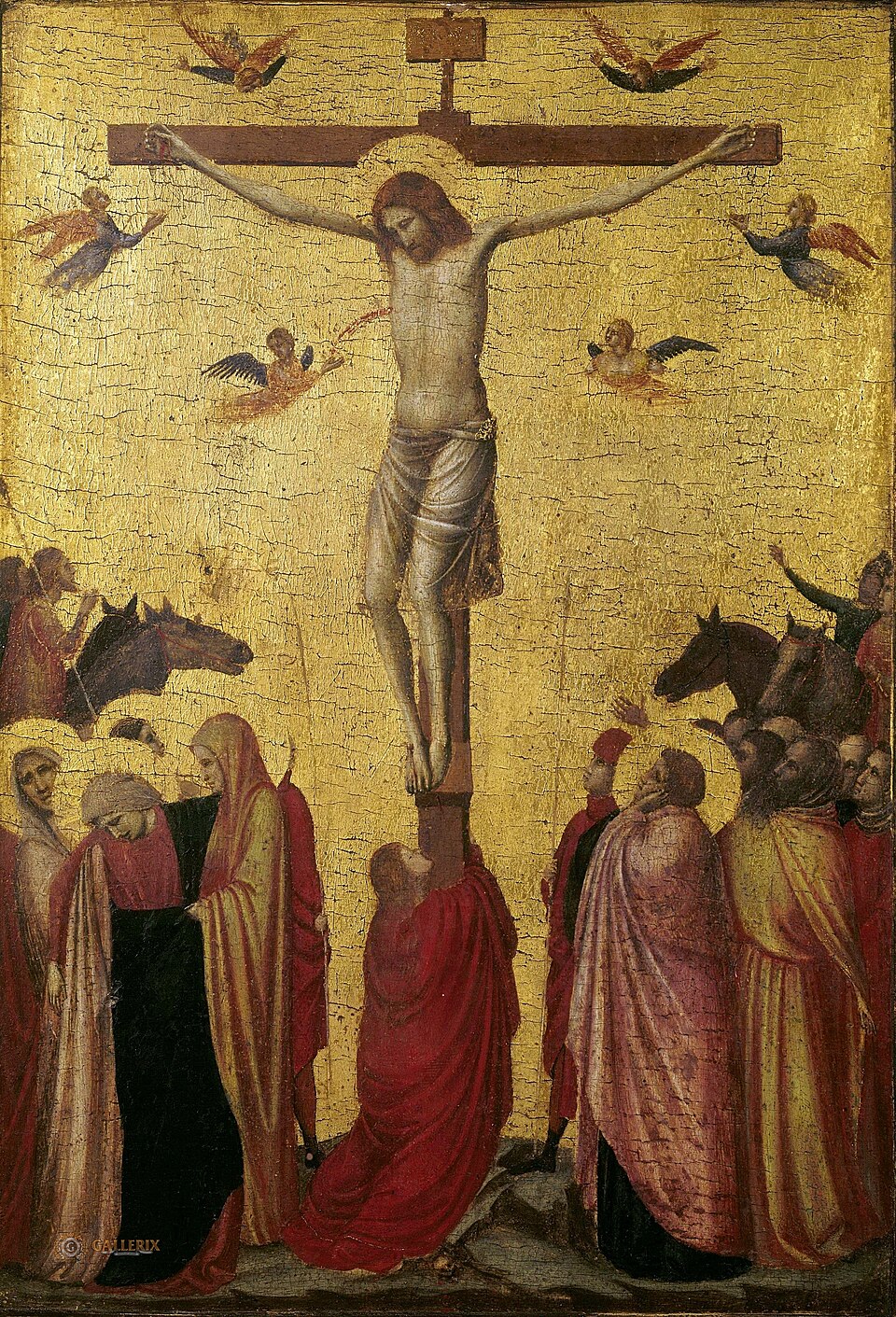
On a field of gold, angels swirl in grief around a slender Christ, while Mary Magdalene in red clings to the foot of the cross. Who painted this small, intense panel is still an open question.
The story behind the painting
This small panel in tempera and gold, 45.3 by 32.7 centimetres, is dated to around 1315 and kept in the Musée des Beaux-Arts in Strasbourg, inventory number 167. It was once attributed to the school of Giotto, until Roberto Longhi gave it to the master himself in 1948. It probably formed a diptych with a Madonna Enthroned between the Virtues, now in the Wildenstein Collection in New York and attributed to the Master of the Sails. Its attribution remains uncertain. Gnudi and Salvini left it out of their catalogue of Giotto's work, while it was presented as Giotto's at the 2013 Giotto exhibition at the Louvre.
What to look for
The cross stands in the centre on a uniform gold ground. Around Christ, grieving angels crowd the air. Below, Mary Magdalene, dressed in red, embraces the foot of the cross. Two groups stand at the sides, leaving the centre open and isolated. At left are the holy women with the Virgin Mary, who is fainting. At right stands a group that includes a centurion raising his arm. Look at the body of Christ: slender, almost reedy, far from the sense of weight in Giotto's Crucifix of Santa Maria Novella. Then notice the edges, where figures are cut off by the frame, suggesting a gathering larger than the panel can hold.
Meaning and intent
The scene follows the traditional pattern of the Crucifixion while carrying forward the innovations of Giotto's Crucifixion in the Scrovegni Chapel. The empty space around the cross gives Christ a terrible solitude, even with angels swirling above and mourners pressing in from both sides. Every gesture speaks of grief: the fainting mother supported by the women, the Magdalene holding the wood of the cross, the angels in flight. The cropped figures at the borders make the crowd feel real and ongoing, as though we too stand just outside the frame. For a small devotional panel, it holds a remarkable weight of shared sorrow.
Legacy
Scholars have proposed many names. William Suida, Pietro Toesca and Offner assigned it to a separate Master of the Strasbourg Crucifixion, to whom they also gave a similar small Crucifixion in Berlin. Even today the attribution is debated. What most agree on is that it belongs to the late phase of Giotto's career, as shown by the voluminous drapery also found in the Peruzzi and Bardi Chapels. Whether by Giotto or a close follower, the panel offers visitors in Strasbourg an intimate encounter with the art of Giotto's circle, where gold, gesture and empty space combine to tell the most solemn story of Christian faith.
Lo sapevi?
- Tempera and gold on panel, about 1315, 45.3 x 32.7 cm
- Attributed to Giotto by Roberto Longhi in 1948
- Others assign it to a Master of the Strasbourg Crucifixion
- Musée des Beaux-Arts, Strasbourg, inventory 167
L'artista
Giotto (1267-1337)
woman · religious art · man · Mary · Jesus Christ · waist-length hair · Mary Magdalene
Altre opere di Giotto
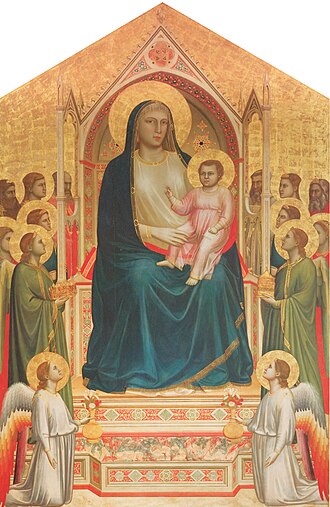 Madonna Enthroned - Giotto (1300s)
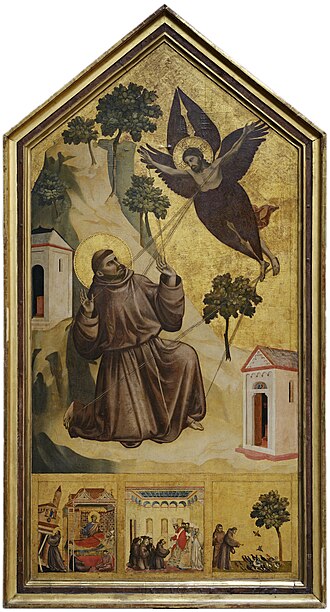 St. Francis of Assisi Receiving the Stigmata - Giotto (1290s)
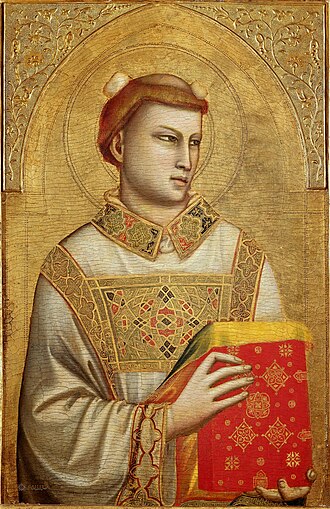 Saint Stephen - Giotto (1320)
 Badia Polyptych - Giotto (1300s)
 The Crucifixion of Christ - Giotto (1310s)
 Coronation of Mary with Angels and Saints - Giotto (1328)
 Scenes from the New Testament: Lamentation - Giotto (1291)
 Madonna and Child of San Giorgio alla Costa - Giotto (1295)