Le Coucher du soleil
François Boucher · 1752
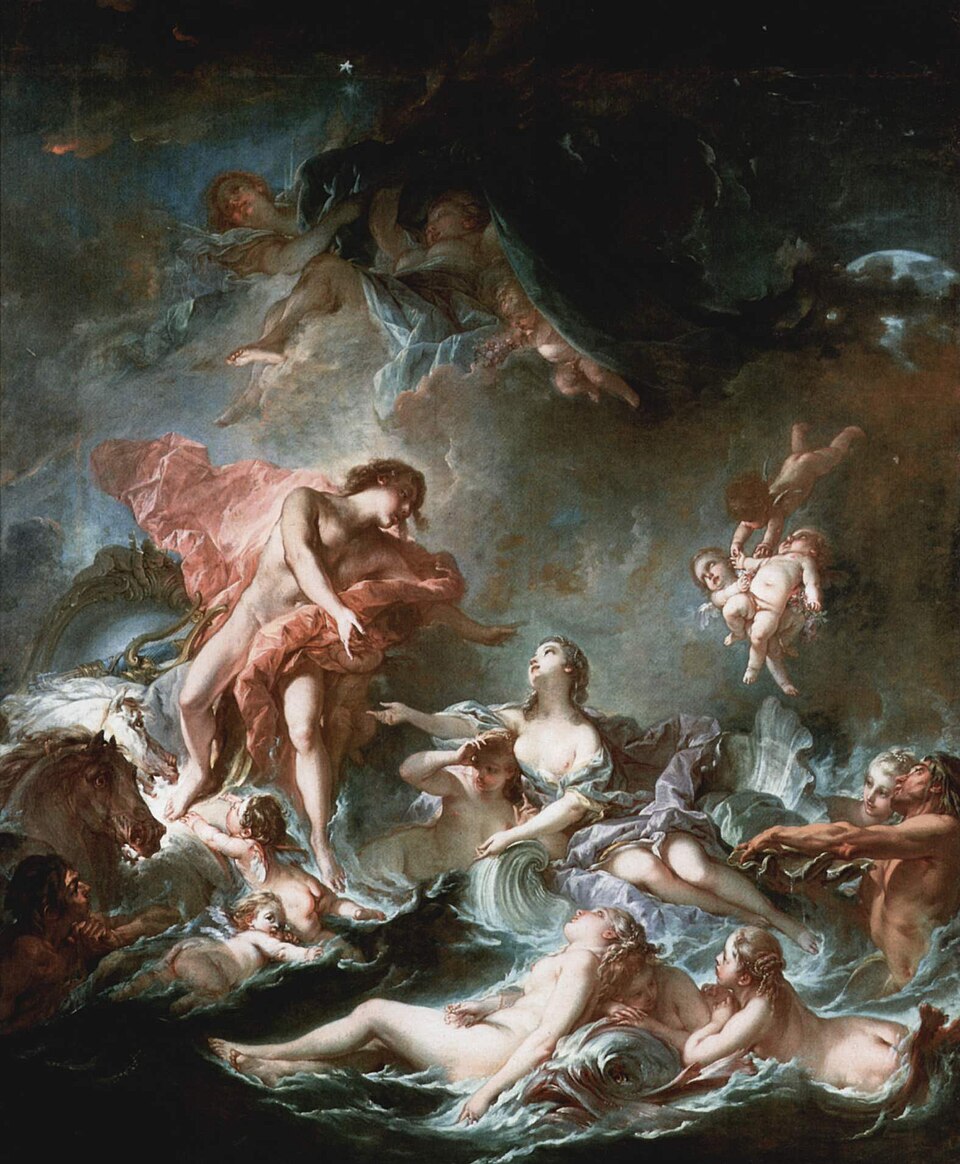
At dusk Apollo sinks down to the sea, returning to waiting arms among nymphs, putti and two white horses. Boucher painted this sunset as a giant model for a tapestry in Louis XV's bedroom, the evening half of a pair that tells the story of a single day.
The story behind the painting
Madame de Pompadour privately commissioned The Setting of the Sun and its pair, The Rising of the Sun, from François Boucher in 1752. Both were full-scale models for the Gobelins Manufactory, which turned them into tapestries completed in 1754 to 1755. The tapestries were hung in the King's bedroom at the château de Bellevue, the country house of Louis XV. The canvas is very large, about 318 by 261 cm, because it had to match the woven hanging it was designed for. It was made as a working design, to be translated into thread, rather than as a painting to be displayed on its own.
What to look for
In The Setting of the Sun, Apollo returns to the arms of his mother, as the Wikipedia article describes it, bringing dusk with him. The colours change from the bright blues of the morning picture to muted pinks, browns and creams. The foreground is filled with nude nymphs and naiads whose overlapping bodies form arabesque curves that echo the waves. The source counts 17 mythological figures, eight women, three men and six babies, together with two majestic white horses. Wikidata also lists a curtain, fish, seashells, a moon and a star, small details that tell us night is arriving over the sea.
Meaning and intent
Together the two paintings represent the rhythm of the day, from the sun's rise to its return to the sea, layered with allegory and symbolism. The meeting of sky and sea places the scene firmly in the world of myth. These harmonious pastels, beautiful nude bodies and gauzy textures show the visual elegance of the Rococo style at its most refined. Their decorative character was the point: as tapestry designs they were meant to adorn a luxurious and fashionable home, and to surround the King, in his own bedroom, with the calm of evening.
Legacy
After Madame de Pompadour's death, both paintings were sold with the rest of her collection on 28 April 1766. They passed through four other collections, and on 2 August 1855 they were bought by Richard Seymour-Conway, 4th Marquess of Hertford. Like the rest of his collection, they now hang in the Wallace Collection in London. The pair is often counted among Boucher's most ambitious and successful mythological works, and there the setting sun can still be seen beside the rising one, a full day of the gods, kept together for more than two and a half centuries.
Le saviez-vous ?
- Commissioned by Madame de Pompadour in 1752.
- A full-scale model for a Gobelins tapestry.
- Pair of The Rising of the Sun.
- In the Wallace Collection, London, since Hertford's 1855 purchase.
À propos de l'artiste
François Boucher (1703-1770)
peinture mythologique · nu · rideau · putto · Wallace Collection · Lune · étoile
Autres œuvres de François Boucher
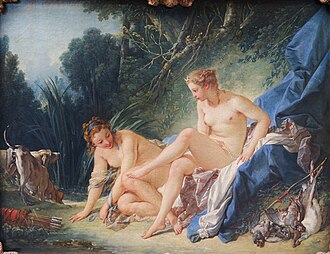 Diane sortant du bain - François Boucher (1742)
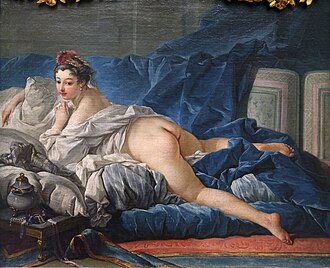 L'Odalisque - François Boucher (1740s)
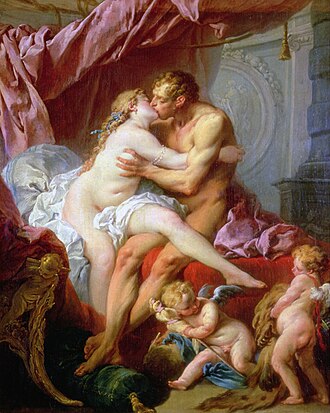 Hercule et Omphale - François Boucher (1730s)
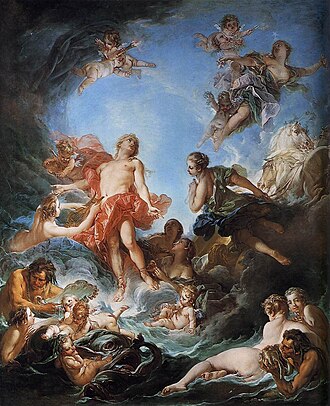 Le Lever du Soleil - François Boucher (1753)
 Le Déjeuner - François Boucher (1739)
 La Toilette de Vénus - François Boucher (1751)
 Pompadour à sa toilette - François Boucher (1750)
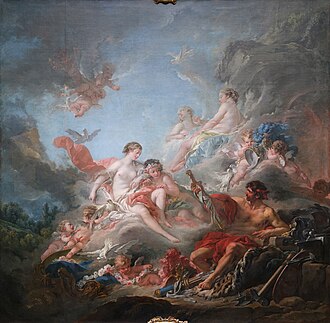 Les Forges de Vulcain - François Boucher (1757)
Œuvres d'artistes liés
 Le Pèlerinage à l'île de Cythère - Jean-Antoine Watteau (1717)
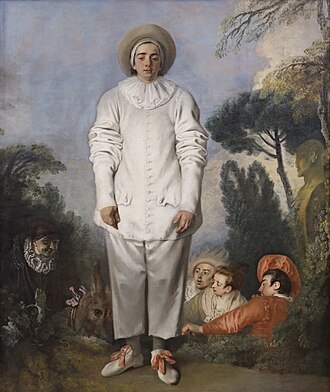 Pierrot - Jean-Antoine Watteau (1718)
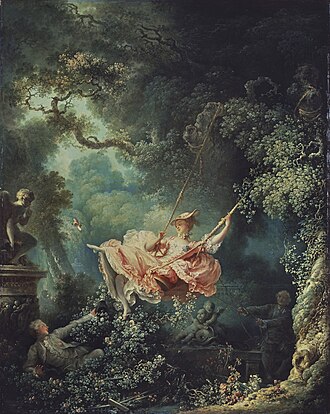 Les Hasards Heureux de l'Escarpolette - Jean-Honoré Fragonard (1760s)
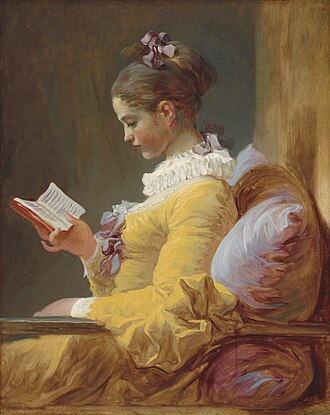 La Liseuse - Jean-Honoré Fragonard (1770)
 Tres de Mayo - Francisco Goya (1814)
.jpg) La Maja nue - Francisco Goya (1800)
La Maja nue - Francisco Goya (1800)