Le Martyre de Saint Symphorien
Jean-Auguste-Dominique Ingres · 1834
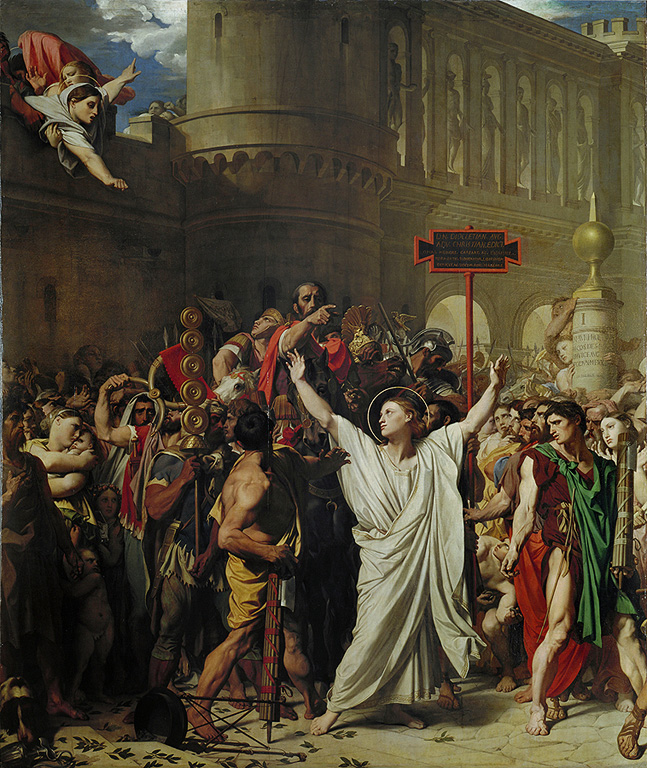
A young saint is led to his death while his mother calls down from the city wall. Ingres spent ten years on The Martyrdom of Saint Symphorian, and its failure at the Salon drove him out of France.
The story behind the painting
Ingres longed to be known as a history painter, not a portraitist, and after the triumph of The Vow of Louis XIII in 1824 he was seen as the champion of classicism against Delacroix's romantics. In December 1824 the bishop of Autun, Monsignor de Vichy, commissioned this altarpiece to replace a Fra Bartolomeo taken to Paris during the Revolution, and gave Ingres a detailed programme. Ingres hoped to finish for the Salon of 1827, but worked slowly, making more than 200 drawings and at least eleven oil studies, visiting Autun in 1826 to study the old city wall, and painting from wooden models of the props. The July Revolution of 1830 interrupted him; he returned to it by 1833.
What to look for
The scene is crowded and tall, 407 by 339 cm. The Roman proconsul Heraclius and his guards seize Symphorian, the first Christian martyr in Gaul, and order him to bow in the temple of the goddess Cybele or die. From the wall above, his mother stretches out her arms and urges him to face death with faith, and he gives her a heartening look. Below, a mob of soldiers and onlookers presses forward. The painter Avigdor Arikha admired the contrast between the still architecture and the swarming movement in the foreground, which reminded him of Bronzino.
Meaning and intent
Ingres meant the picture as his masterpiece and the fruit of wide research, and he spoke of devouring Michelangelo. The historian Susan L. Siegfried sees a change after 1830: in studies such as the two of 1833 in the Fogg Art Museum, Ingres poured his own reaction to social upheaval into the energy of the mob, painting a moral lesson for a public he abhorred. When critics complained that the mother's arms were too long, Ingres answered indignantly that the arms of a mother blessing her son on his way to death are never too long.
Legacy
At the Salon of 1834 it was a critical failure: critics attacked the congested composition and swollen muscles, while Delacroix and Delaroche were praised, and Ingres's canvas was hung below a picture of life-sized cows. He vowed never to exhibit at the Salon again, became director of the French Academy in Rome, and stayed in Italy until 1841. The painting was installed in Autun Cathedral in November 1834. Later critics such as Paul Mantz and Pierre Schneider were harsh, yet the preparatory drawings and oil studies are highly admired; Gautier stood stupefied before them in 1867. Ingres painted a small replica in 1865, now in Philadelphia.
Le saviez-vous ?
- Commissioned in 1824 by the bishop of Autun; finished in 1834.
- Ingres made more than 200 preparatory drawings.
- Its poor reception led Ingres to leave Paris for Rome.
- Installed in Autun Cathedral in November 1834.
À propos de l'artiste
Jean-Auguste-Dominique Ingres (1780-1867)
art religieux · néo-classicisme
Autres œuvres de Jean-Auguste-Dominique Ingres
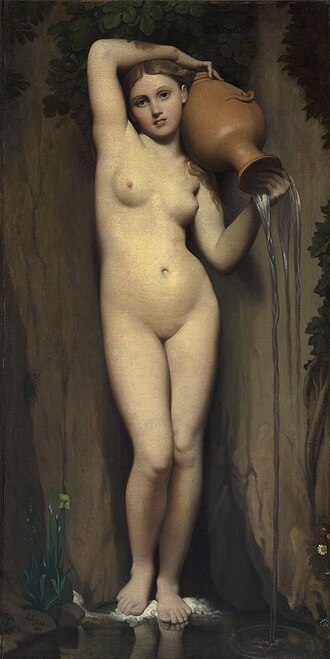 La Source - Jean-Auguste-Dominique Ingres (1856)
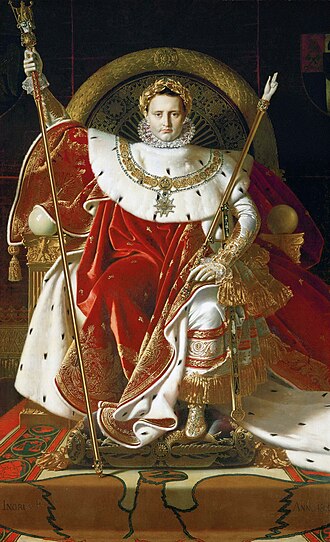 Napoléon Ier sur le trône impérial - Jean-Auguste-Dominique Ingres (1806)
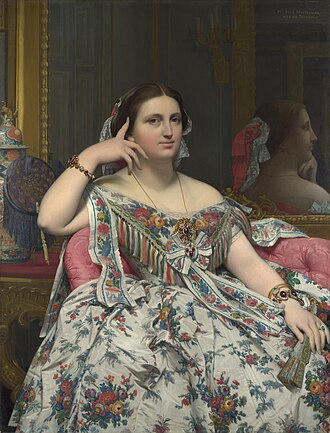 Madame Moitessier - Jean-Auguste-Dominique Ingres (1856)
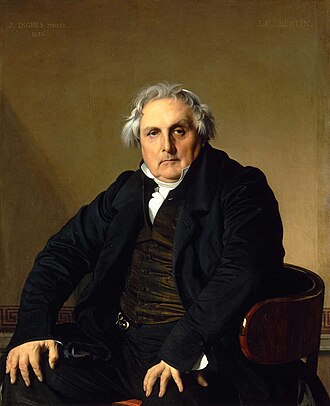 Louis-François Bertin - Jean-Auguste-Dominique Ingres (1832)
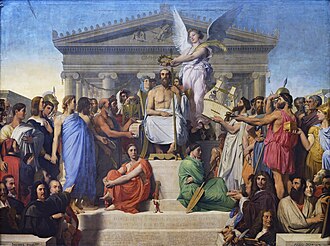 L'Apothéose d'Homère - Jean-Auguste-Dominique Ingres (1827)
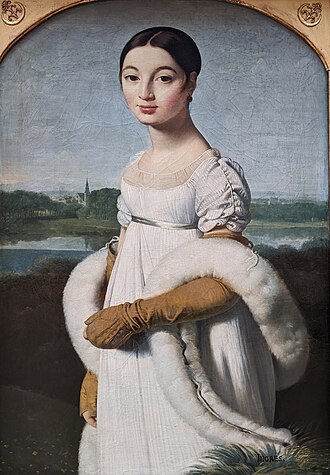 Mademoiselle Caroline Rivière - Jean-Auguste-Dominique Ingres (1806)
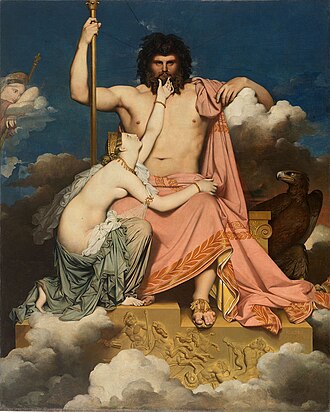 Jupiter et Thétis - Jean-Auguste-Dominique Ingres (1811)
 La Mort de Léonard de Vinci - Jean-Auguste-Dominique Ingres (1818)
Œuvres d'artistes liés
 Le Serment des Horaces - Jacques-Louis David (1784)
.jpg) Les Sabines - Jacques-Louis David (1799)
Les Sabines - Jacques-Louis David (1799) Tres de Mayo - Francisco Goya (1814)
.jpg) La Maja nue - Francisco Goya (1800)
La Maja nue - Francisco Goya (1800)