La Mort de Léonard de Vinci
Jean-Auguste-Dominique Ingres · 1818
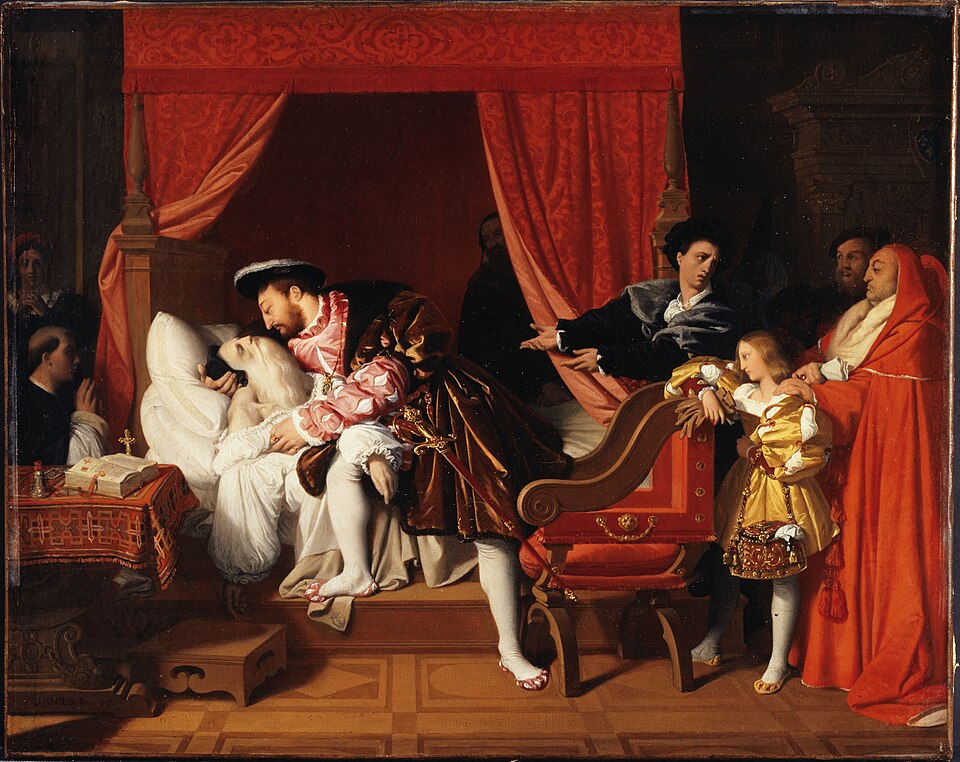
A king leans over a dying old man and cradles his head. Ingres imagined the last breath of Leonardo da Vinci in 1519, with Francis I of France at his side, and turned it into a farewell to a whole golden age of art.
The story behind the painting
Leonardo da Vinci died at the Clos Lucé house in Amboise on 2 May 1519. Ingres built his scene on the account in Giorgio Vasari's Lives of the Artists, which is not wholly accurate, and especially on one sentence: to show him favour and soothe his pain, the king held his head. Ingres saw that moment as a quiet symbol of the end of a glorious artistic era. The painting of 1818 was commissioned by Pierre Louis Jean Casimir de Blacas, the French ambassador in Rome. Ingres worked the idea out in a wash drawing, widening it with an added strip of paper, reshaping the curtain, adding a young priest as an afterthought and using a paper cut-out to adjust a cardinal's hand.
What to look for
Look first at the king's hands: he wears no gloves, and his face is close to Leonardo's. The chair behind him is tilted, as if he has just leapt up, which tells of how sudden the death was. Leonardo's faith is shown by the draped table, the handbell, the missal, the crucifix and the monk on the left. On his chest hangs the small medallion of the Order of Saint Michel, worn like a 19th century boutonniere. Behind the bed the doctor stands in shadow, his hands resting still, his work done. The grieving figure to the right has been identified as Francesco Melzi, Leonardo's wealthy friend and student.
Meaning and intent
The picture is a double tribute. It honours the great artists of the past, and it also carries Ultra-Royalist ideas, as Ingres did in Henri IV and the Spanish Ambassador: the alliance of throne and altar, royal virtues such as humanity and humility, and the generosity of the Crown toward the fine arts. The Order of Saint Michel was given for artistic and scholarly achievement and made its holders noble. By placing it on Leonardo's chest, Ingres raises him to nobility after death. This choice may suggest that Ingres felt Leonardo had not been recognised or rewarded enough by his royal patrons while he lived.
Legacy
The painting is often given a second title, Francis I Receives the Last Breaths of Leonardo da Vinci, which names the gesture at its heart. It now hangs in the Petit Palais in Paris, the Musée des Beaux-Arts de la ville de Paris, and Wikidata links it to the Dutuit collection there. The canvas is small, about 40 by 50.5 cm, an intimate size for so solemn a scene. Ingres returned to the subject much later: another version, painted around 1851, is held by the Smith College Museum of Art. Together the two pictures show how long the image of a king holding a dying artist stayed with him.
Le saviez-vous ?
- Painted in 1818 for the French ambassador in Rome, Blacas.
- Based on Vasari's account of Leonardo's death on 2 May 1519.
- Held at the Petit Palais in Paris.
- A later version of about 1851 is at Smith College.
À propos de l'artiste
Jean-Auguste-Dominique Ingres (1780-1867)
homme · position assise · néo-classicisme · peinture d'histoire · station debout · décubitus · agonie
Autres œuvres de Jean-Auguste-Dominique Ingres
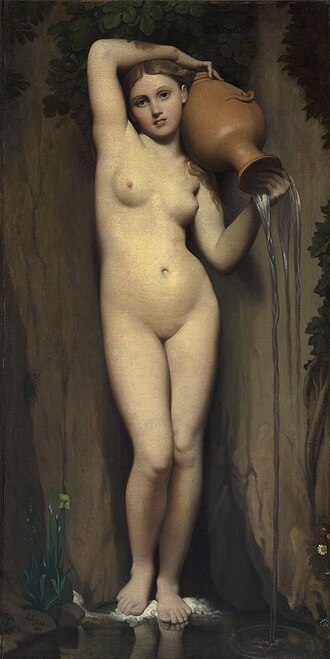 La Source - Jean-Auguste-Dominique Ingres (1856)
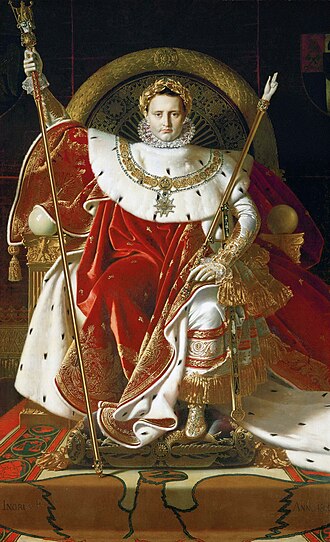 Napoléon Ier sur le trône impérial - Jean-Auguste-Dominique Ingres (1806)
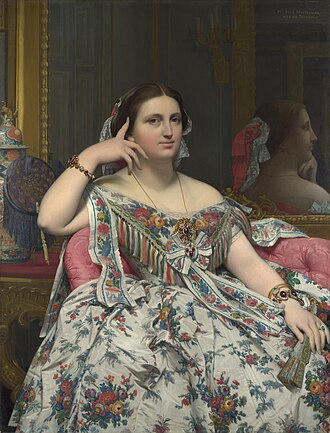 Madame Moitessier - Jean-Auguste-Dominique Ingres (1856)
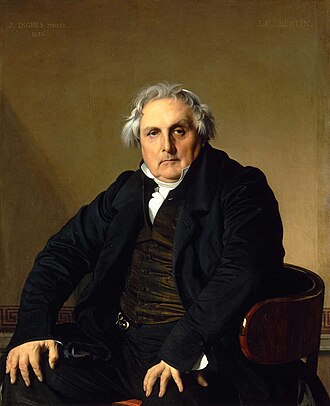 Louis-François Bertin - Jean-Auguste-Dominique Ingres (1832)
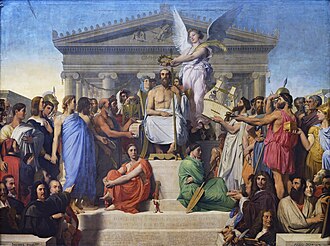 L'Apothéose d'Homère - Jean-Auguste-Dominique Ingres (1827)
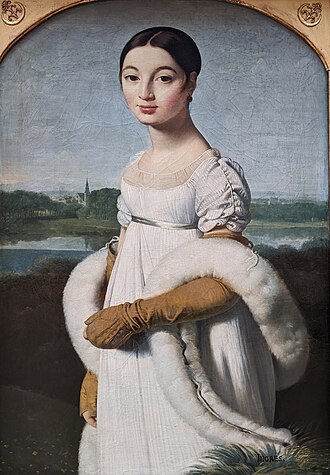 Mademoiselle Caroline Rivière - Jean-Auguste-Dominique Ingres (1806)
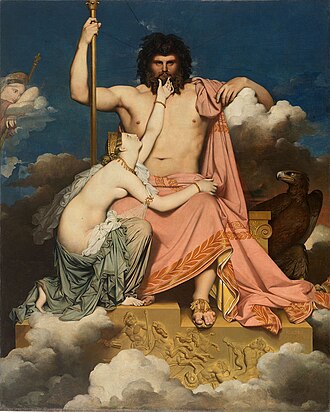 Jupiter et Thétis - Jean-Auguste-Dominique Ingres (1811)
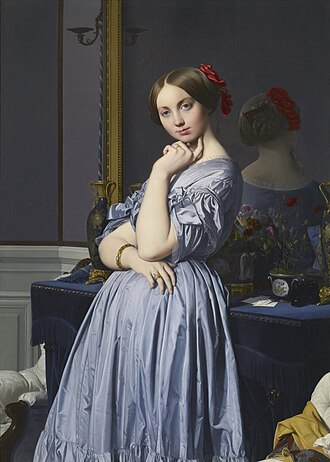 La Vicomtesse d'Haussonville - Jean-Auguste-Dominique Ingres (1845)
Œuvres d'artistes liés
 Le Serment des Horaces - Jacques-Louis David (1784)
.jpg) Les Sabines - Jacques-Louis David (1799)
Les Sabines - Jacques-Louis David (1799) Tres de Mayo - Francisco Goya (1814)
.jpg) La Maja nue - Francisco Goya (1800)
La Maja nue - Francisco Goya (1800)