Raphaël et la Nièce du cardinal Bibbiena
Jean-Auguste-Dominique Ingres · 1813
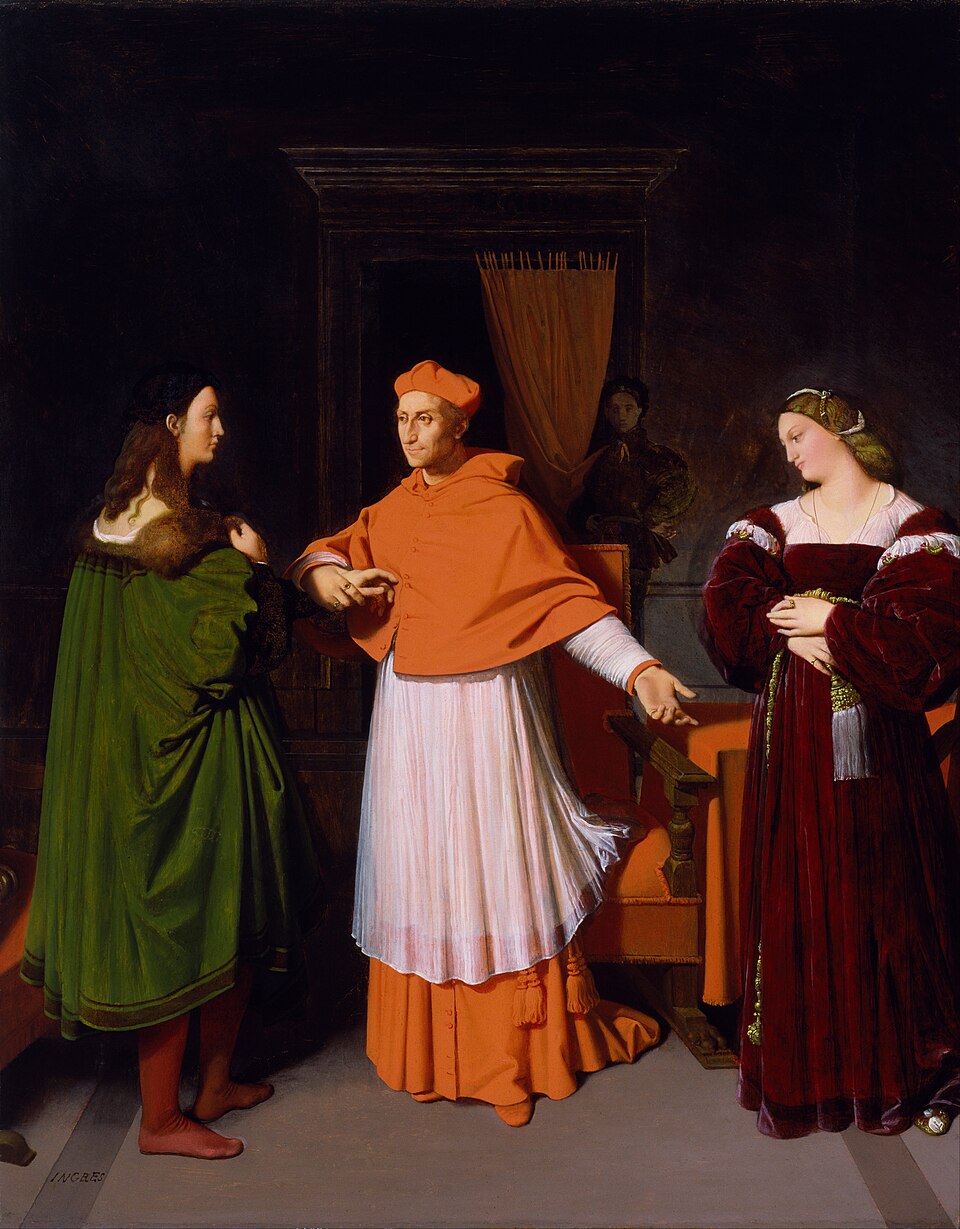
A cardinal offers his niece in marriage to the most famous painter in Rome. Ingres, newly married himself, painted this moment from Raphael's life in just twenty days, for the Queen of Naples.
The story behind the painting
Ingres became curious about Raphael after seeing a copy of the Madonna della Seggiola in his teacher's studio in Toulouse. After winning the Prix de Rome in 1801 he could study Raphael's work in Italy, and he read deeply about his life, in Vasari's Lives and in Angelo Comolli's Vita inedita di Raffaello of 1780. He planned a whole series of scenes from Raphael's life but painted only two subjects, this one and Raphael and the Fornarina. In 1813, while working on it for Caroline Murat, Queen of Naples, Ingres married Madeleine Chapelle.
What to look for
Cardinal Bibbiena, a monumental figure, occupies the centre of a symmetrical, balanced composition and presents his niece Maria Francesca to Raphael. Ingres borrowed real faces. Raphael's features come from the Portrait of Bindo Altoviti in Washington, once thought to be a self portrait. The cardinal is based on Raphael's own Portrait of Cardinal Bibbiena in the Palatine Gallery in Florence. The niece is inspired by Sebastiano del Piombo's woman once identified as Raphael's mistress, called La Fornarina. The French source praises the colour as a masterly symphony. It is oil on paper mounted on canvas, about 59.1 by 46.5 cm.
Meaning and intent
Raphael was close to the cardinal, who kept pressing him to marry. To gain time, Raphael asked him to wait three or four years. When the delay was over, the cardinal reminded him of his promise when he least expected it, and Raphael, unwilling to break his word, agreed to the engagement. According to Comolli, the marriage never took place because the niece died young. Henry Lapauze linked the picture to Ingres's own life and his relations with women, quoting a letter in which Ingres wrote that he would live and die the servant of women.
Legacy
A letter of 26 May 1814 to Charles Marcotte d'Argenteuil says Ingres finished the painting in only twenty days. After Caroline Murat left Naples, Leopold of Bourbon Two Sicilies hung it in his palace. It reappeared with its companion, Paolo and Francesca, in the 1852 sale catalogue of the Prince of Salerno's collection, and later passed through the collection of Giuseppe Tibaldi and the critic Charles Blanc. It was shown at the great Ingres retrospective at the École des Beaux Arts. Henry Walters bought it in 1903 and left it to the Walters Art Museum in Baltimore in 1931.
Le saviez-vous ?
- Painted in 1813 to 1814 for Caroline Murat, Queen of Naples.
- Ingres said he painted it in twenty days.
- Faces are borrowed from portraits by Raphael and Sebastiano del Piombo.
- In the Walters Art Museum, Baltimore, since 1931.
À propos de l'artiste
Jean-Auguste-Dominique Ingres (1780-1867)
peinture d'histoire · Walters Art Museum
Autres œuvres de Jean-Auguste-Dominique Ingres
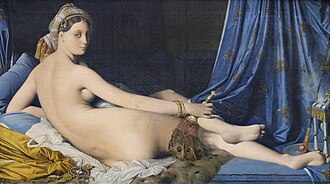 La Grande Odalisque - Jean-Auguste-Dominique Ingres (1814)
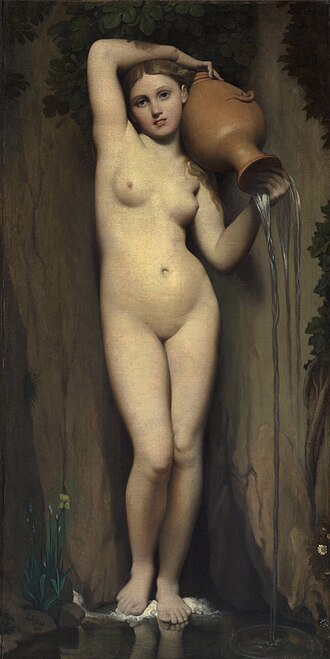 La Source - Jean-Auguste-Dominique Ingres (1856)
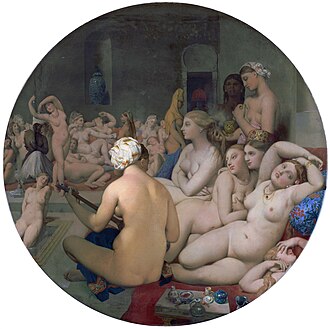 Le Bain turc - Jean-Auguste-Dominique Ingres (1862)
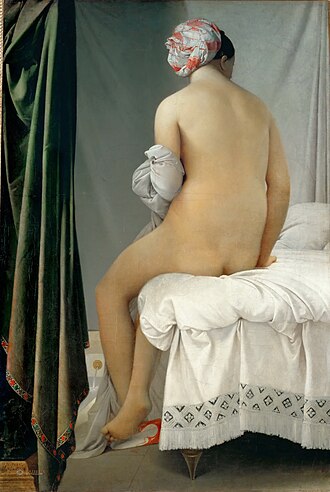 La Baigneuse Valpinçon - Jean-Auguste-Dominique Ingres (1808)
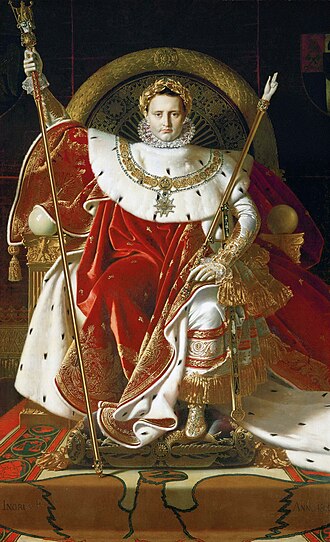 Napoléon Ier sur le trône impérial - Jean-Auguste-Dominique Ingres (1806)
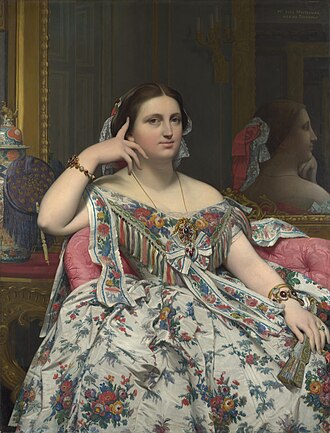 Madame Moitessier - Jean-Auguste-Dominique Ingres (1856)
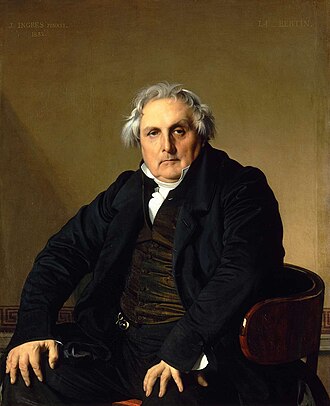 Louis-François Bertin - Jean-Auguste-Dominique Ingres (1832)
 Vénus Anadyomène - Jean-Auguste-Dominique Ingres (1808)
Œuvres d'artistes liés
 La Mort de Socrate - Jacques-Louis David (1787)
 Le Serment des Horaces - Jacques-Louis David (1784)
 Tres de Mayo - Francisco Goya (1814)
 La Maja nue - Francisco Goya (1800)