La Princesse de Broglie
Jean-Auguste-Dominique Ingres · 1853
%2C%20Princesse%20de%20Broglie%20MET%20DT717.jpg)
A young princess in pale blue satin leans on a gold damask chair, beautiful, shy and quietly melancholy. Ingres said this portrait made him suffer, and her grieving husband later kept it hidden behind a velvet curtain.
The story behind the painting
Pauline de Galard de Brassac de Béarn married Albert de Broglie in 1845, and the couple styled themselves Prince and Princesse. She was intelligent, religious and well read, widely thought beautiful, yet so shy that people avoided her eyes so as not to embarrass her. Albert, impressed by Ingres's portrait of his sister, the Comtesse d'Haussonville, approached the painter around 1850. Ingres dined with the family in January 1850 and seemed, said one witness, very happy with his model. He worked from 1851 and signed the canvas "J. INGRES. pit 1853", when Pauline was 28.
What to look for
She stands in three-quarter view, arms resting on a pale gold damask easy chair, head tilted, black hair pulled back with blue satin ribbons. Her off-the-shoulder pale blue satin gown with lace and ribbon trim and her gold embroidered shawl are the height of 1850s Paris evening dress. Look at the jewels: cascading pearl earrings, a roped pearl bracelet, a red enamel and diamond bracelet, a pendant with a cross pattée for her piety. Art historians compare the precision of the costume to Jan van Eyck. Robert Rosenblum spoke of a "glassy chill" and silvery harmonies rivalled perhaps only by Vermeer. The black hat on the chair seems a late addition.
Meaning and intent
Ingres preferred history painting, but portraits paid. Following Jacques-Louis David, he began with nude studies from professional models to understand the body before designing the costume, and some five or six preparatory drawings survive, showing her habit of folding her arms. He wrote to Charles Marcotte that he was killing his eyes on the background and that this would surely be his last such portrait. As in his other portraits of women, the body seems to lack bones: the neck is long, the arms almost dislocated, the face idealised and porcelain-like, while every object around her is crisp and real.
Legacy
Pauline died of tuberculosis in 1860, aged 35. Albert published three volumes of her essays, became prime minister of France in 1873 and never remarried. He kept her portrait draped and hidden behind a velvet curtain, lending it only to select exhibitions. It stayed in the family until 1958, when it went to the Metropolitan Museum of Art through the banker and collector Robert Lehman, and it now hangs in the Lehman Wing. The family kept most of the jewellery shown, though the marabou feathers went to the Met's Costume Institute. It is counted among Ingres's finest late portraits of women, and was his last society portrait.
Le saviez-vous ?
- Painted between 1851 and 1853, signed and dated 1853.
- Ingres's second-last female portrait and final society portrait.
- Her widower kept it hidden behind a velvet curtain.
- In the Metropolitan Museum of Art since 1958.
À propos de l'artiste
Jean-Auguste-Dominique Ingres (1780-1867)
femme · portrait · Metropolitan Museum of Art · robe · bracelet · gant · collier · perle
Autres œuvres de Jean-Auguste-Dominique Ingres
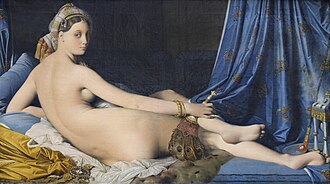 La Grande Odalisque - Jean-Auguste-Dominique Ingres (1814)
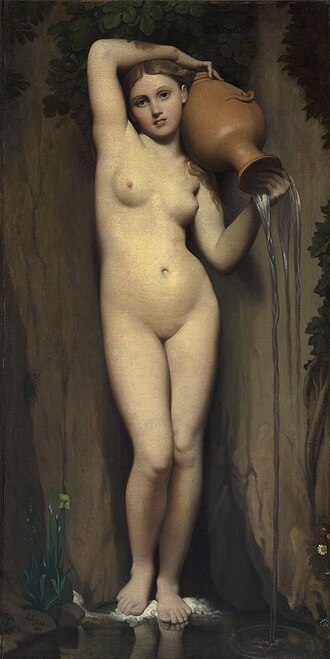 La Source - Jean-Auguste-Dominique Ingres (1856)
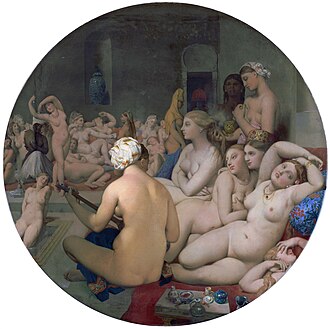 Le Bain turc - Jean-Auguste-Dominique Ingres (1862)
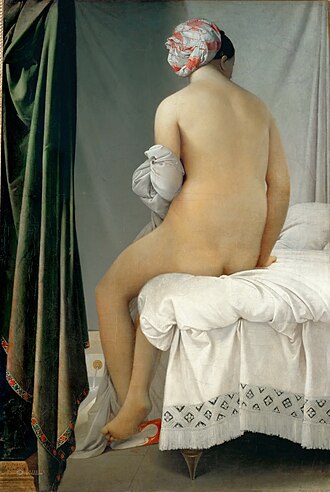 La Baigneuse Valpinçon - Jean-Auguste-Dominique Ingres (1808)
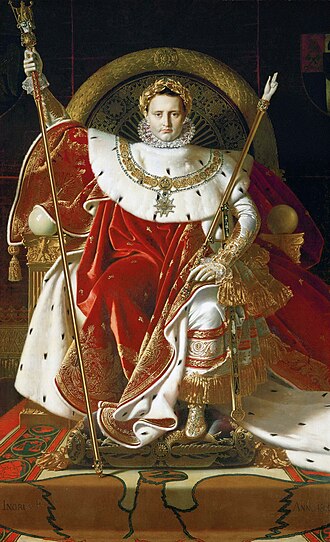 Napoléon Ier sur le trône impérial - Jean-Auguste-Dominique Ingres (1806)
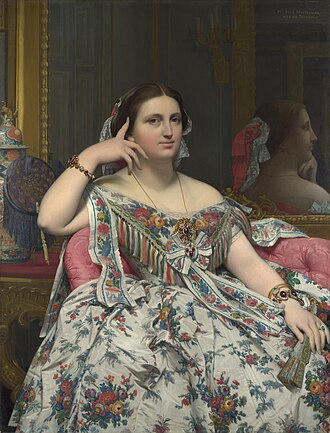 Madame Moitessier - Jean-Auguste-Dominique Ingres (1856)
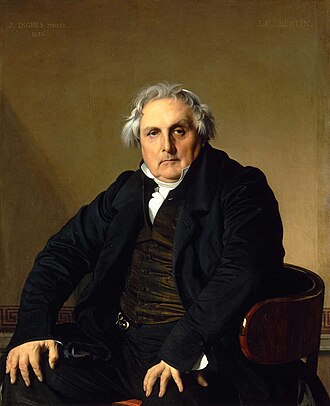 Louis-François Bertin - Jean-Auguste-Dominique Ingres (1832)
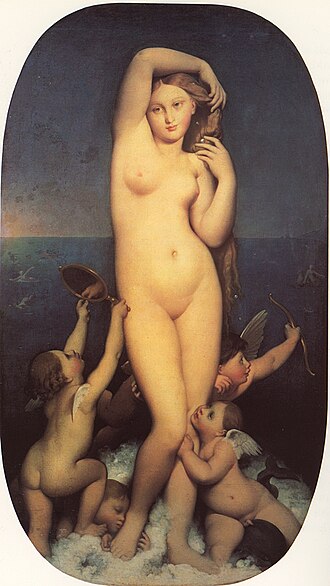 Vénus Anadyomène - Jean-Auguste-Dominique Ingres (1808)
Œuvres d'artistes liés
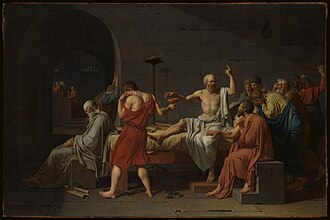 La Mort de Socrate - Jacques-Louis David (1787)
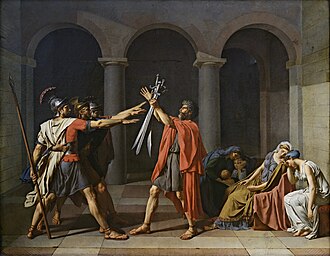 Le Serment des Horaces - Jacques-Louis David (1784)
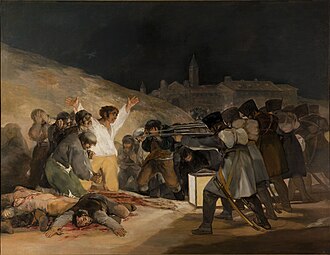 Tres de Mayo - Francisco Goya (1814)
.jpg) La Maja nue - Francisco Goya (1800)
La Maja nue - Francisco Goya (1800)