Mujer joven empolvándose
Georges Seurat · 1889
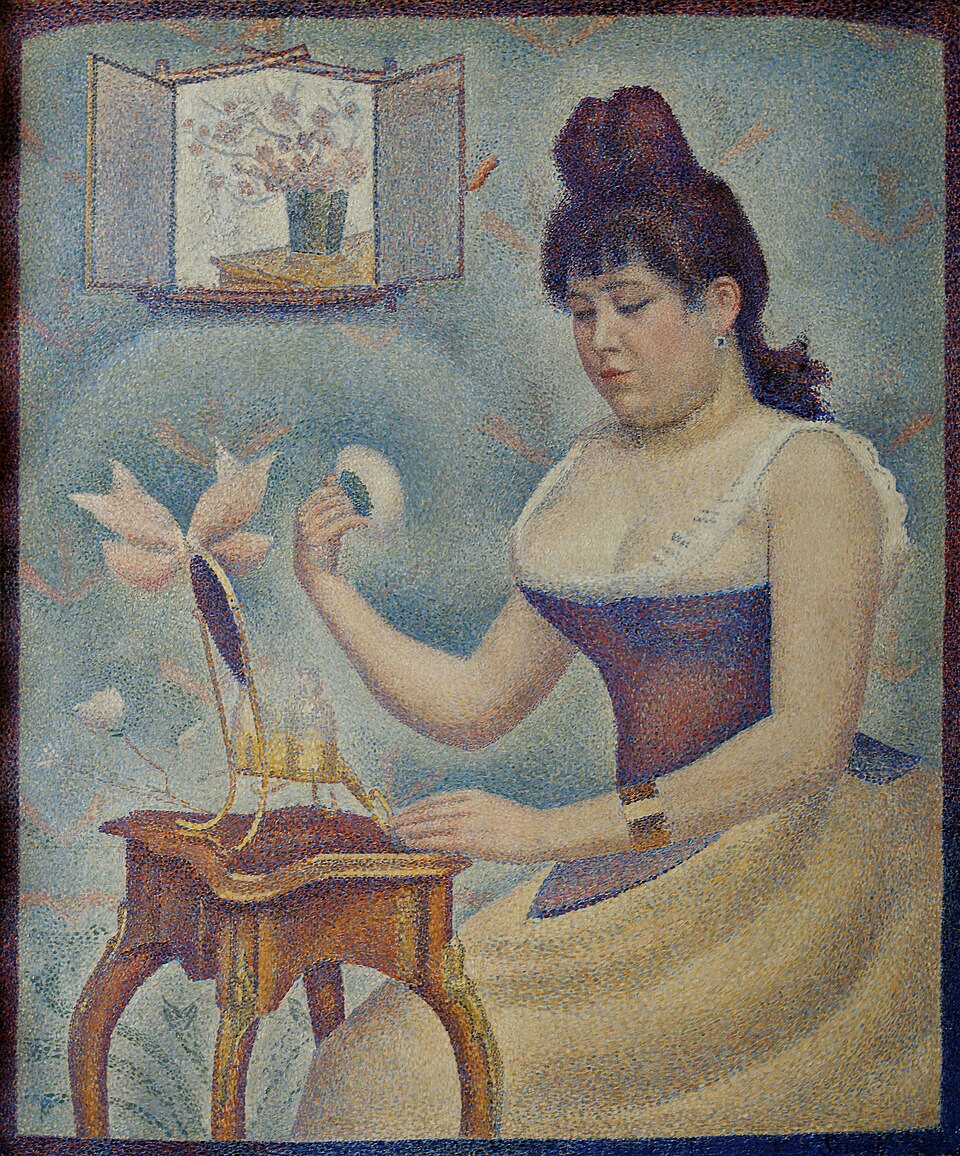
A young woman at a tiny dressing table dabs powder on her face, built entirely from small dots of colour. Under the mirror on the wall, scans have found the painter himself, the only self-portrait Seurat is known to have made.
The story behind the painting
The sitter is Madeleine Knobloch, Seurat's mistress, at her dressing table. Art historians believe she was pregnant with their son, Pierre-Georges, when it was painted; she gave birth one month before the picture was shown at the sixth Salon des Indépendants in March 1890. The sources differ slightly on the date: Wikipedia says it was painted between 1889 and 1890, while Wikidata gives 1889. Her identity was only confirmed after Seurat's death in 1891, when Knobloch, writing to his friends for money, called the work mon portrait, my portrait. It is Seurat's only single-figure portrait.
What to look for
Her tight corset and full skirt fill much of the canvas. On the small table stand a mirror tied with a pink bow and two perfume bottles; she looks into the mirror as she lifts the powder puff. Behind her is a flat, papered wall, and in the top left hangs a bamboo-framed mirror reflecting a vase of flowers, its bamboo and folding doors showing Seurat's interest in japonisme. Everything is made from small dots of paint that blend in the eye, the method Seurat called my method. Notice how flat the space feels, pressing woman and table against the wall.
Meaning and intent
The meaning is debated. One reading, from the Courtauld Gallery, sees a tension between nature and artifice: powder and perfume shape an idealised appearance, and the flat, constructed setting reinforces it. Robert Herbert instead saw a comment on human vanity, her careful attention to her looks set against plain furniture. Critics have been divided too. In 1890 Georges Lecomte praised its delightful workmanship; in 1926 Roger Fry said Seurat treated his subject with a religious solemnity that carried it into abstract beauty. In 1900 Julien Leclercq found it lacking expression. At its debut it was eclipsed by Seurat's Le Chahut.
Legacy
In 1931 the critic Robert Rey claimed that Seurat had first painted himself in the wall mirror, then covered it after a friend said it could look comical. X-rays in 1958 and 1987 found paint beneath the flower vase, though curators in 1991 remained sceptical. In 2014 a multispectral scan revealed a bearded man seated before a canvas, holding what seems to be a brush, and experts believe it confirms Rey's story. After Seurat's death Knobloch sold the painting to the critic Félix Fénéon. Samuel Courtauld bought it in 1926, and it now hangs in the Courtauld Gallery at Somerset House in London.
¿Sabías que…?
- Shows Seurat's partner Madeleine Knobloch at her dressing table.
- First exhibited at the Salon des Indépendants in March 1890.
- A hidden self-portrait of Seurat lies beneath the wall mirror.
- Bought by Samuel Courtauld in 1926; now in the Courtauld Gallery.
escena de género · Courtauld Gallery
Más obras de Georges Seurat
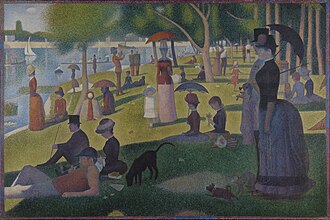 Tarde de domingo en la isla de La Grande Jatte - Georges Seurat (1884-1886)
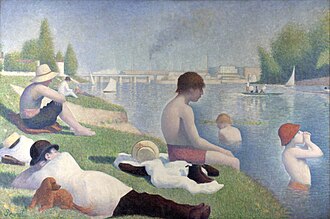 Un baño en Asnières - Georges Seurat (1884)
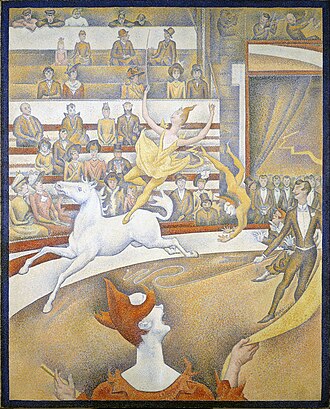 El circo - Georges Seurat (1891)
%20-%20BF811%20-%20Barnes%20Foundation.jpg) Las modelos - Georges Seurat (1886)
Las modelos - Georges Seurat (1886)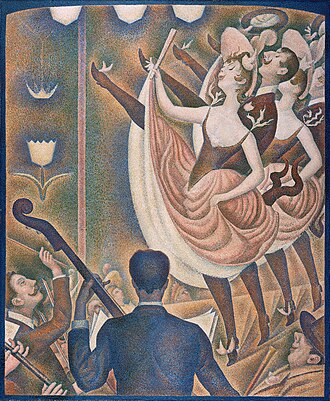 Le Chahut - Georges Seurat (1889)
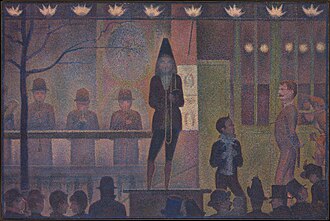 La parada del circo - Georges Seurat (1888)
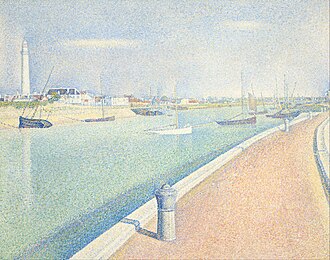 El canal de Gravelines, Petit Fort Philippe - Georges Seurat (1890)
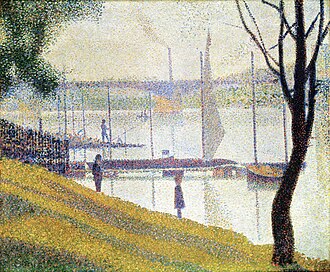 El puente de Courbevoie - Georges Seurat (1880)
Obras de artistas relacionados
 La noche estrellada - Vincent van Gogh (1889)
.jpg) Terraza de café por la noche - Vincent van Gogh (1888)
Terraza de café por la noche - Vincent van Gogh (1888)