The Painter on His Way to Work
Vincent van Gogh · 1888
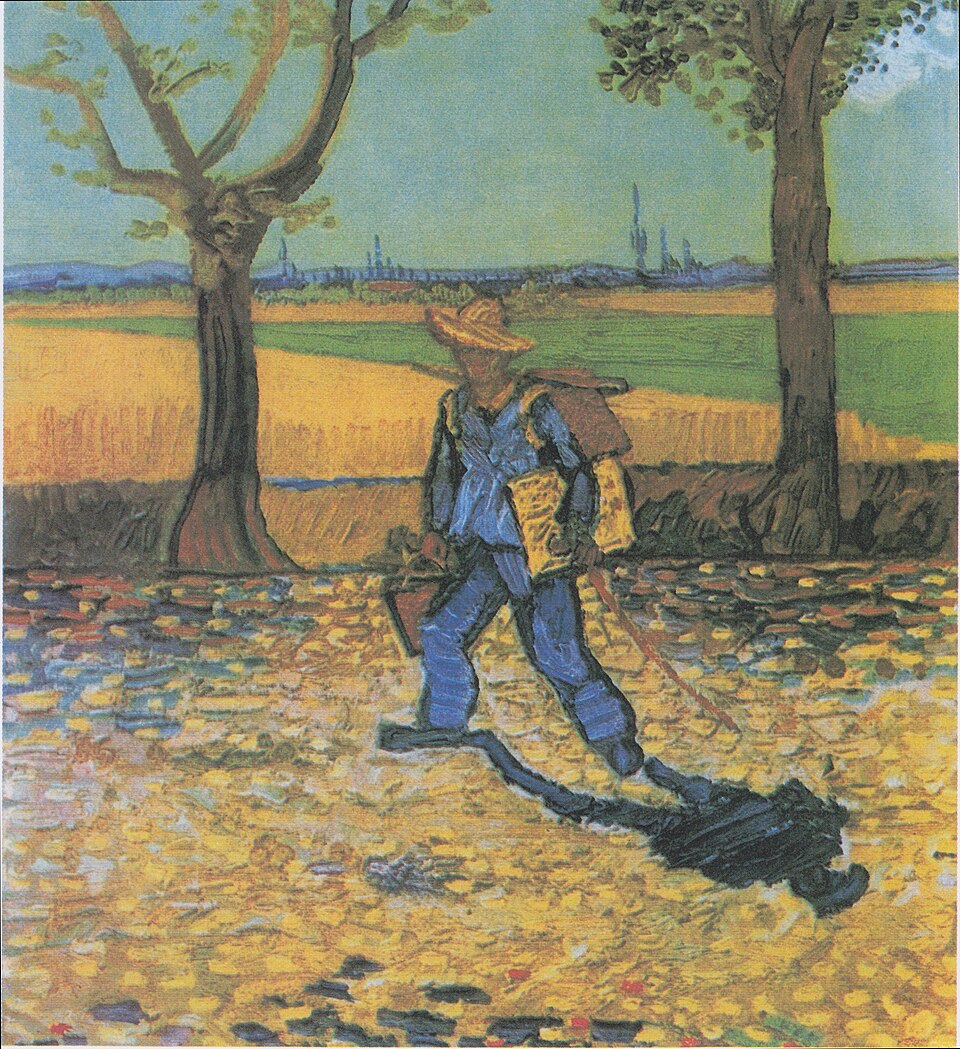
Van Gogh walks down a sunny road in Provence, loaded with his painting gear, his shadow falling beside him. It may be his first self-portrait from Arles, and no one has seen the canvas since the fires of 1945.
The story behind the painting
The painting, also called The Painter on the Road to Tarascon, dates from 1888, when Van Gogh was living in Arles. It is thought to be the first self-portrait he painted there. On 13 August 1888 he wrote to his brother Theo about a series of recent studies and mentioned a quick sketch of himself laden with boxes, sticks and a canvas on the sunny Tarascon road. That is how we know what the picture shows and how he saw it: not a formal portrait, but a fast record of himself at work, heading out to paint.
What to look for
The scene is simple. The artist walks along a country road on his way to work, carrying the tools of his trade: boxes, sticks and a canvas, in his own words. Wikidata lists among its subjects a man, a straw hat, a tree and a shadow, so the bright southern sun and the dark shape it throws are part of the picture. The canvas measured about 48 by 44 cm. Because it was photographed in colour in the 1930s, a rare and costly practice at the time, we still have a record of its colours even though the original is gone.
Meaning and intent
Rather than showing his face up close, Van Gogh shows himself as a small working figure in the landscape, defined by what he carries and where he is going. That idea, the painter as a lonely walker on a hot road, proved powerful. Francis Bacon took it as an especially important inspiration and painted a whole series based on The Painter on the Road to Tarascon in 1956 and 1957. The work has influenced many other modern artists as well, perhaps all the more because the original can no longer be seen.
Legacy
In 1912 the Kaiser-Friedrich Museum in Magdeburg, today the Kulturhistorisches Museum Magdeburg, bought the painting; it was one of the first Van Goghs in a public collection. During the Second World War the collection was moved to a salt mine at Stassfurt to protect it from bombing. In April 1945, after American forces reached the site, fires broke out in the mine. Monuments Men reports said the contents were entirely reduced to ashes, yet part of the collection was recovered, and some believe the fires were set to hide looting. The painting is believed destroyed, but the Monuments Men Foundation lists it as missing.
¿Sabías que…?
- Painted in Arles in 1888.
- Described by Van Gogh in a letter to Theo of 13 August 1888.
- Bought by the Magdeburg museum in 1912.
- Lost after fires at the Stassfurt salt mine in April 1945.
Sobre el artista
Vincent van Gogh (1853-1890)
varón · escena de género · árbol · sombrero de paja · sombra
Más obras de Vincent van Gogh
 La noche estrellada - Vincent van Gogh (1889)
 Terraza de café por la noche - Vincent van Gogh (1888)
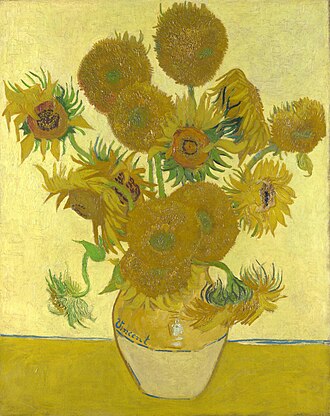 Los girasoles - Vincent van Gogh (1888)
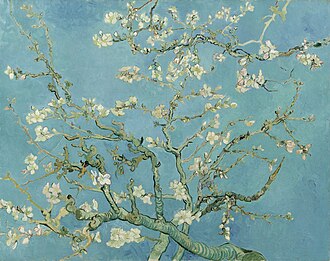 Almendro en flor - Vincent van Gogh (1890)
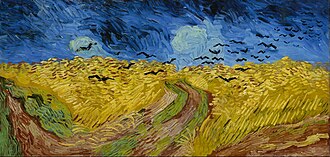 Campo de trigo con cuervos - Vincent van Gogh (1890)
 El dormitorio en Arlés - Vincent van Gogh (1888)
 Los comedores de patatas - Vincent van Gogh (1885)
 Lirios - Vincent van Gogh (1889)
Obras de artistas relacionados
 Las grandes bañistas - Paul Cézanne (1900s)
 The Boy in the Red Vest - Paul Cézanne
 ¿De dónde venimos? ¿Qué somos? ¿Adónde vamos? - Paul Gauguin (1897-1898)
 El Cristo amarillo - Paul Gauguin (1889)
 La elevación de la cruz - Peter Paul Rubens (1609)
 Rapto de las hijas de Leucipo - Peter Paul Rubens (1618)
 Paseo a orillas del mar - Joaquín Sorolla (1909)
 Triste herencia - Joaquín Sorolla (1898)
 Baile en el Moulin de la Galette - Pierre-Auguste Renoir (1876)
 El almuerzo de los remeros - Pierre-Auguste Renoir (1881)
 En el Moulin Rouge - Henri de Toulouse-Lautrec (1892)
 La toilette - Henri de Toulouse-Lautrec (1896)