Los músicos
Caravaggio · 1595
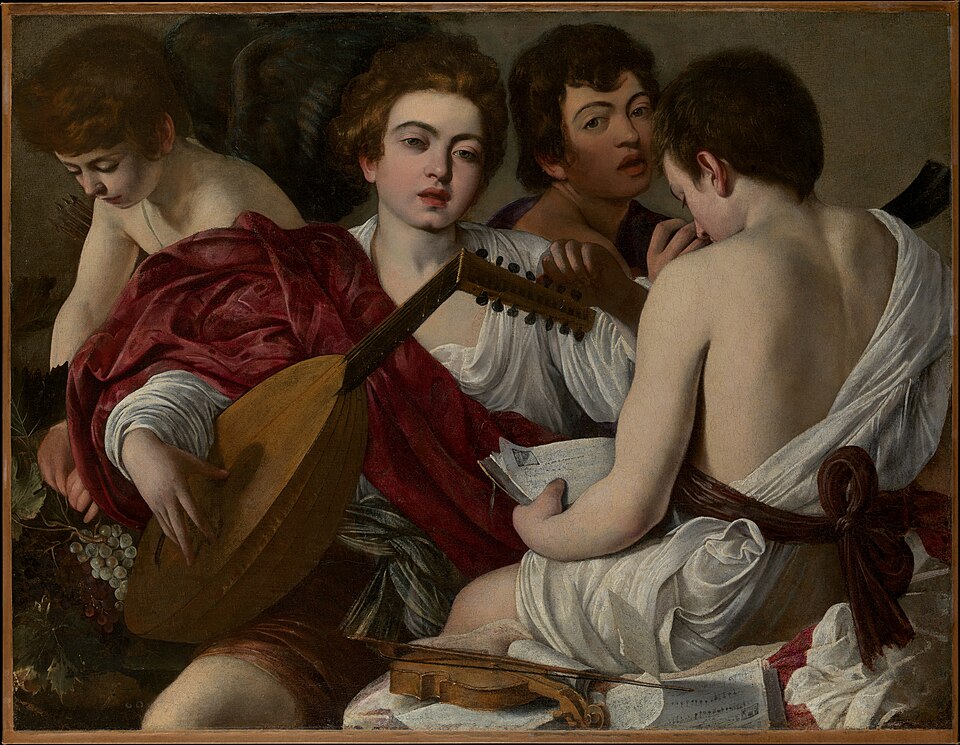
Four young men crowd into a small canvas: one tunes a lute with moist eyes, one looks straight at us, and a Cupid reaches for grapes. It may be Caravaggio himself who meets our gaze.
The story behind the painting
The Musicians, also called Concert of Youths, dates from about 1595. Caravaggio entered the household of Cardinal Francesco Maria del Monte around that year, and this is thought to be his first painting made expressly for him. Del Monte loved music and owned fine instruments the painter could use as models. The biographer Baglione mentions youths playing music, very well drawn from nature, for the Cardinal. After del Monte's death the picture was sold in 1628, was inventoried in 1638 in the collection of Cardinal Richelieu and the Duchesse d'Aiguillon, and later disappeared. It resurfaced at a house sale and has been at the Metropolitan Museum of Art since 1952.
What to look for
Four boys in classical robes sit close together within the small space of the canvas. Three play instruments or sing, and the fourth, dressed as Cupid, reaches toward a bunch of grapes. The central lutenist, the principal figure, has been identified as Caravaggio's companion Mario Minniti, and the youth beside him facing us is possibly a self-portrait. Look closely and you find dirt under fingernails and flushed faces. The music manuscripts, damaged by past restorations, still show a tenor and an alto part. A violin in the foreground suggests a fifth player, silently inviting the viewer to join.
Meaning and intent
The picture is an allegory linking music and love: music sustains love as food sustains life. The boys appear to be practising madrigals about love, and the lutenist's eyes are moist with tears, so the songs presumably tell of love's sorrow more than its pleasure. Cupid, absent-mindedly picking at grapes, may hint at love's own need for nourishment. Although musical scenes were popular as the Church supported new music, this one is clearly secular, recalling the tradition of concert pictures that began in Venice with works such as Titian's Le concert champetre.
Legacy
The Musicians shows Caravaggio's belief in painting from life, ritrarre dal naturale, using real models rather than idealised figures, a choice not always welcomed by patrons and fellow artists. The Cupid resembles the boy in Boy Peeling Fruit and the angel in Saint Francis of Assisi in Ecstasy, and the work seems paired with The Lute Player. The painting has suffered: it was in poor condition and underwent extensive restoration in 1983. Yet, as Andrew Graham-Dixon notes, its originality remains undimmed, and the intimate closeness of the figures still draws visitors in.
¿Sabías que…?
- Painted about 1595 for Cardinal Francesco Maria del Monte.
- Central lutenist identified as Mario Minniti; a possible self-portrait beside him.
- At the Metropolitan Museum of Art since 1952; restored in 1983.
- Size 92.1 x 118.4 cm (Wikidata).
Sobre el artista
Caravaggio (1571-1610)
escena de género · varón · Museo Metropolitano de Arte · alegoría · Cupido · músico · Caravaggio · laúd
Más obras de Caravaggio
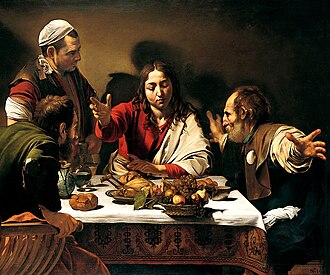 La cena de Emaús - Caravaggio (1601)
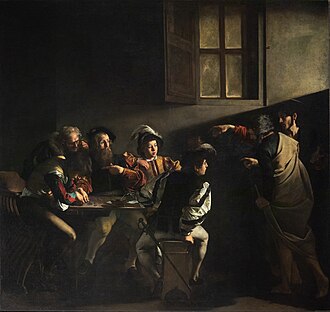 La vocación de San Mateo - Caravaggio (1609)
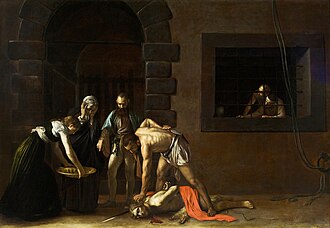 La decapitación de San Juan Bautista - Caravaggio (1608)
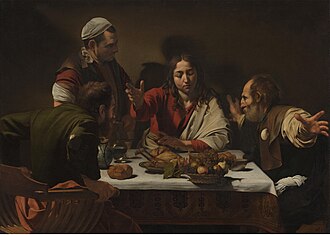 Los discípulos de Emaús - Caravaggio (1601)
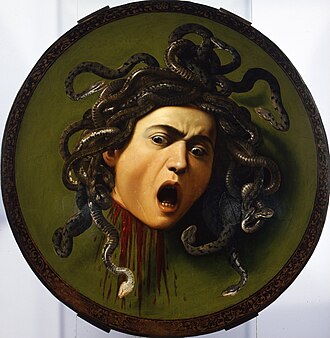 Cabeza de Medusa - Caravaggio (1597)
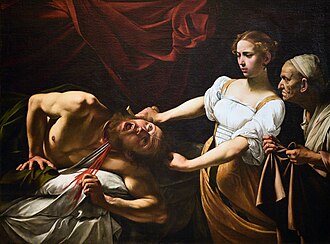 Judit decapitando a Holofernes - Caravaggio (1598)
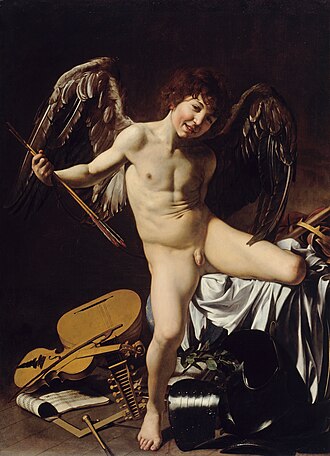 El amor victorioso - Caravaggio (1600s)
%2C%201595%20circa%2C%20534.jpg) Baco enfermo - Caravaggio (1595)
Baco enfermo - Caravaggio (1595)
Obras de artistas relacionados
 Las meninas - Diego Velázquez (1656)
 La rendición de Breda - Diego Velázquez (1635)
 La ronda de noche - Rembrandt van Rijn (1642)
 Autorretrato - Rembrandt van Rijn (1659)
 La joven de la perla - Johannes Vermeer (1665)
 La lechera - Johannes Vermeer (c. 1658)