Pentecostés
Tiziano · 1540s
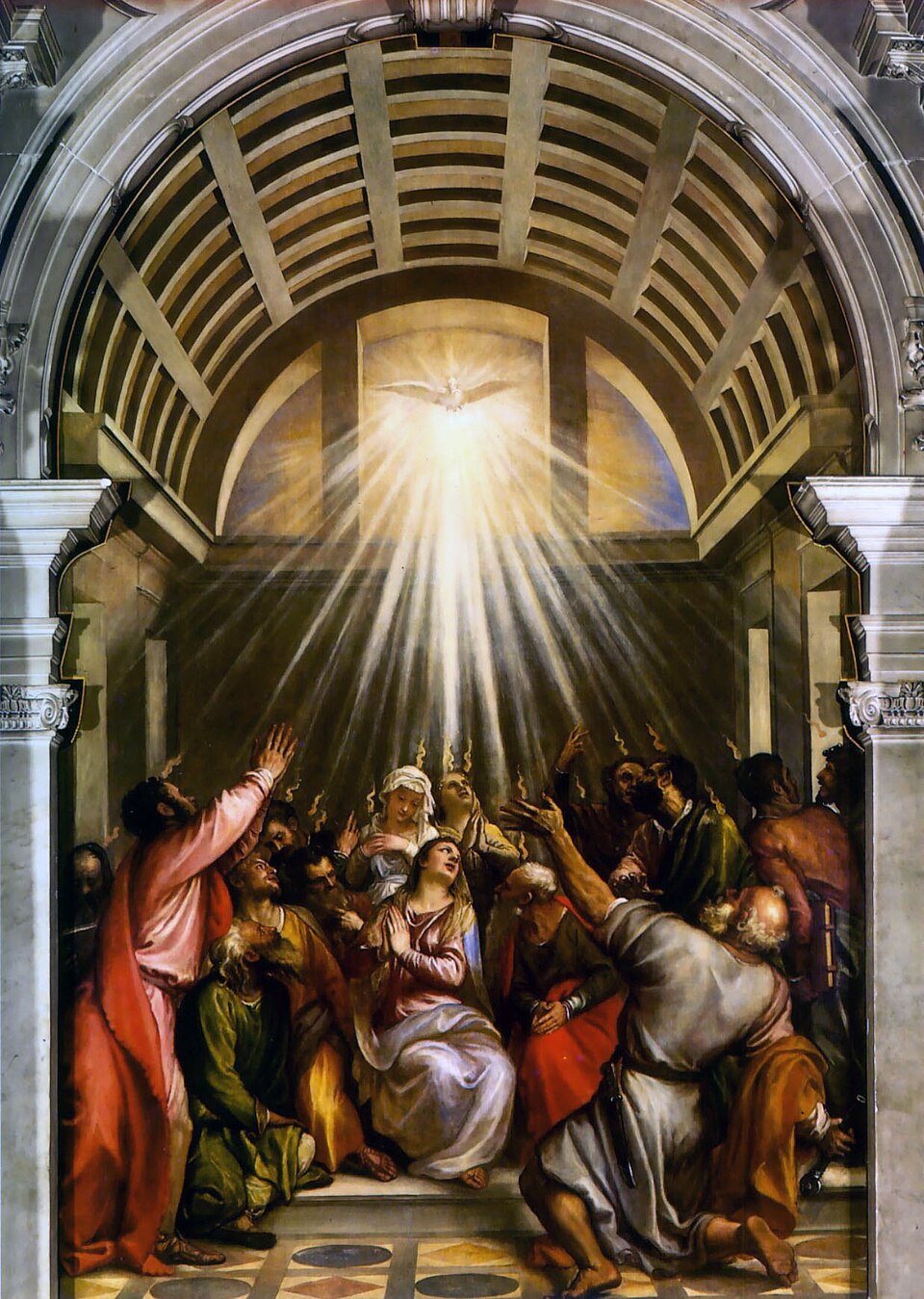
Rays of light fall from a dove and end as tongues of fire above the Virgin and the apostles. Titian had to paint this Pentecost twice: the first version decayed, the monks refused to pay, and a church court ordered him to start again.
The story behind the painting
Titian made the work for the high altar of the church of the convent of Santo Spirito in Isola in Venice, and had a first version ready in 1541. That version deteriorated quickly, so the monks did not pay him. The case went to a church court, where Titian sought help from his patron Cardinal Alessandro Farnese, and in 1545 the court ruled that he should paint it again. Other accounts say the problem was not quality but doctrine, over fire shown as a symbol of God the Father. The painting is usually dated 1545 or 1546, but some experts, Fogolari in 1935 and Pallucchini in 1953, push it to 1555.
What to look for
The canvas is tall, 570 by 260 cm. Under a coffered barrel vault, with a large window behind like those of Roman baths, the dove of the Holy Spirit sends out rays over the gathered figures. In the centre the Virgin joins her hands in prayer and looks up, six apostles on each side, and behind her two women, probably two of the Three Marys. Tongues of fire hover over their heads. The composition is a pyramid, its base in the figures and its tip at the dove. The two apostles in the foreground are clearly painted by a different hand, so Titian likely had assistants.
Meaning and intent
The scene comes from the Acts of the Apostles: on the day of Pentecost a sound like a rushing wind filled the house, tongues as of fire rested on each of them, and they began to speak in other languages. Titian, a master of vibrant atmosphere and subtle light, made the rays ending in flames an effect the source calls innovative for its time. The architecture, painted after his second Roman stay of 1545 to 1546, is clearly inspired by Bramante's work for Saint Peter's, while the foreshortened, moving figures and intense colour point to early Mannerism and the influence of Michelangelo.
Legacy
The painting is neither signed nor dated. It now hangs in the basilica of Santa Maria della Salute in Venice, a Baroque church built from 1631 to 1687 to a design by Baldassare Longhena, on the altar of the Descent of the Holy Spirit, beside the reliquary of Saint Crescentius and angel sculptures by Michele Fabris. Five other Titians share the basilica, including The Death of Abel and David and Goliath. All came from the convent of Santo Spirito, which was secularised in 1656, after which the works moved to the Salute.
¿Sabías que…?
- Titian's first version decayed, and a church court ordered a new one in 1545.
- Usually dated 1545-1546; some experts say 1555.
- Canvas about 570 by 260 cm.
- Now in Santa Maria della Salute, Venice.
Sobre el artista
Tiziano (1488-1576)
arte religioso · Virgen María · María Magdalena · basílica de Santa Maria della Salute · Doce apóstoles
Más obras de Tiziano
 Venus de Urbino - Titian (1538)
 La Asunción de la Virgen - Titian (1510s)
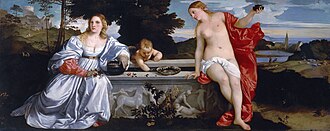 Amor sacro y amor profano - Titian (1510s)
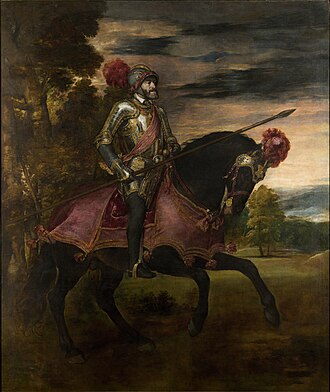 Carlos V a caballo en Mühlberg - Titian (1548)
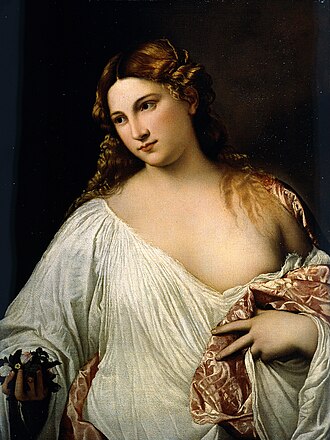 Flora - Titian (1517)
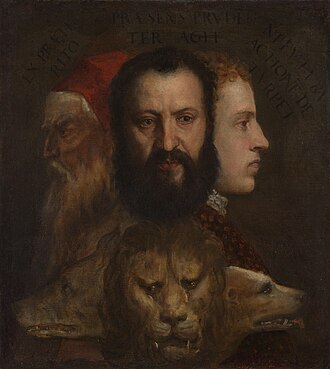 Alegoría de la Prudencia - Titian (1550)
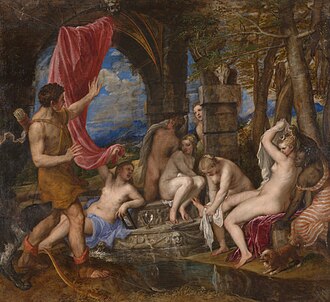 Diana y Acteón - Titian (1550s)
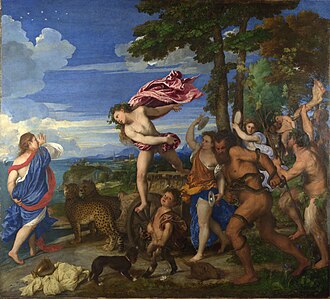 Baco y Ariadna - Titian (1520s)
Obras de artistas relacionados
 La Última Cena - Jacopo Tintoretto (1563)
 San Marcos liberando al esclavo - Jacopo Tintoretto (1540s)
 Las bodas de Caná - Paolo Veronese (1560s)
 Cena en casa de Leví - Paolo Veronese (1573)