La coronación de espinas
Tiziano · 1540s
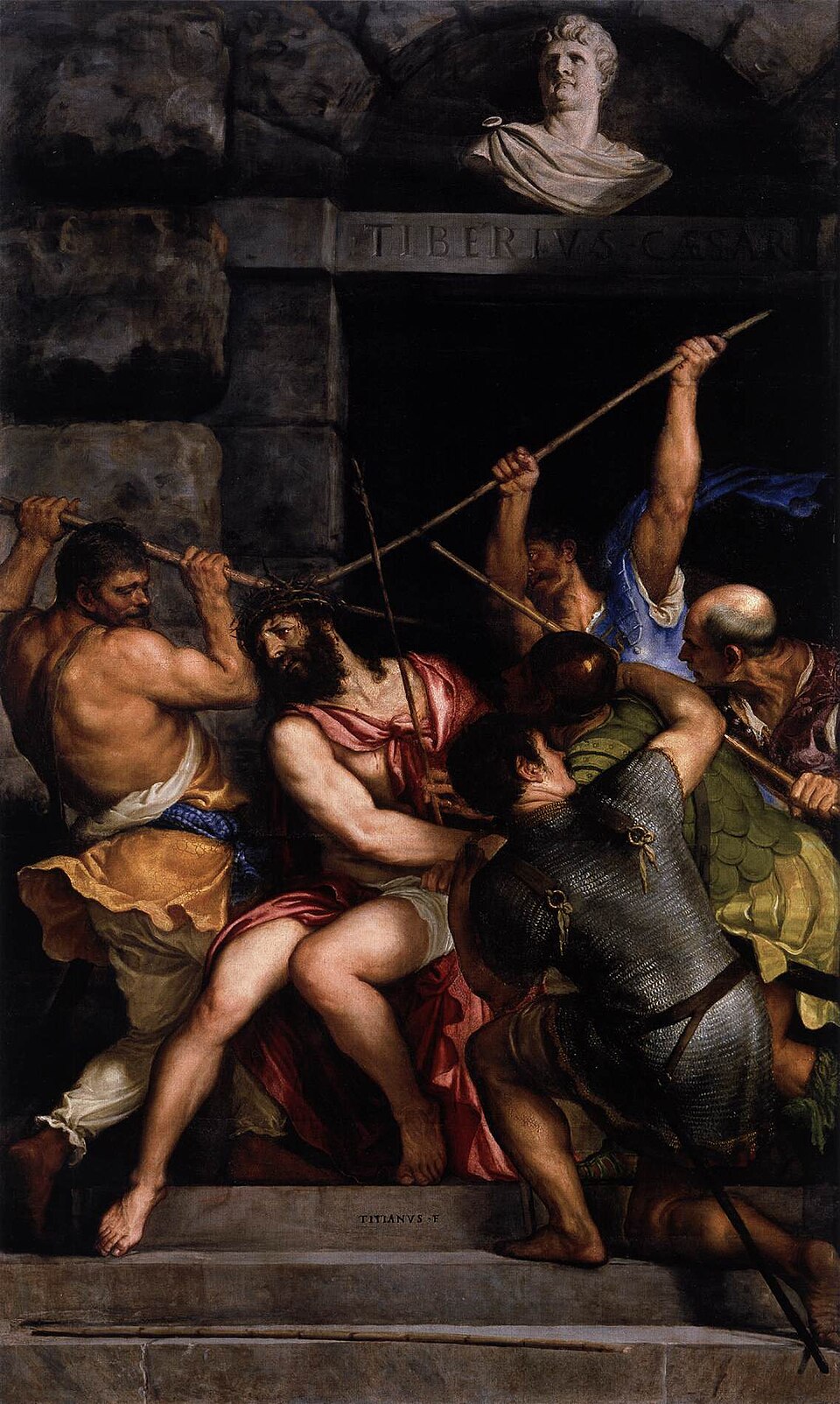
Canes cross like knife strokes above Christ as his tormentors twist the crown of thorns onto his head. Titian made a brutal scene glow with colour, and one painter called it the greatest picture ever painted.
The story behind the painting
Titian painted this canvas in 1542 and 1543 for the confraternity of Santa Maria delle Grazie in Milan. Wikidata simply dates it to the 1540s. It stayed in Milan until the Napoleonic conquest of the city in 1797, when it was brought to France. It is now in the Louvre in Paris. The Italian Renaissance master chose a subject of pure brutality for the confraternity, and filled it with references to the ancient sculpture he knew from Rome.
What to look for
The figures are pressed onto a shallow stage, closed off by the wall of a building. Christ's body is drawn from the ancient Laocoön, discovered in Rome in 1506, a classic example of pain. The torturer on the left borrows his upper body from the Belvedere Torso, and a bust of Emperor Tiberius watches from the wall. Look at Christ's foot stretched on the steps, where you can almost sense blood moving under the skin, and at the single cane lying unused on the front step, still and shadowless like a snake.
Meaning and intent
The violence is real, yet the beauty of the colour lifts Christ's suffering. The blues and greens on the right are colder than usual for Titian, in deference to his Roman sources. The canes slice through the crowded figures and form a Trinitarian triangle beside Christ's head. With the bust of Tiberius, Titian points directly at the Roman authority that condemned Christ, and pays homage to the classical past. Pain and beauty are held together.
Legacy
The picture, about 303 by 180 cm, is one of the Louvre's great Venetian works. According to Robert Haven Schauffler, the German painter Fritz von Uhde once considered it the greatest picture ever painted. Its journey from a Milan confraternity to Paris after the Napoleonic conquest of 1797 made it one of the many Italian works that reached France in those years, and it has stayed there ever since, still admired for its colour and its violence.
¿Sabías que…?
- Painted in 1542-1543 for a Milan confraternity.
- Taken to France after 1797.
- Christ's pose comes from the Laocoön.
- Now in the Louvre, Paris.
Sobre el artista
Tiziano (1488-1576)
arte religioso · Departamento de Pinturas del Museo del Louvre · Jesús de Nazaret · escuela veneciana · corona de espinas
Más obras de Tiziano
 Venus de Urbino - Titian (1538)
 La Asunción de la Virgen - Titian (1510s)
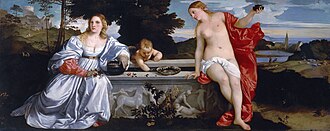 Amor sacro y amor profano - Titian (1510s)
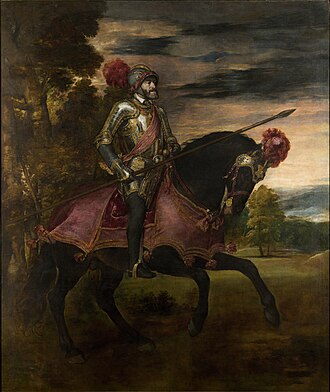 Carlos V a caballo en Mühlberg - Titian (1548)
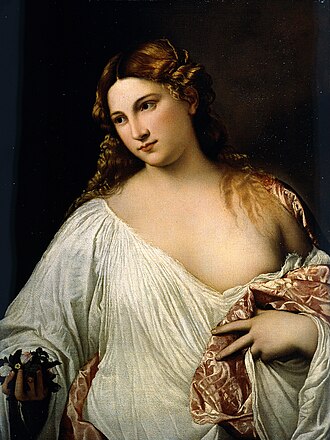 Flora - Titian (1517)
 Alegoría de la Prudencia - Titian (1550)
 Diana y Acteón - Titian (1550s)
 Baco y Ariadna - Titian (1520s)
Obras de artistas relacionados
 La Última Cena - Jacopo Tintoretto (1563)
 San Marcos liberando al esclavo - Jacopo Tintoretto (1540s)
 Las bodas de Caná - Paolo Veronese (1560s)
 Cena en casa de Leví - Paolo Veronese (1573)