The Boyhood of Raleigh
John Everett Millais · 1870
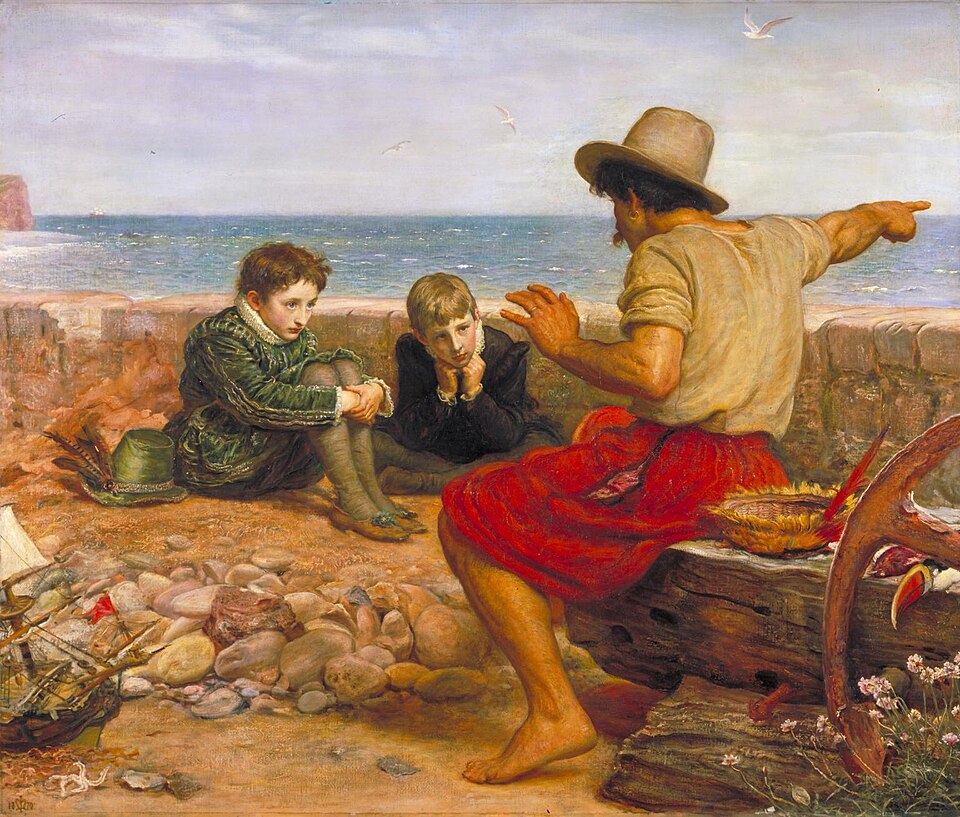
Two boys sit on a Devon beach while an old sailor points out to sea. One of them will become Walter Raleigh, and the gesture has been borrowed by cartoonists ever since.
The story behind the painting
Millais painted the picture in 1870, inspired by James Anthony Froude's essay England's Forgotten Worthies, about the lives of Elizabethan seafarers. He was probably also influenced by a recent biography of Raleigh that imagined him as a boy listening to old sailors. Millais travelled to Budleigh Salterton on the Devonshire coast to paint the setting. His own sons, Everett and George, posed as the two boys, and the sailor was a professional model. The painting was shown at the Royal Academy in 1871 and quickly won acclaim.
What to look for
The scene shows the young Walter Raleigh and his brother seated by the shore, listening to a sailor tell tales of wonder on sea and land. Follow the sailor's arm: everything in the composition leads to that pointing hand and the horizon beyond it. Millais' friend and biographer, the critic Marion Spielmann, said the sailor was meant to be Genoese, and argued that he is pointing south, towards the Spanish Main. The canvas measures about 121 by 142 cm.
Meaning and intent
The picture is about a future not yet lived: a boy listening, and the adventures that the stories will one day send him on. That simple setup, an old voice and young listeners facing the sea, made it easy to reuse. In 1928 David Low drew British ministers listening to Tales of the Dominions. In 1993 the Sunday Telegraph showed John Major and Douglas Hurd as boys listening to Edward Heath pointing to Europe, and in 1999 a Garland cartoon showed William Hague with two old sailors pointing away from a ship marked Euro.
Legacy
The painting is in the Tate collection. It has also travelled into literature: in Salman Rushdie's Midnight's Children, the narrator Saleem Sinai has a copy on his childhood bedroom wall and partly misremembers and transforms its meaning, part of the picture's place in later discussions of postcolonialism. It is mentioned in A Presumption of Death by Jill Paton Walsh and Dorothy L. Sayers, and in Susan Hill's The Woman in Black. Elements of it appear on the cover of Talk Talk's 1984 album It's My Life and on a 1982 single by The Church.
¿Sabías que…?
- Painted in 1870, shown at the Royal Academy in 1871.
- Inspired by an essay by James Anthony Froude.
- Millais' sons Everett and George posed for the boys.
- Tate, London.
Sobre el artista
John Everett Millais (1829-1896)
National Gallery de Londres · Hermandad Prerrafaelita · Tate
Más obras de John Everett Millais
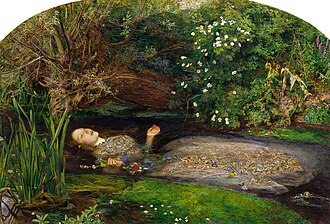 Ofelia - John Everett Millais (1851)
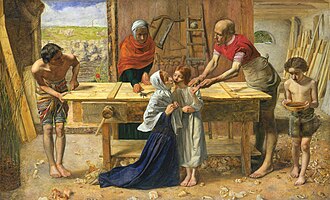 El Cristo en casa de sus padres - John Everett Millais (1849)
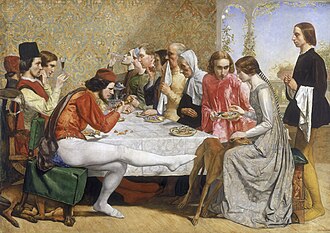 Isabella - John Everett Millais (1849)
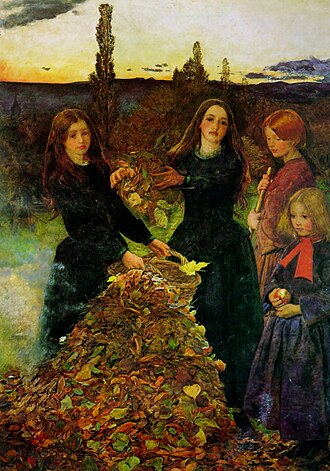 Hojas de otoño - John Everett Millais (1856)
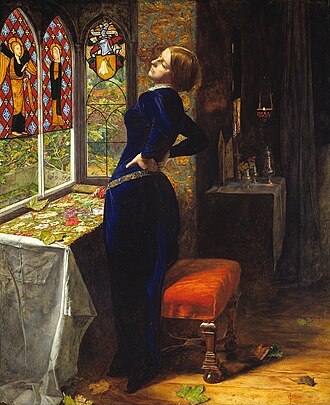 Mariana - John Everett Millais (1851)
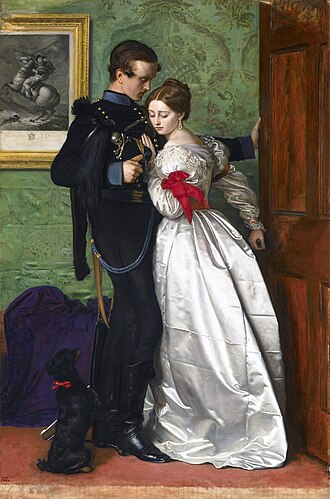 El brunswicker negro - John Everett Millais (1860)
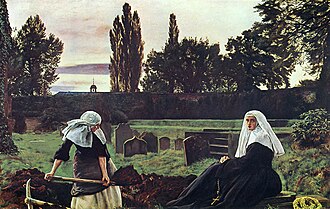 El valle del descanso - John Everett Millais (1850s)
 The Order of Release - John Everett Millais (1850s)
Obras de artistas relacionados
 Proserpina - Dante Gabriel Rossetti (1874)
 Bocca Baciata - Dante Gabriel Rossetti (1859)
 hilas y las ninfas - John William Waterhouse (1896)
 La señora de Shalott - John William Waterhouse (1888)