Autorretrato de Vincent Van Gogh
Vincent van Gogh · 1889
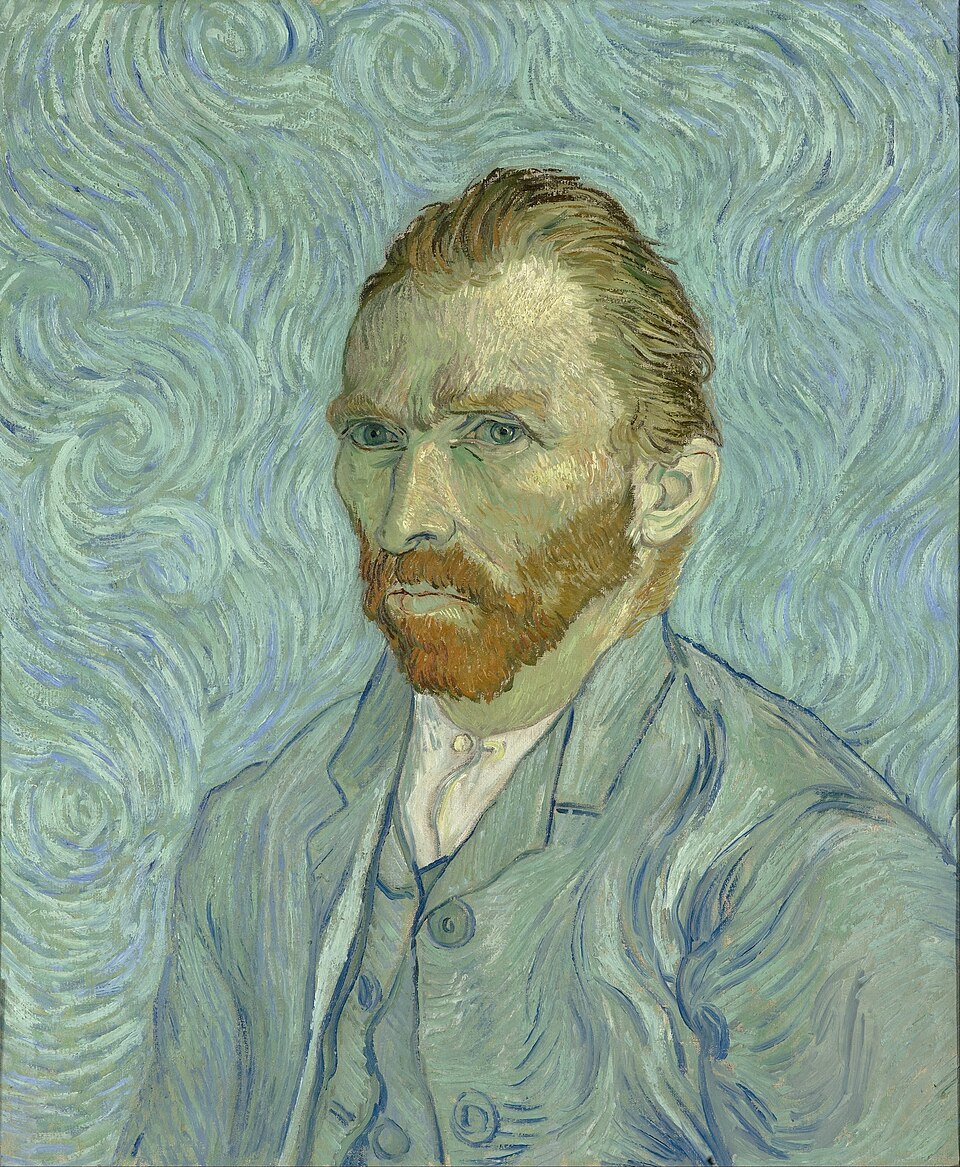
A man sits perfectly still while the world around him seems to swirl. Look into his eyes: Van Gogh himself admitted they still held the same insecure look as before.
The story behind the painting
In September 1889, shortly before he left Saint-Rémy-de-Provence in southern France, Vincent van Gogh turned once more to the subject he knew best: himself. He painted about 32 self-portraits over a ten-year period, partly because he often lacked the money to pay for models, and this oil on canvas may be the very last of them. Art historians still debate the point. Ingo F. Walther and Jan Hulsker consider this canvas his final self-portrait, while Ronald Pickvance gives that place to the beardless self-portrait now in a private collection. Van Gogh sent the picture to his younger brother Theo, an art dealer, with a letter asking him to study it for a while. He hoped Theo would notice that his facial expression had become much calmer.
What to look for
Begin with the figure. The painter sits upright and unmoving, his gaze steady, his body a firm shape against the field behind him. Then let your eye drift to his hair and beard, which ripple in restless, wavy strokes. The Musée d'Orsay points out how this undulating movement is echoed and amplified in what it calls the hallucinatory arabesques of the background, so that the space around the man seems to pulse and curl. The canvas measures 65 by 54.2 centimetres, close to life-size for a head and shoulders. Notice the tension between stillness and motion: the face holds firm while the patterned surface around it never rests. Sister Wendy Beckett described the colours as dissolving and the patterns as turbulent, and it is worth standing long enough to feel that pull for yourself.
Meaning and intent
Van Gogh himself gave us the key. In his letter to Theo he wrote that his expression had become calmer, though his eyes kept the same insecure look as before, or so it seemed to him. The painting holds both truths at once. Walther and Rainer Metzger argue that it is neither a pretty pose nor a realistic record, but the image of someone who has seen too much jeopardy and turmoil to keep his agitation under control. For Sister Wendy Beckett, the swirling surroundings symbolise an artist under mental, physical and emotional pressure. Read this way, the background is not a wall at all but a landscape of the mind, and the still figure at its centre is a man holding himself together by sheer attention.
Legacy
Van Gogh valued this canvas enough to take it with him to Auvers-sur-Oise, near Paris, where he showed it to Dr Paul Gachet. According to Van Gogh, the doctor was absolutely fanatical about it. Today the painting belongs to the Musée d'Orsay in Paris, where it is one of the most recognisable faces in the collection. Its importance goes beyond its beauty. Self-portraits were a central part of Van Gogh's work as a painter, a way of practising, searching and confessing, and this one stands at the far end of that long series. Whether or not it is truly his last, it captures the painter at a fragile turning point, looking back at us with remarkable honesty.
¿Sabías que…?
- Van Gogh painted about 32 self-portraits over roughly ten years.
- He often painted himself because he could not afford to pay models.
- Dr Paul Gachet was, in Van Gogh's words, absolutely fanatical about this painting.
- Scholars still disagree whether this or the self-portrait without beard came last.
Sobre el artista
Vincent van Gogh (1853-1890)
varón · Museo de Orsay · autorretrato · Vincent van Gogh · pintor · barba
Más obras de Vincent van Gogh
 La noche estrellada - Vincent van Gogh (1889)
.jpg) Terraza de café por la noche - Vincent van Gogh (1888)
Terraza de café por la noche - Vincent van Gogh (1888)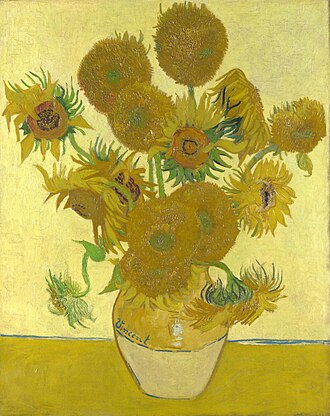 Los girasoles - Vincent van Gogh (1888)
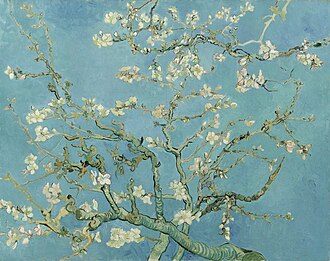 Almendro en flor - Vincent van Gogh (1890)
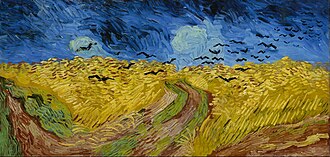 Campo de trigo con cuervos - Vincent van Gogh (1890)
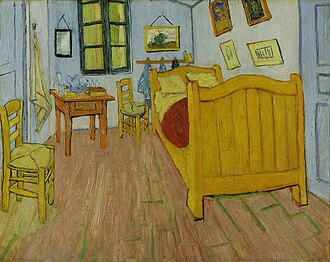 El dormitorio en Arlés - Vincent van Gogh (1888)
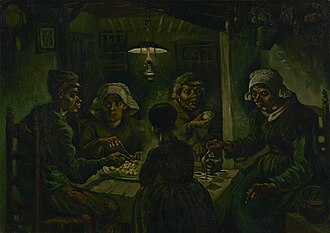 Los comedores de patatas - Vincent van Gogh (1885)
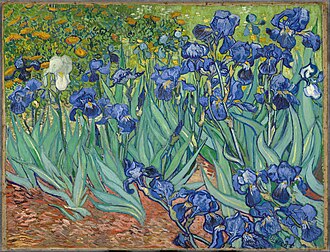 Lirios - Vincent van Gogh (1889)
Obras de artistas relacionados
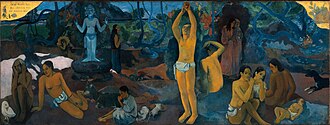 ¿De dónde venimos? ¿Qué somos? ¿Adónde vamos? - Paul Gauguin (1897-1898)
%201889.jpg) El Cristo amarillo - Paul Gauguin (1889)
El Cristo amarillo - Paul Gauguin (1889)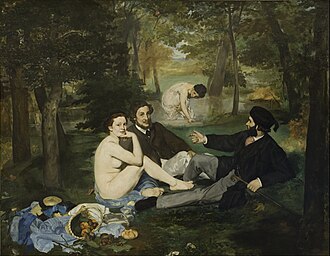 Almuerzo sobre la hierba - Édouard Manet (1863)
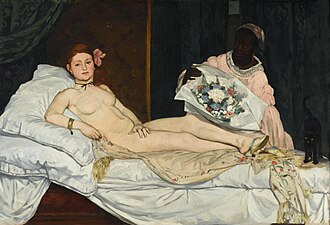 Olympia - Édouard Manet (1863)