Scene from Shakespeare's The Tempest
William Hogarth · 1736
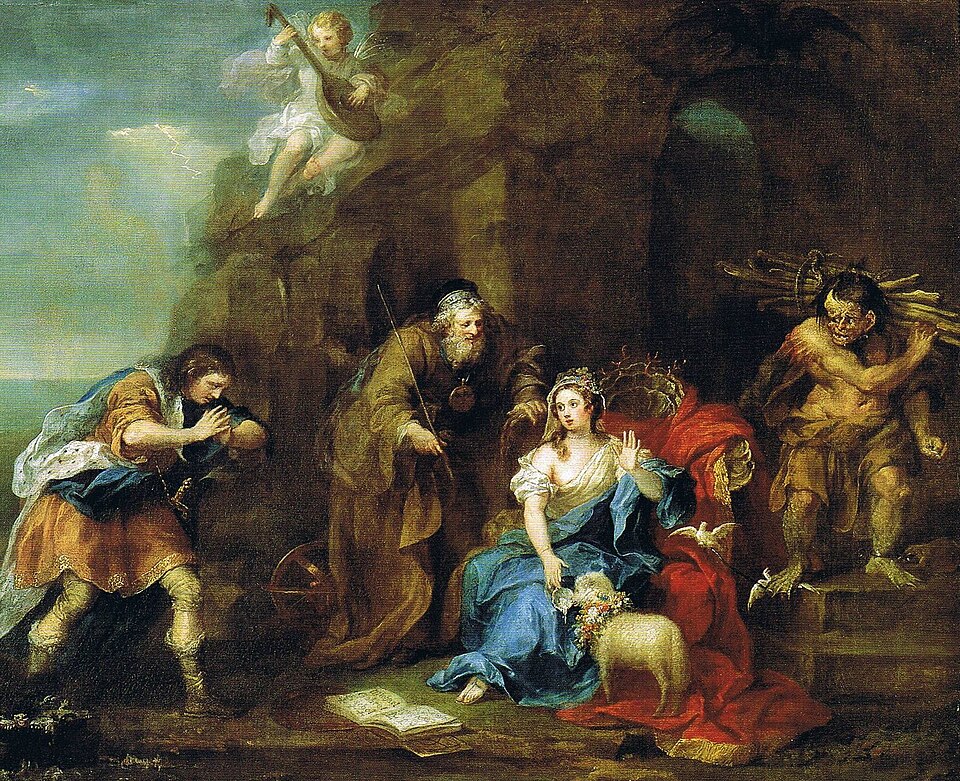
Miranda sits on a throne of shells and coral, so distracted by Ferdinand that she spills the milk she was feeding a lamb. Ariel plays above, Caliban drools below. The National Trust calls it the first known painting of a scene from Shakespeare.
The story behind the painting
William Hogarth painted this scene around 1730 to 1735 as a special project for one of his devoted patrons, George Parker, 2nd Earl of Macclesfield. Wikidata dates it 1736. It was part of Hogarth's attempt to found a distinctively British school of history painting. He is thought to have hoped that commissions for similar scenes would follow, but they did not. The picture is also known as Ferdinand Courting Miranda, and it illustrates act 1, scene 2 of Shakespeare's play The Tempest, when the shipwrecked prince first meets Prospero's daughter.
What to look for
Miranda sits at the centre on a throne made of shells and coral. She is distracted, and the bowl of milk she has been feeding to a lamb is spilling. To the left stands her father Prospero, and further left Ferdinand. The spirit Ariel floats above, playing a lute or mandolin. On the right is the misshapen monster Caliban, a bat above his head, grimacing and drooling as he stamps on a dove. The canvas, about 80 by 106.5 centimetres, is described as rich and vibrant, and full of small actions to find.
Meaning and intent
The picture sets innocence against menace. The lamb and the spilled milk show Miranda's sudden distraction as love arrives, while the dove crushed under Caliban's foot and the bat over his head mark the dark side of the island. Hogarth, better known for his satirical series, was here trying to show that an English painter could treat great literature with the seriousness of history painting. By choosing Shakespeare, he looked for a national subject for that ambition.
Legacy
After the Earl of Macclesfield's death, his widow sold the painting in 1766 to Sir Rowland Winn, 5th Baronet. It hung at Nostell Priory, near Wakefield in West Yorkshire, for more than two centuries, owned by the Winn baronets and then their relatives the Barons St Oswald. The National Trust acquired the house in 1953, but most of the contents stayed with the family. When the 6th Baron St Oswald wished to sell the painting in 2002, the National Trust bought it with a grant from the Art Fund, and it remains at Nostell.
¿Sabías que…?
- Painted around 1730 to 1735 for the 2nd Earl of Macclesfield; Wikidata gives 1736.
- Shows act 1, scene 2 of The Tempest.
- Called by the National Trust the first known painting of a Shakespeare scene.
- At Nostell Priory since 1766, owned by the National Trust since 2002.
Sobre el artista
William Hogarth (1697-1764)
Fundación Nacional para Lugares de Interés Histórico o Belleza Natural
Más obras de William Hogarth
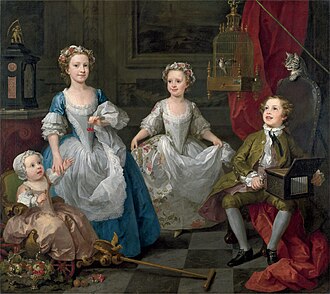 Retrato de los niños Graham - William Hogarth (1742)
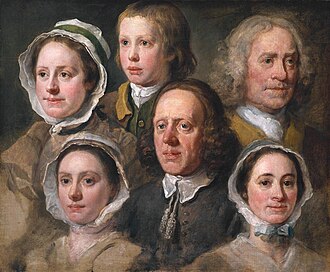 Los servidores del pintor - William Hogarth (1750s)
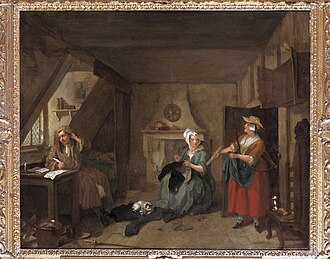 El poeta angustiado - William Hogarth (1730s)
 Casamiento a la moda II - William Hogarth (1743)
 David Garrick as Richard III - William Hogarth (1745)
 La orgía - William Hogarth (1735)
 Marriage A-la-Mode: 6. The Lady's Death - William Hogarth (1743)
La última apuesta de la dama - William Hogarth (1759)