Salomé
Tiziano · 1515
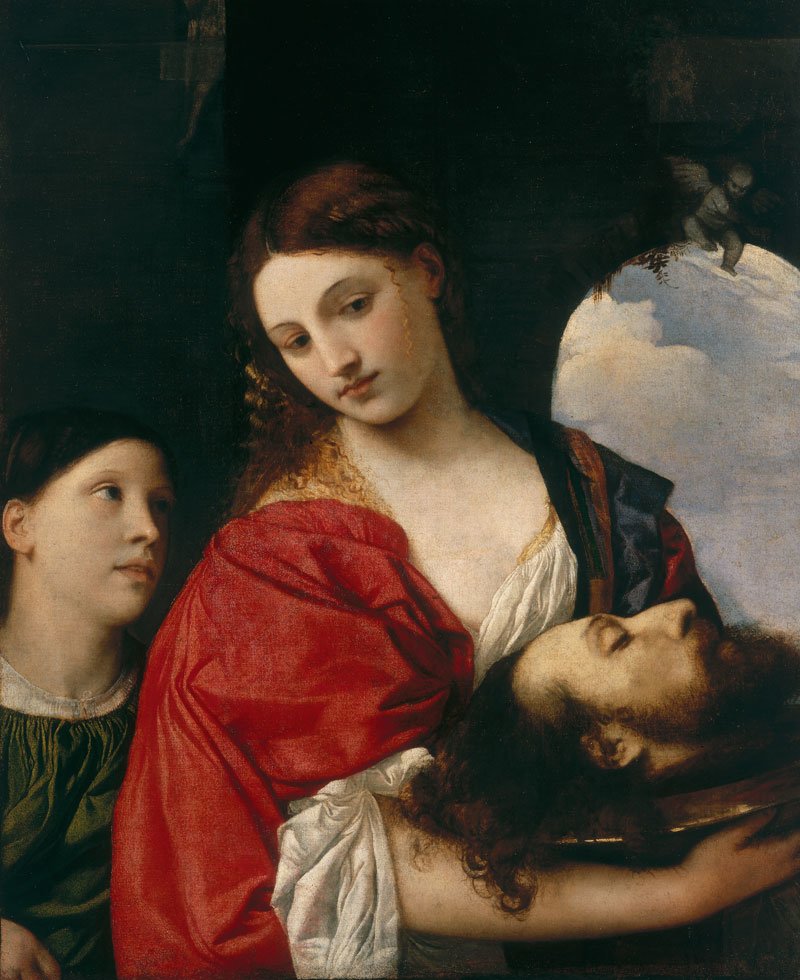
A young woman holds a severed head on a dish, her face turned away while her eyes slide back toward it. Is she Salome, Judith or Herodias? Five centuries later, Titian's early painting still keeps the secret.
The story behind the painting
This oil painting is an early work by Titian, usually dated around 1515 and now in the Doria Pamphilj Gallery in Rome. Charles Hope has suggested about 1511, partly because of its link with Sebastiano del Piombo's Salome of 1510. Its history may begin in 1533, with a Judith by Titian recorded in the collection of Alfonso I d'Este, Duke of Ferrara. In 1592 his granddaughter Lucrezia d'Este owned a painting called a Herodias. By 1603 the painting certainly belonged to Cardinal Pietro Aldobrandini, then passed to his niece Olimpia, whose second husband was Camillo Pamphilj, and it has descended through that family ever since.
What to look for
Three figures form a pyramid. A maid on the left looks up at the heroine; the heroine looks down toward the head; the dead John at the right has closed eyes. Panofsky described her as meditative, sad and a little benumbed, recoiling from the face that still draws her sidelong glances. A single lock of hair falls over her face, a detail once thought highly alluring. A small Cupid sits on the keystone of an arch. In the murky background, between the two women's heads, is a fitting that may be a lock or a hinge, marking a change of tint that might be the edge of a door. Wikidata gives about 90 by 72 cm.
Meaning and intent
The subject is debated. The head on a dish belongs to Salome's story, but a maidservant usually accompanies Judith. The dark doorway suggests women leaving John's prison, which is hard to reconcile with Judith, whose victim died in his tent. In the 18th century the painting was called a Herodias, though visitors thought the figure was Judith; Herodias now has no recent supporters. A medieval legend gave Salome a frustrated love for John, which the Cupid may evoke. Erwin Panofsky suggested John's head might be a self-portrait, and the model has been linked with the Dresden Venus. Around this time Salome became a more seductive figure in art.
Legacy
Attribution has wavered: given to Titian in early records, to Giorgione by the 19th century, to Pordenone by Crowe and Cavalcaselle, and back to Titian by most experts by the end of that century. The painting is seen as Titian's personal style in development, with a sense of physical closeness to the viewer and soft hair on creamy flesh. It belongs to two Venetian types of the 1510s: close half-length groups with enigmatic expressions, and the belle donne, idealised beautiful women. The composition was copied many times, partly by Titian's workshop; the best workshop version is in the Norton Simon Museum in Pasadena.
¿Sabías que…?
- Usually dated about 1515; Charles Hope suggests about 1511.
- The figure has been read as Salome, Judith or Herodias.
- Owned by Cardinal Pietro Aldobrandini by 1603, then the Pamphilj family.
- Now in the Doria Pamphilj Gallery, Rome.
Sobre el artista
Tiziano (1488-1576)
arte religioso · mujer · Alto Renacimiento · escuela veneciana · Galería Doria-Pamphili · cabeza decapitada
Más obras de Tiziano
.jpg) Venus de Urbino - Titian (1538)
Venus de Urbino - Titian (1538)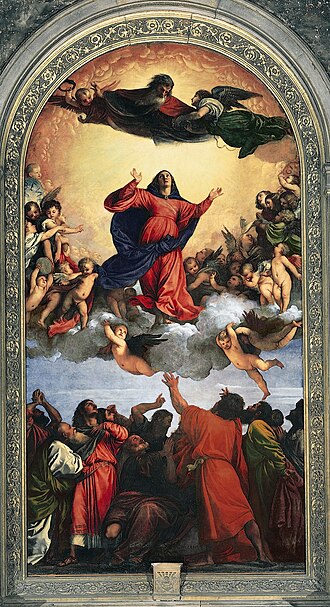 La Asunción de la Virgen - Titian (1510s)
FXD.jpg) Amor sacro y amor profano - Titian (1510s)
Amor sacro y amor profano - Titian (1510s)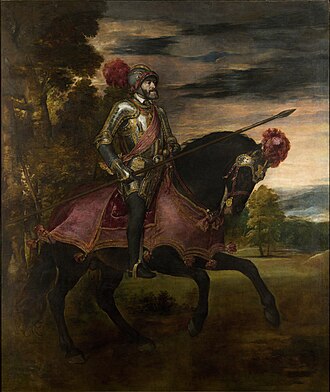 Carlos V a caballo en Mühlberg - Titian (1548)
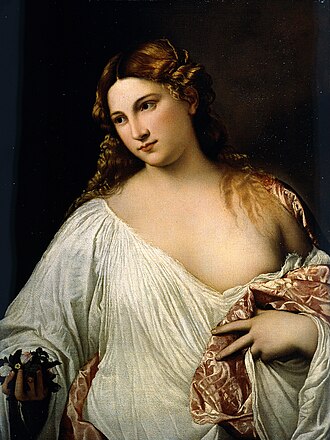 Flora - Titian (1517)
 Alegoría de la Prudencia - Titian (1550)
 Baco y Ariadna - Titian (1520s)
%20nave%20left%20-%20Altar%20of%20Madona%20di%20Ca'Pesaro.jpg) Pala Pesaro - Titian
Pala Pesaro - Titian